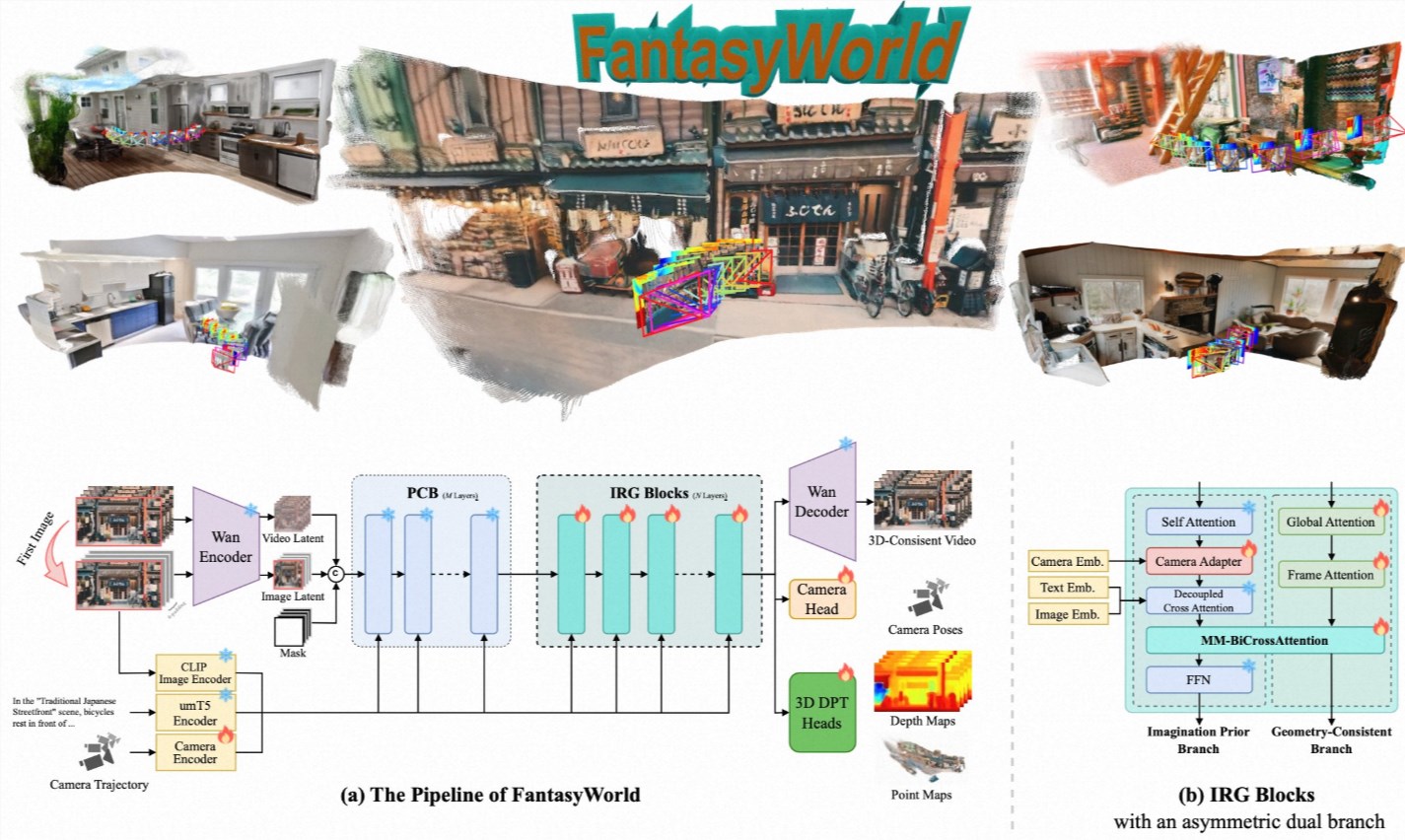
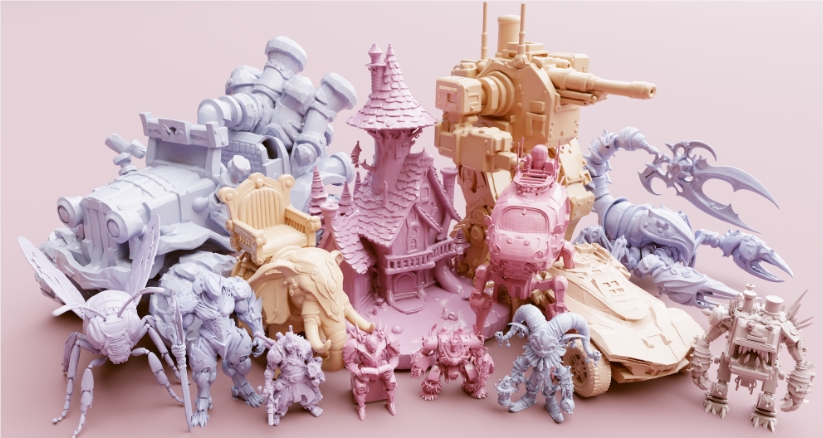
WorldLabs' Spark2.0 brings high-end 3D rendering to any device

WorldLabs Revolutionizes 3D Web Rendering with Spark2.0

In a significant leap for web-based 3D graphics, Stanford professor Fei-Fei Li's startup WorldLabs has launched Spark2.0, a dynamic renderer that brings professional-grade 3D visualization to everyday devices. Unlike traditional solutions requiring powerful workstations, this new technology runs smoothly on everything from smartphones to VR headsets—all through a standard web browser.

Breaking Down Hardware Barriers

The magic behind Spark2.0 lies in its innovative Level of Detail (LoD) system, which intelligently manages resource-intensive 3D Gaussian Splatting (3DGS) content. "We've essentially future-proofed 3D web experiences," explains a WorldLabs spokesperson. "What previously demanded specialized hardware now works on the phone in your pocket."

Built on WebGL2 and deeply integrated with the popular Three.js framework, the technology streams complex 3D environments in real-time. This means architectural walkthroughs, virtual showrooms, or detailed product visualizations can load as easily as watching a YouTube video.

Implications Across Industries

Early adopters are already imagining the possibilities:

  • E-commerce: Try on clothes or preview furniture in your actual living space
  • Education: Explore historical sites or molecular structures in immersive detail
  • Collaboration: Engineers worldwide inspecting 3D prototypes simultaneously

"This isn't just better rendering—it's removing the final barriers to spatial computing becoming mainstream," notes VR industry analyst Maya Chen. The technology's cross-platform nature (supporting iOS, Android, desktops and VR) makes it particularly compelling for businesses aiming to reach diverse audiences.

Technical Breakthroughs

Key innovations include:

  • Adaptive streaming that adjusts quality based on device capabilities
  • Memory optimization handling scenes with millions of data points
  • Seamless integration with existing web development workflows

Unlike previous solutions that stuttered with complex scenes, Spark2.0 maintains smooth performance even when rendering detailed environments. Early tests show loading times reduced by up to 70% compared to conventional methods.

What This Means for the Future

As internet content evolves beyond flat pages, technologies like Spark2.0 are building the infrastructure for truly immersive web experiences. "We're witnessing the birth of the 3D web," observes tech journalist Raj Patel. "And it's arriving not through specialized apps, but through the browsers we use every day."

With major platforms expected to adopt the technology within months, users might soon wonder how they ever settled for 2D product images or static architectural plans.

Key Points:

  • First cross-platform solution for high-fidelity 3D web rendering
  • Works on devices from smartphones to VR without specialized apps
  • Built on WebGL2 with Three.js integration for developer familiarity
  • Potential applications span retail, education, and industrial design
  • Represents significant step toward mainstream spatial computing
Enjoyed this article?

Subscribe to our newsletter for the latest AI news, product reviews, and project recommendations delivered to your inbox weekly.

Weekly digestFree foreverUnsubscribe anytime

Related Articles

Ant Forest Releases Massive 2.7TB Depth Dataset for AI Vision
News

Ant Forest Releases Massive 2.7TB Depth Dataset for AI Vision

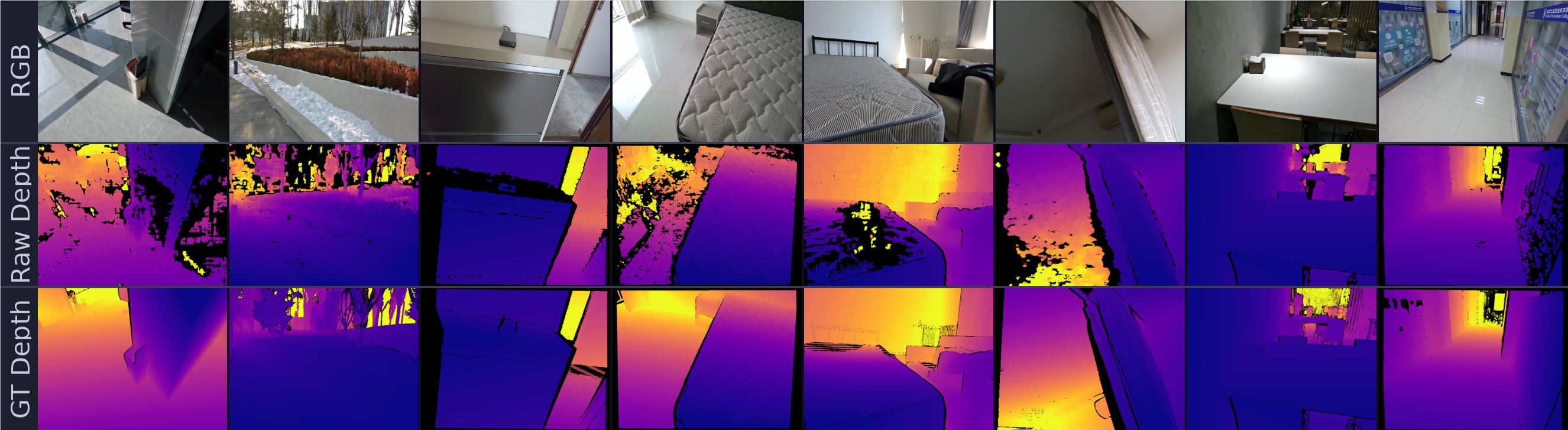
Ant Lingbo Technology has unveiled a game-changing open-source dataset for computer vision research. The LingBot-Depth-Dataset packs 3 million sample pairs - including 2 million real-world captures - across six popular depth cameras. This treasure trove of spatial perception data could revolutionize how AI systems understand 3D environments, with potential applications ranging from robotics to augmented reality.

March 31, 2026
computer visionAI datasetsdepth sensing
News

AliQwen Steps Into Wearable AI With Smart Glasses Launch

Alibaba's AI assistant Qwen is expanding beyond software into smart wearables, starting with AI glasses set to debut at MWC 2026. The move signals Alibaba's push into spatial computing, integrating lifestyle services directly into wearable hardware. Qwen's popularity has skyrocketed, processing nearly 200 million voice commands during China's recent Spring Festival.

February 27, 2026
AI wearablesAlibabaspatial computing
Alibaba's FantasyWorld Takes Top Spot in Global AI Model Rankings
News

Alibaba's FantasyWorld Takes Top Spot in Global AI Model Rankings

Alibaba's AutoNavi has unveiled its groundbreaking 'FantasyWorld' model, which quickly claimed the number one position on Stanford's WorldScore benchmark. This innovative 3D world modeling technology combines video processing with geometric precision, offering unprecedented realism for applications ranging from autonomous driving to virtual tours. Already integrated into AutoNavi's 'Flying Street View' feature, the model demonstrates China's growing leadership in spatial intelligence technologies.

January 9, 2026
AI innovationspatial computingAlibaba tech
Direct3D-S2 Revolutionizes 3D Generation with 10x Speed Boost
News

Direct3D-S2 Revolutionizes 3D Generation with 10x Speed Boost

The new Direct3D-S2 framework introduces a breakthrough Spatial Sparse Attention mechanism, accelerating gigabit-level 3D generation by nearly 10 times while maintaining high quality. This innovation promises to transform industries from gaming to industrial design.

May 27, 2025
3D modelingAI technologycomputer graphics
Google's New Windows AI App Lets You Search with Just Two Keystrokes
News

Google's New Windows AI App Lets You Search with Just Two Keystrokes

Google has launched a slick new desktop AI application for Windows users that makes searching faster than ever. With just Alt+Space, you can instantly access web results, local files, and even solve math problems using Google Lens. While currently English-only, this marks Google's ambitious push into AI-powered desktop tools, setting the stage for a showdown with competitors like ChatGPT.

April 15, 2026
Google AIWindows appsProductivity tools
News

Microsoft Steps In as OpenAI Retreats from Major AI Infrastructure Projects

Microsoft is aggressively expanding its AI infrastructure while OpenAI appears to be pulling back from ambitious projects. The tech giant has taken over a key Norwegian data center project originally intended for OpenAI, mirroring similar moves in the UK and Texas. Meanwhile, OpenAI has quietly reduced its long-term infrastructure investment plans by nearly 60%, signaling a strategic shift as Microsoft and Google fill the void in the race for AI computing power.

April 15, 2026
AI InfrastructureMicrosoftOpenAI