Alibaba's FantasyWorld Takes Top Spot in Global AI Model Rankings

Alibaba Makes Waves With New 3D World Model

AutoNavi, Alibaba's mapping subsidiary, has officially launched its ambitious "FantasyWorld" project - and it's already turning heads in the AI community. Within days of release, the model secured top honors on Stanford University's prestigious WorldScore Leaderboard, outperforming international competitors across multiple metrics.
Image

Technical Innovation Behind the Success

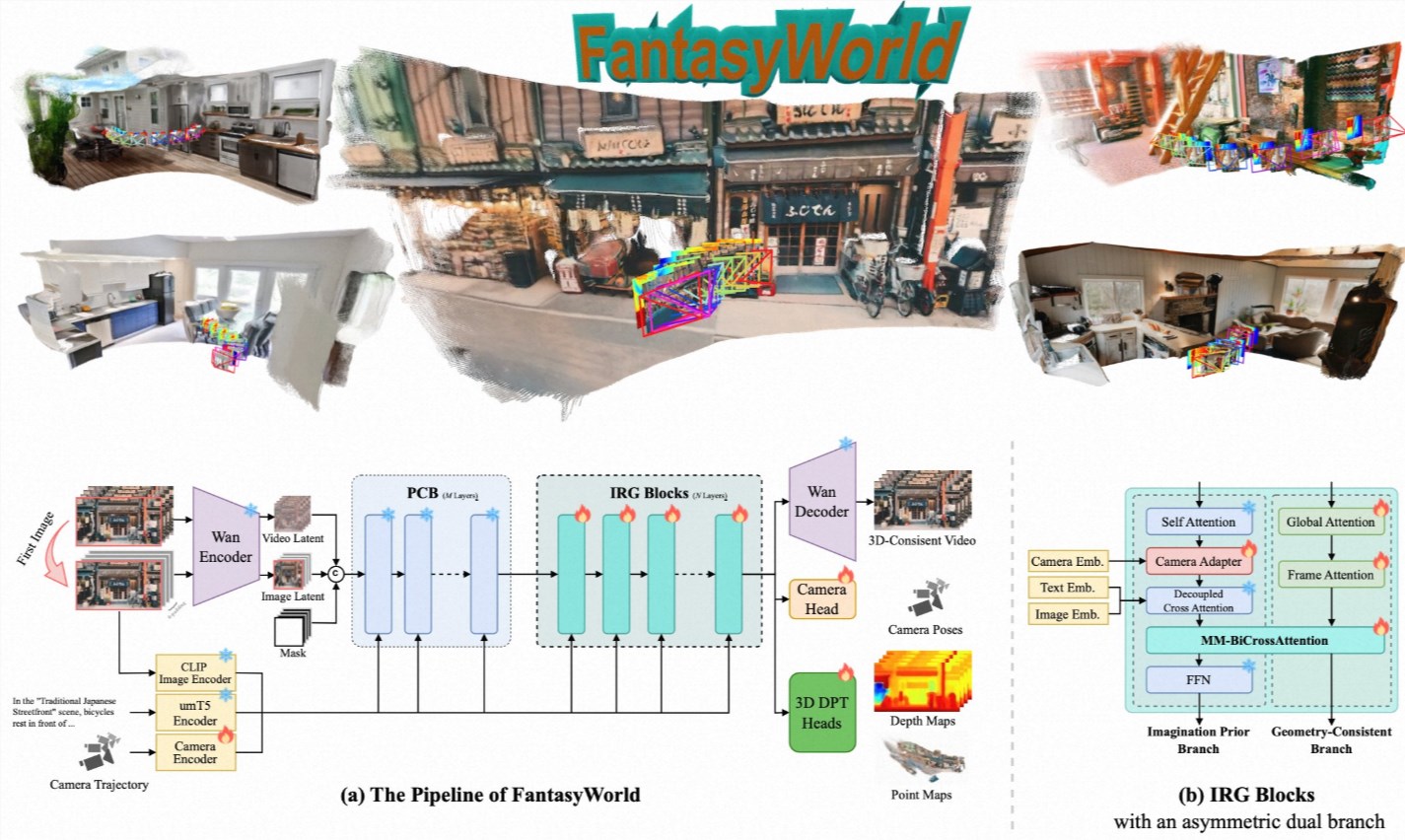
What sets FantasyWorld apart is its clever fusion of video processing and 3D modeling. The team added a trainable geometric component to existing video-based models, creating what they call "joint modeling of video latent variables and implicit 3D fields." In simpler terms? It generates remarkably realistic 3D environments from flat videos with impressive efficiency.

The results speak for themselves. Compared to other methods, FantasyWorld maintains exceptional consistency across different viewing angles - even handling extreme perspectives like complete 180-degree rotations without losing detail or coherence.

Real-World Applications Take Flight

The technology isn't just theoretical. AutoNavi has already integrated FantasyWorld into its "Flying Street View" feature, revolutionizing how businesses create virtual tours. Restaurant owners can now generate photorealistic 3D walkthroughs by simply uploading smartphone videos - no expensive equipment or technical expertise required.

This democratization of spatial modeling aligns with what AutoNavi calls "technological equity," lowering barriers for small businesses while giving customers richer preview experiences.

Industry Implications: A New Era Dawns

The timing couldn't be better. As autonomous vehicles shift toward visual-based navigation and embodied AI systems grow more sophisticated, demand for accurate world models has skyrocketed. FantasyWorld positions Alibaba at the forefront of this transformation.

The company isn't stopping here. An internal embodied business division is already exploring applications ranging from service robots to robotic dogs, signaling Alibaba's broader ambitions in physical AI systems.

Key Points:

  • Top-ranked performance: Scores 78.55 (static scenes) and 66.89 (dynamic scenes) on WorldScore benchmarks
  • Technical breakthrough: Combines video processing with geometric modeling in single computation pass
  • Commercial deployment: Powers AutoNavi's Flying Street View feature for businesses
  • Academic recognition: Research papers accepted by ICLR 2025 and NeurIPS 2025 conferences

Enjoyed this article?

Subscribe to our newsletter for the latest AI news, product reviews, and project recommendations delivered to your inbox weekly.

Weekly digestFree foreverUnsubscribe anytime

Related Articles

News

Google's AI Turns News Reports into Flood Warnings for Vulnerable Regions

Google has developed an innovative flood prediction system by analyzing millions of news articles with its Gemini AI. The technology transforms qualitative reports into quantitative data, creating early warnings for areas lacking traditional weather monitoring. Already implemented in 150 countries, this approach marks a breakthrough in using language models for disaster prevention while addressing global inequality in weather forecasting capabilities.

March 13, 2026
AI innovationdisaster preventionclimate technology
Google's Gemini Embedding 2 Bridges the Gap Between Machines and Human Understanding
News

Google's Gemini Embedding 2 Bridges the Gap Between Machines and Human Understanding

Google has unveiled Gemini Embedding 2, its first native multimodal embedding model that can process text, images, videos, audio, and documents simultaneously. Unlike generative models focused on content creation, this breakthrough technology helps machines truly 'understand' complex data by mapping diverse media types into unified mathematical spaces. With support for over 100 languages and combined media inputs, it promises significant improvements in search accuracy, legal research, and AI-powered analysis across industries.

March 11, 2026
AI innovationmultimodal learningmachine understanding
News

NVIDIA shakes up AI with open-source NemoClaw platform

NVIDIA is making waves with its new open-source AI agent platform NemoClaw, breaking free from hardware dependencies. Meanwhile, China celebrates a milestone in industrial communication standards, and Apple gears up for its foldable iPhone launch with boosted production targets. The tech world is buzzing with innovation as these developments signal major shifts across industries.

March 11, 2026
AI innovationtech trendsopen source
News

Shenzhen Hosts Lobster Feast with AI Twist to Boost Tech Adoption

Longgang District teams up with AI firm Kimi for an unforgettable culinary-tech fusion event. On March 14th, attendees will witness robots cooking lobster while enjoying free samples, all while learning about OpenClaw deployment. The festival offers practical benefits too - from free installation services to API discounts for businesses embracing AI transformation.

March 10, 2026
AI innovationculinary techShenzhen events
News

Alibaba's Tiny AI Model Takes On GPT-4o – And Wins

In a surprising turn of events, Alibaba's compact Qwen 3.5 model with just 4 billion parameters has outperformed OpenAI's massive GPT-4o in independent testing. This breakthrough challenges the industry's obsession with ever-larger models, proving that smarter architecture can trump sheer size. The achievement opens new possibilities for running powerful AI locally on everyday devices.

March 9, 2026
AI innovationMachine learningChinese tech
Microsoft's New AI Model Thinks Like Humans - Decides When to Go Deep
News

Microsoft's New AI Model Thinks Like Humans - Decides When to Go Deep

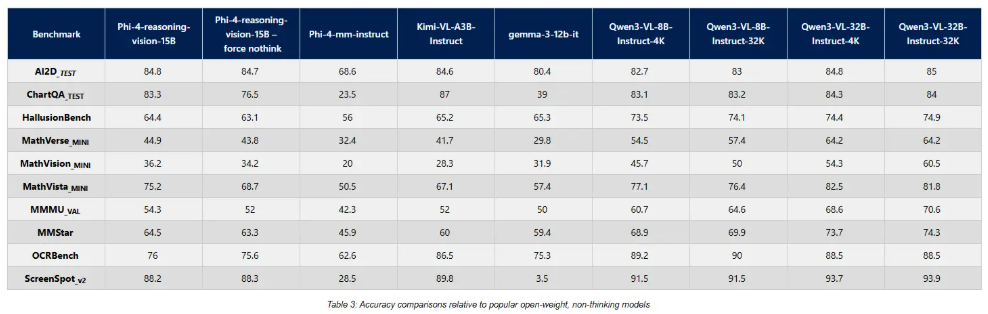
Microsoft just unveiled Phi-4-reasoning-vision-15B, an open-source AI model that mimics human decision-making by choosing when to think deeply. Unlike typical models that require manual mode switching, this 15-billion-parameter wonder automatically adjusts its reasoning depth based on task complexity. Excelling in image analysis and math problems while using surprisingly little training data, it could revolutionize how we deploy lightweight AI systems.

March 5, 2026
AI innovationMicrosoft Researchlightweight models