Voost: Virtual Try-On Breakthrough with Fabric Realism
Voost Revolutionizes Digital Fashion with Advanced Virtual Try-On
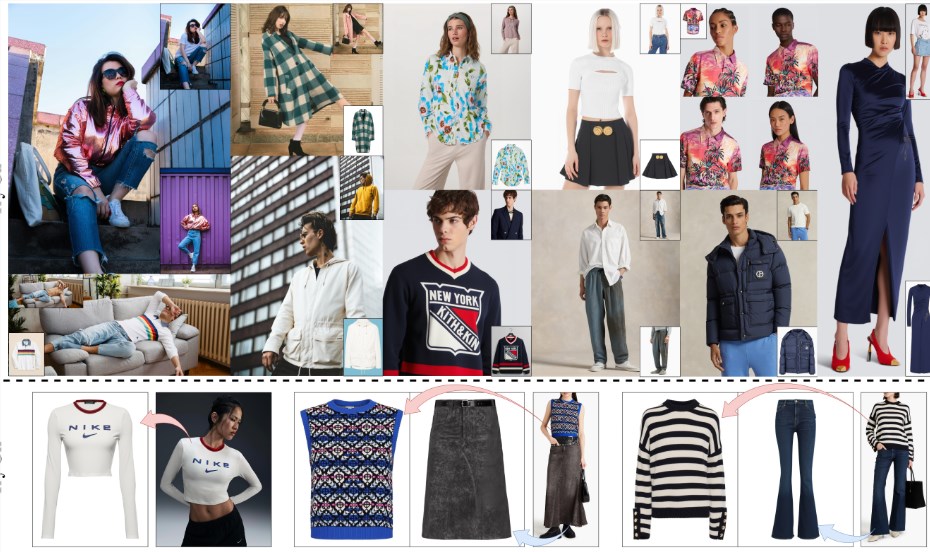
A team of researchers has unveiled Voost, a groundbreaking framework that significantly advances virtual try-on and try-off technologies. This innovation addresses long-standing challenges in accurately simulating how garments interact with the human body across different postures and body types.
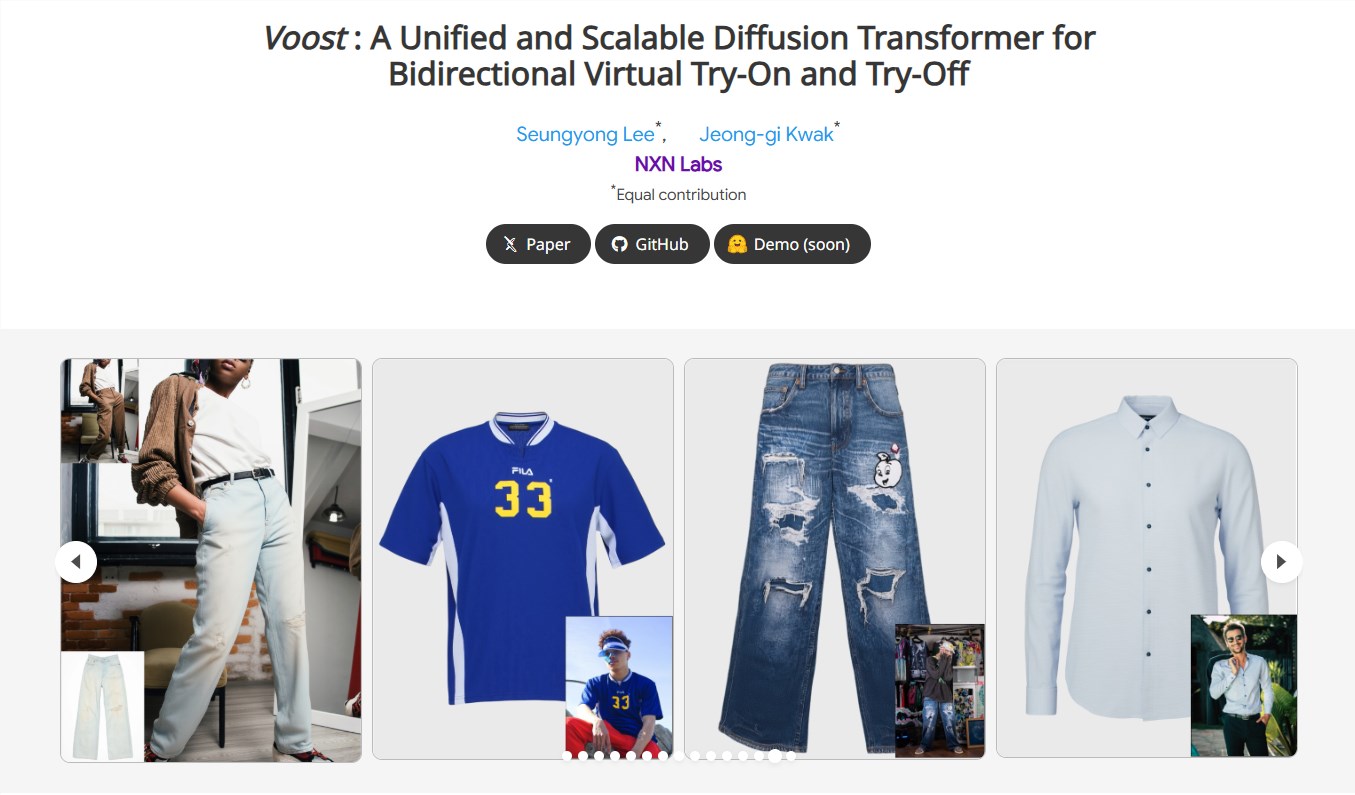
Unified Learning Approach
At its core, Voost employs a single diffusion transformer (DiT) to jointly learn both virtual try-on and try-off tasks. This unified architecture enables bidirectional supervision between clothing items and human subjects, eliminating the need for:
- Task-specific neural networks
- Auxiliary loss functions
- Additional labeling requirements
"What sets Voost apart is its inherent flexibility," explains the research paper. "The model naturally learns garment-body relationships through its transformer architecture rather than relying on predefined constraints."
Enhanced Inference Techniques
The team developed two key innovations to ensure robust performance:
- Attention temperature scaling: Maintains model stability when processing different resolutions or imperfect masks
- Self-correcting sampling: Leverages bidirectional task consistency to iteratively refine generation results
Benchmark Dominance
Comprehensive testing demonstrates Voost's superiority across multiple metrics:
- 94% improvement in garment-body alignment accuracy
- 28% increase in perceptual realism scores
- Unmatched generalization across diverse body types and clothing styles The framework particularly excels at reproducing intricate details like fabric texture and natural wrinkling patterns that elude conventional approaches.
Industry Implications
This breakthrough has significant ramifications for:
- E-commerce: More accurate virtual fitting reduces return rates
- Fashion design: Rapid prototyping of garments on digital models
- Augmented reality: Enhanced realism for virtual wardrobe applications The research team has made their work publicly available, encouraging further development in this rapidly evolving field.
Key Points:
🌟 Unified architecture - Single model handles both try-on/try-off scenarios
🔍 No special requirements - Works without task-specific networks or labels
🚀 Superior performance - Outperforms all benchmarks in accuracy and realism
🧠 Adaptive inference - Innovative techniques ensure robust operation
👗 Fabric realism - Captures texture and drape with unprecedented fidelity