US Bets Big on AI to Tackle Nuclear Fusion and Quantum Tech Challenges

US Launches AI-Powered Push for Next-Gen Tech Dominance

The Department of Energy is putting artificial intelligence to work solving America's toughest scientific challenges through its new "Genesis" program. This sweeping initiative identifies 26 critical technology gaps where AI could accelerate breakthroughs - with nuclear innovation taking center stage.

Fusion Dreams Meet AI Reality

Nearly half the targeted challenges involve nuclear technology, reflecting both its promise and problems:

  • Fusion energy finally moving from lab experiments toward practical implementation
  • Modernizing existing nuclear power infrastructure
  • Cleaning up aging nuclear facilities
  • Enhancing detection of nuclear threats

"We're leveraging decades of nuclear research data," explains a DOE spokesperson. "AI helps us spot patterns humans might miss in the quest for fusion power."

Beyond the Atom: Quantum Leaps and Material Marvels

The program casts a wide net across emerging technologies:

Quantum Frontiers

  • Discovering novel quantum algorithms
  • Building specialized quantum systems for scientific research

Industrial Revival

  • Jumpstarting domestic microchip production
  • Securing supplies of critical minerals
  • Maintaining dominance in data center technology

Materials Science Breakthroughs

  • Accelerating development of strategic materials
  • Designing next-gen materials with predictable properties

The DOE envisions AI not just assisting researchers, but eventually running "autonomous laboratories" that design and conduct experiments with minimal human input.

Funding Questions Loom Large

While ambitious in scope, Genesis currently lacks detailed implementation plans or budget figures. Industry watchers note that past "moonshot" programs have often stumbled when theory meets funding realities.

"These aren't weekend projects," cautions Dr. Elena Torres, a nuclear policy expert at MIT. "Fusion alone could swallow billions before we see commercial viability."

The Genesis program taps America's vast research network - 17 national labs plus university and corporate partners - in what officials call "the most comprehensive marriage of AI and hard science yet attempted."

Key Points:

  • The US aims to maintain tech leadership through AI-driven research
  • Nuclear fusion and quantum computing are top priorities
  • Autonomous labs could revolutionize materials discovery
  • Success depends on long-term funding commitments
  • Public-private partnerships will be crucial
Enjoyed this article?

Subscribe to our newsletter for the latest AI news, product reviews, and project recommendations delivered to your inbox weekly.

Weekly digestFree foreverUnsubscribe anytime

Related Articles

OpenAI's GPT-5.2 Upgrade Transforms Research Experience
News

OpenAI's GPT-5.2 Upgrade Transforms Research Experience

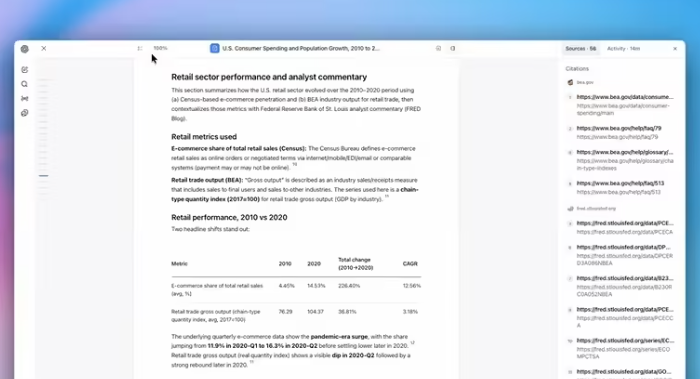
OpenAI has rolled out a significant update to its ChatGPT research tools, introducing GPT-5.2-powered features that revolutionize how users interact with AI-generated reports. The standout improvement is a new full-screen viewer that makes navigating lengthy reports surprisingly intuitive. With interactive tables of contents and clear reference listings, digesting complex information has never been easier.

February 11, 2026
ChatGPTGPT-5AI-research
News

Google's Gemini Takes on OpenAI in High-Stakes AI Research Battle

Google has unveiled Gemini Deep Research, its upgraded AI research agent built on Gemini 3 Pro, just as OpenAI prepares to launch GPT-5.2. The new tool offers advanced research capabilities through an Interactions API and tackles AI's notorious 'hallucination' problem. Both tech giants are now locked in a fierce competition to define the future of agent-based artificial intelligence.

December 12, 2025
AI-researchGoogle-GeminiOpenAI-GPT5
mmBERT Outperforms XLM-R in Multilingual NLP Efficiency
News

mmBERT Outperforms XLM-R in Multilingual NLP Efficiency

Researchers from Johns Hopkins University unveiled mmBERT, a multilingual encoder surpassing XLM-R in speed and performance. With configurations supporting up to 8192 tokens and trained on 3 trillion tokens across 1833 languages, mmBERT excels in low-resource language tasks while being 2-4x faster than predecessors.

September 11, 2025
multilingual-NLPAI-researchlanguage-models
Google's New Windows App Lets You Search Anything with Just Two Keystrokes
News

Google's New Windows App Lets You Search Anything with Just Two Keystrokes

Google has unveiled a smart new desktop app for Windows that brings AI-powered search to your fingertips—literally. With just Alt+Space, you can instantly pull up search results without opening a browser. The lightweight application taps into Gemini AI technology to scour both the web and your local files, while handy features like Google Lens let you search anything visible on your screen. Though currently English-only, it's a promising alternative to browser-based searching that could change how we interact with information.

April 15, 2026
Google AIWindows appsproductivity tools
News

WorldLabs debuts Spark2.0: Bringing cinematic 3D to your browser

Stanford professor Fei-Fei Li's startup WorldLabs has unveiled Spark2.0, a groundbreaking 3D rendering technology that brings high-fidelity graphics to any device with a web browser. By seamlessly integrating with Three.js, this innovation allows smartphones, tablets, and VR headsets to display complex 3D environments that previously required powerful workstations. The secret sauce? A clever streaming system that adapts to your device's capabilities while maintaining stunning visual quality.

April 15, 2026
Web3DSpatialComputingThreeJS
News

Microsoft Outmaneuvers OpenAI in Global Computing Power Race

A quiet battle over AI infrastructure is unfolding, with Microsoft aggressively expanding its computing resources while OpenAI appears to pull back. The tech giant recently secured 30,000 NVIDIA chips in Norway - a facility originally intended for OpenAI. Meanwhile, Google snapped up UK computing power after OpenAI paused its 'Star Gate' project there. These strategic moves suggest a significant shift in the AI landscape as Microsoft doubles down on data center investments while OpenAI scales back its ambitious plans.

April 15, 2026
AI InfrastructureMicrosoftOpenAI