Google's Gemini Takes on OpenAI in High-Stakes AI Research Battle
The AI Research Arms Race Heats Up
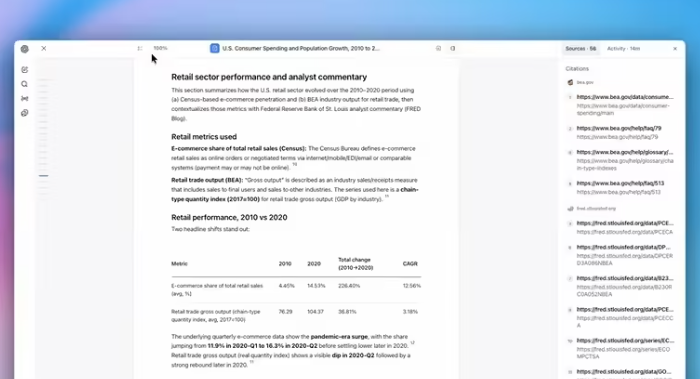
In a strategic move that underscores the intensifying competition in artificial intelligence, Google has launched Gemini Deep Research, its newly enhanced AI research agent. This comes just as rival OpenAI prepares to roll out GPT-5.2, setting the stage for what industry observers are calling "the next frontier" in AI development.
What Gemini Brings to the Table
Built on Google's powerful Gemini 3 Pro large language model, this isn't your average chatbot. Gemini Deep Research specializes in generating comprehensive research reports and handling complex information tasks—from financial due diligence to pharmaceutical safety assessments.
The real game-changer? Google is opening access through its new Interactions API, allowing developers to integrate these advanced capabilities into third-party applications. Soon, you might find this technology powering your Google Search results or helping academics through NotebookLM.
Tackling AI's Achilles' Heel
One persistent challenge with current AI systems is their tendency toward "hallucination"—generating plausible-sounding but factually incorrect information during extended reasoning tasks. Google claims significant improvements here, with Gemini 3 Pro specifically optimized for factual accuracy in multi-step decision chains.
"In high-stakes research applications," explains Dr. Elena Rodriguez, an AI ethics researcher at Stanford, "a single factual error can invalidate an entire analysis. That's why reliability improvements matter so much."
Benchmark Battles Begin
To prove its mettle, Google introduced DeepSearchQA, a new benchmark designed specifically to test AI agents on complex information retrieval tasks. Early tests show promising results:
- Outperformed competitors on the notoriously difficult "Humanity's Last Exam"
- Demonstrated strong capabilities in browser automation through BrowserComp (though slightly trailing ChatGPT 5 Pro)
- Showed marked improvement in handling ultra-long context prompts
The timing couldn't be more dramatic—OpenAI released GPT-5.2 just one day later, claiming superiority across multiple benchmarks including those where Google had just taken the lead.
What This Means for Users
The implications extend far beyond corporate bragging rights:
- Researchers gain powerful tools for synthesizing vast amounts of information
- Businesses can automate complex analysis tasks with greater confidence
- Developers now have access to sophisticated AI through simple API integrations
- Everyday users will see these advancements trickle into search engines and productivity tools
The battle lines are drawn: Google bets on specialized deep research capabilities while OpenAI pushes broader reasoning performance. As both companies race toward what they call "agentic AI"—systems that autonomously handle complex tasks—the only certainty is that consumers stand to benefit from their fierce competition.