Uber Expands into AI Annotation with Gig Workforce

Uber's Entry into the AI Annotation Market

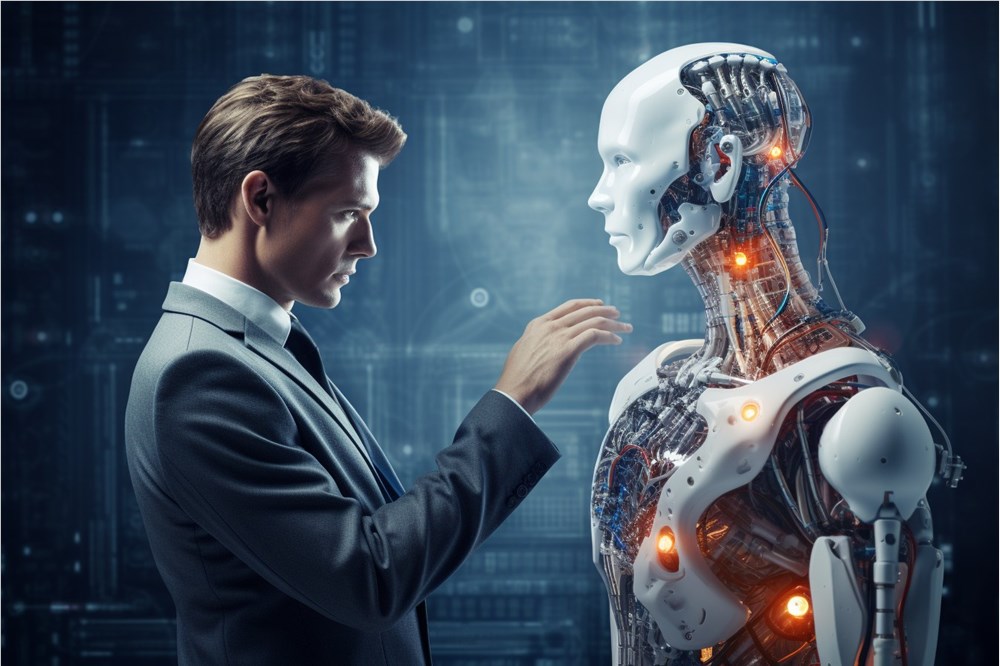
According to a report by Bloomberg, Uber is making a significant move into the artificial intelligence (AI) labeling industry by recruiting gig workers. This strategy allows Uber to utilize its existing business model, which relies on independent contractors, to address the increasing demand for machine learning and large language models.

image

Uber's new business division, named "Scaled Solutions," asserts that it can connect companies with a range of professionals, including "detailed analysts, testers, and independent data operators" through its platform. This initiative serves as an extension of Uber's internal team, which primarily includes members based in the United States and India. These team members are responsible for tasks such as testing new features and converting restaurant menus into options available on Uber Eats.

Leveraging AI and Machine Learning

Uber has previously incorporated artificial intelligence and machine learning within its own operations. Now, the company aims to monetize these technologies by offering services to other businesses for a fee. To implement this strategy, Uber is recruiting gig workers for various companies, including Aurora, Luma AI, and Niantic, to manage tasks related to data labeling, testing, and localization.

A crucial aspect of AI model training is the reliance on extensive human labor to perform mundane tasks. These tasks may include selecting the most suitable responses for chatbots or labeling pedestrians in footage captured by self-driving cars. Typically, AI model development companies hire workers from developing countries, where wages are comparatively lower. For instance, an engineer from India shared with Bloomberg that they are tasked with comparing and scoring AI-generated answers to complex coding problems, earning approximately 200 Indian Rupees (around $2.37) per group.

Global Recruitment Efforts

Uber's recruitment efforts currently span multiple countries, including Canada, India, Poland, Nicaragua, and the United States. Workers are offered varying pay rates based on the volume of tasks completed, with compensation provided monthly. The company is also actively seeking individuals from diverse cultural backgrounds to enhance AI adaptability in different markets.

A History in AI

This is not Uber's first venture into the artificial intelligence sector. The company has previously invested heavily in developing autonomous vehicles but ultimately shut down the entire project following a tragic incident involving a pedestrian. Furthermore, in 2016, Uber acquired an AI research lab established by cognitive scientist Gary Marcus and other prominent computer science professors.

Key Points:

  1. Uber is utilizing gig workers to enter the AI labeling business to meet the demands of machine learning and large language models.
  2. The company is hiring gig workers for several businesses to handle data labeling, testing, and localization tasks, offering different pay rates.
  3. AI model training relies on a large workforce to complete tedious tasks, and Uber is recruiting workers from around the globe to enhance AI adaptability.
Enjoyed this article?

Subscribe to our newsletter for the latest AI news, product reviews, and project recommendations delivered to your inbox weekly.

Weekly digestFree foreverUnsubscribe anytime

Related Articles

DeepSeek's Memory Boost: How AI Models Are Getting Smarter
News

DeepSeek's Memory Boost: How AI Models Are Getting Smarter

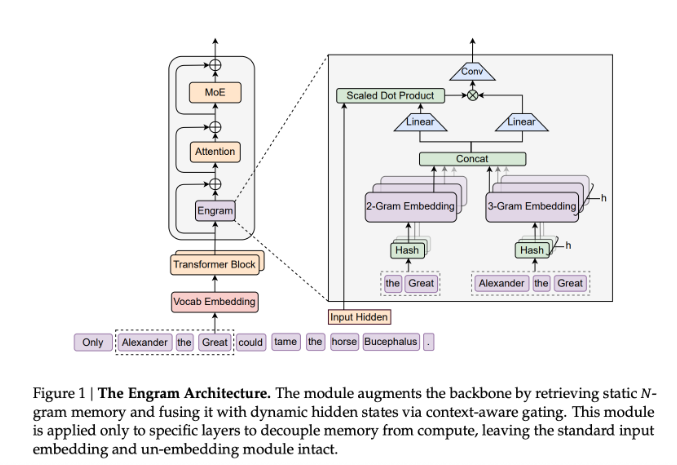
DeepSeek researchers have developed Engram, a clever add-on that helps large language models remember common phrases and facts more efficiently. Acting like a mental sticky note system, Engram lets AI focus its brainpower on complex reasoning while quickly recalling basic information. Early tests show impressive results - models equipped with Engram performed better across various tasks while using the same computing resources.

January 15, 2026
AI efficiencymachine learningnatural language processing
Chinese Researchers Teach AI to Spot Its Own Mistakes in Image Creation
News

Chinese Researchers Teach AI to Spot Its Own Mistakes in Image Creation

A breakthrough from Chinese universities tackles AI's 'visual dyslexia' - where image systems understand concepts but struggle to correctly portray them. Their UniCorn framework acts like an internal quality control team, catching and fixing errors mid-creation. Early tests show promising improvements in spatial accuracy and detail handling.

January 12, 2026
AI innovationcomputer visionmachine learning
Fine-Tuning AI Models Without the Coding Headache
News

Fine-Tuning AI Models Without the Coding Headache

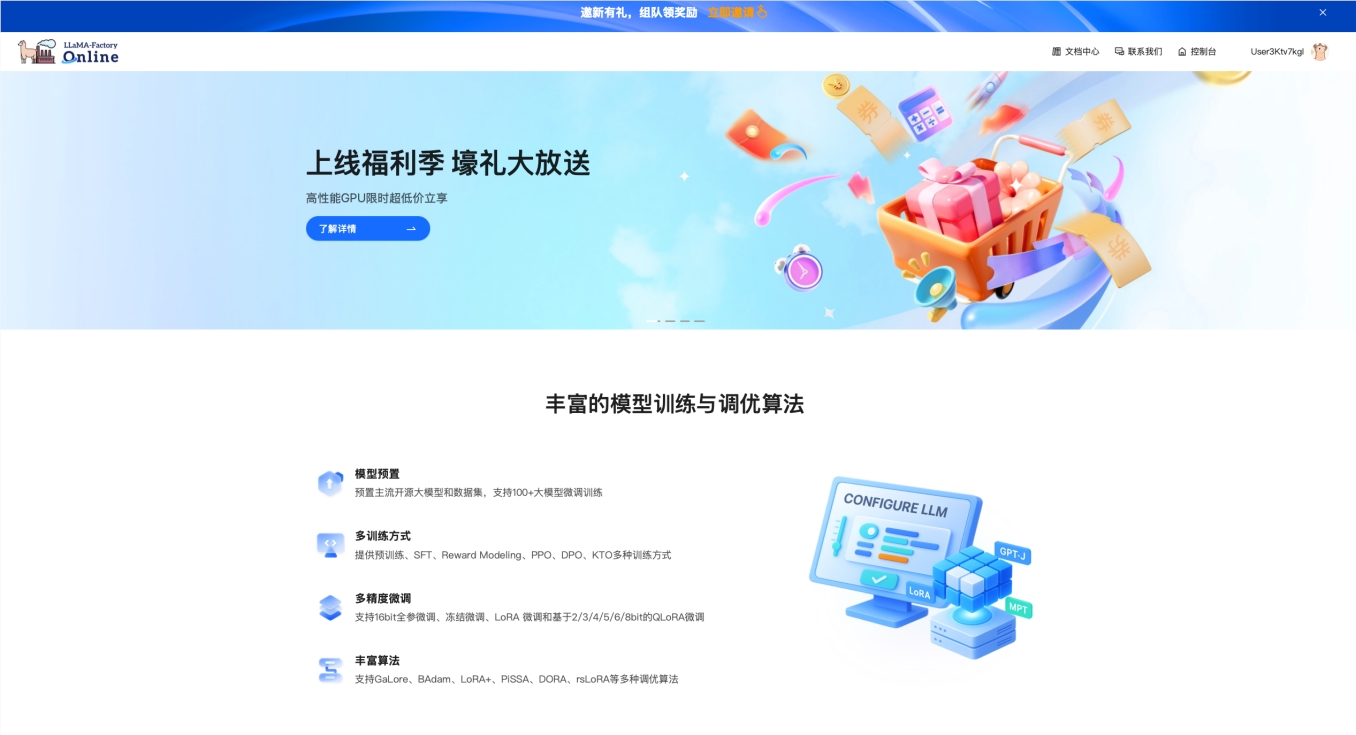
As AI models become ubiquitous, businesses face a challenge: generic models often miss the mark for specialized needs. Traditional fine-tuning requires coding expertise and expensive resources, but LLaMA-Factory Online changes the game. This visual platform lets anyone customize models through a simple interface, cutting costs and technical barriers. One team built a smart home assistant in just 10 hours - proving specialized AI doesn't have to be complicated or costly.

January 6, 2026
AI customizationno-code AImachine learning
Falcon H1R7B: The Compact AI Model Outperforming Larger Rivals
News

Falcon H1R7B: The Compact AI Model Outperforming Larger Rivals

The Abu Dhabi Innovation Institute has unveiled Falcon H1R7B, a surprisingly powerful 7-billion-parameter open-source language model that's rewriting the rules of AI performance. By combining innovative training techniques with hybrid architecture, this nimble contender delivers reasoning capabilities that rival models twice its size. Available now on Hugging Face, it could be a game-changer for developers needing efficient AI solutions.

January 6, 2026
AI innovationlanguage modelsmachine learning
News

Google DeepMind Forecasts AI's Next Leap: Continuous Learning by 2026

Google DeepMind researchers predict AI will achieve continuous learning capabilities by 2026, marking a pivotal moment in artificial intelligence development. This breakthrough would allow AI systems to autonomously acquire new knowledge without human intervention, potentially revolutionizing fields from programming to scientific research. The technology builds on recent advances showcased at NeurIPS 2025 and could lead to fully automated programming by 2030 and AI-driven Nobel-level research by mid-century.

January 4, 2026
AI evolutionmachine learningfuture tech
Tencent's New AI Brings Game Characters to Life with Simple Text Commands
News

Tencent's New AI Brings Game Characters to Life with Simple Text Commands

Tencent has open-sourced its groundbreaking HY-Motion 1.0, a text-to-3D motion generator that transforms natural language into lifelike character animations. This 10-billion-parameter model supports popular tools like Blender and Unity, making professional-grade animation accessible to more creators. While it excels at everyday movements, complex athletic actions still need refinement - but for game developers, this could be a game-changer.

December 31, 2025
AI animationgame developmentTencent