Swiss AI Model Apertus Breaks Open the Black Box

Swiss Researchers Launch Fully Transparent AI Model

In a bold challenge to the proprietary nature of modern artificial intelligence, Swiss research institutions have unveiled Apertus, an open-source language model that completely lifts the veil on AI development. The collaborative effort between École Polytechnique Fédérale de Lausanne (EPFL), ETH Zurich, and the Swiss National Supercomputing Centre (CSCS) represents a paradigm shift in AI transparency.

Image

Unprecedented Openness in AI Development

Unlike mainstream models from OpenAI, Meta, or Anthropic that guard their training methodologies as trade secrets, Apertus (Latin for "open") publishes:

  • Full model weights
  • Architecture blueprints
  • Training code repositories
  • Data collection recipes
  • Complete training documentation

"This isn't just open-source - it's radical transparency," explains Dr. Elena Müller, lead researcher at EPFL's AI Ethics Lab. "We're providing everything needed to understand exactly how this intelligence was created."

The Swiss Approach to Ethical AI

The project reflects Switzerland's growing influence in responsible technology development. By eliminating the "black box" nature of large language models (LLMs), researchers aim to:

  1. Enable verifiable safety audits
  2. Facilitate academic reproducibility
  3. Democratize access to cutting-edge AI tools
  4. Establish new industry standards for transparency

The model's architecture builds upon transformer technology but implements novel verification layers that track decision pathways - a feature made possible by the complete documentation of training data sources.

Global Implications for AI Research

Computer science departments worldwide have already begun incorporating Apertus into curricula. "Finally we can teach LLM principles using actual production-grade code," says MIT Professor Raj Patel. "This changes how we educate future AI developers."

The release coincides with growing regulatory pressure for explainable AI systems, particularly in European Union policy discussions. Industry analysts suggest Apertus may become the reference implementation for upcoming EU AI Act compliance.

Key Points:

  • First fully documented production-scale LLM
  • Collaborative project between Switzerland's top tech institutions
  • Complete technical specifications publicly available
  • Potential benchmark for upcoming AI regulations
  • Enables new research into model interpretability

Enjoyed this article?

Subscribe to our newsletter for the latest AI news, product reviews, and project recommendations delivered to your inbox weekly.

Weekly digestFree foreverUnsubscribe anytime

Related Articles

Microsoft's Harrier Model Breaks Language Barriers with Open-Source Release
News

Microsoft's Harrier Model Breaks Language Barriers with Open-Source Release

Microsoft's Bing team has open-sourced its powerful Harrier multilingual embedding model, supporting over 100 languages. Trained on 2 billion examples plus GPT-5 synthetic data, this technology promises to revolutionize search and AI applications. Developers can now access three model sizes on Hugging Face, with integration planned for Bing and next-gen AI services.

April 8, 2026
MicrosoftNatural Language ProcessingOpen Source AI
Google's Gemma4 Goes Truly Open: What It Means for Developers
News

Google's Gemma4 Goes Truly Open: What It Means for Developers

Google has taken a bold step with its latest AI model Gemma4, adopting the Apache 2.0 license to give developers unprecedented freedom. This marks a significant shift from previous restrictive policies, allowing commercial use and modification without legal hurdles. The new model boasts improved performance and seamless integration with existing developer tools, potentially leveling the playing field for smaller companies in the AI race.

April 3, 2026
Gemma4Open Source AIGoogle
Tongyi Lab's New AI Tool Brings Hollywood-Quality Dubbing to Everyone
News

Tongyi Lab's New AI Tool Brings Hollywood-Quality Dubbing to Everyone

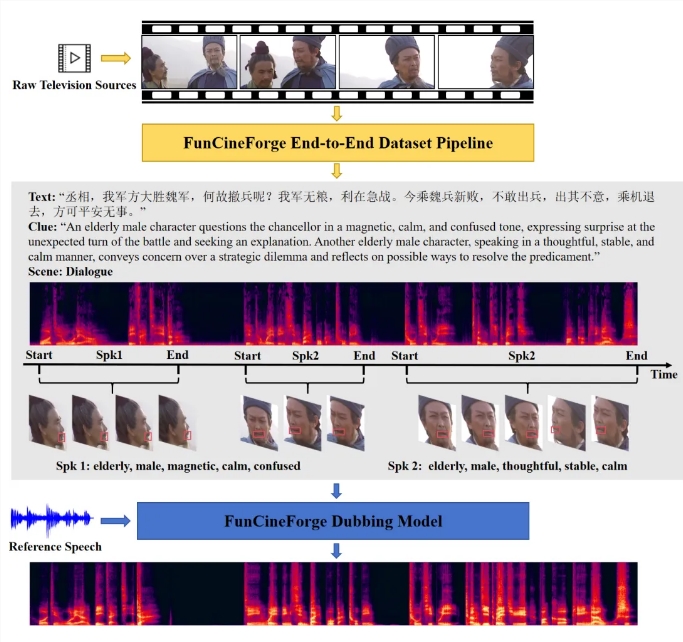
Tongyi Lab has unveiled Fun-CineForge, a groundbreaking open-source tool that solves one of AI dubbing's toughest challenges - realistic multi-person dialogue. Unlike traditional text-to-speech models, this film-grade system syncs voices with lip movements, maintains consistent character voices, and delivers emotional depth. The secret lies in its innovative four-modality fusion architecture and high-quality CineDub dataset. Early tests show it outperforms existing solutions, marking a significant leap forward for video localization and content creation.

March 16, 2026
AI DubbingVoice TechnologyOpen Source AI
News

JD.com Unveils Powerful JoyAI Model to Boost AI Innovation

Chinese e-commerce giant JD.com has open-sourced its new JoyAI-LLM-Flash model on Hugging Face. With 4.8 billion parameters and trained on 20 trillion text tokens, this AI powerhouse shows remarkable reasoning and programming capabilities. The innovative FiberPO framework helps solve traditional scaling issues while boosting efficiency.

February 16, 2026
JoyAILarge Language ModelsJD.com
China Telecom Takes AI Leap with Homegrown TeleChat3 Model
News

China Telecom Takes AI Leap with Homegrown TeleChat3 Model

China Telecom has unveiled TeleChat3, its latest AI model boasting full domestic development from chips to frameworks. Trained on a staggering 150 trillion tokens using China's own computing infrastructure, this model introduces innovative 'Thinking Mode' for transparent reasoning. The open-source release marks a significant step in China's push for AI self-reliance.

January 5, 2026
AI InnovationChinese TechnologyOpen Source AI
Ant Group's LLaDA2.0: A 100B-Parameter Leap in AI Language Models
News

Ant Group's LLaDA2.0: A 100B-Parameter Leap in AI Language Models

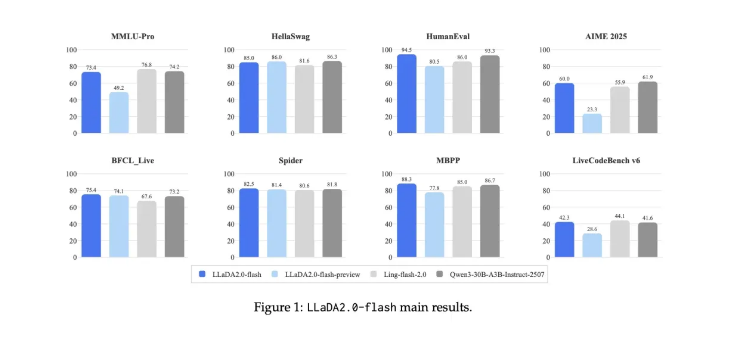
Ant Group has unveiled LLaDA2.0, a groundbreaking 100-billion-parameter diffusion language model that challenges conventional wisdom about scaling limitations. This innovative technology not only delivers faster processing speeds but also excels in complex tasks like code generation. By open-sourcing the model, Ant is inviting developers worldwide to explore its potential while pushing the boundaries of what diffusion models can achieve.

December 12, 2025
LLaDA2.0Diffusion ModelsAI Innovation