SenseTime Unveils Revolutionary AI That Sees, Reasons and Acts

SenseTime Breaks New Ground With Thinking AI Model

Shanghai-based artificial intelligence company SenseTime made waves yesterday with the release of SenseNova-MARS, a multimodal reasoning system that pushes the boundaries of what AI can do with visual information.

More Than Just Image Recognition

The new model represents a significant leap forward from conventional computer vision systems. Unlike typical AI that simply identifies objects in pictures, SenseNova-MARS demonstrates something approaching human-like reasoning abilities when processing visual data.

"This isn't just about recognizing a cat in a photo anymore," explains Dr. Li Wei, SenseTime's chief research scientist. "Our model can look at complex scenes, understand relationships between elements, and even plan actions based on what it sees."

How It Works Differently

The technology combines several cutting-edge approaches:

  • Dynamic Visual Processing: The system analyzes images while simultaneously considering contextual information
  • Integrated Search Capabilities: It can pull relevant external knowledge to enhance its understanding
  • Decision-Making Architecture: The model evaluates multiple potential responses before selecting the most appropriate action

Two versions are now available to developers worldwide:

Standard Version (8B) Ideal for mobile applications and edge computing devices where processing power is limited but responsiveness matters.

Advanced Version (32B) Designed for industrial applications requiring deep analysis and complex problem-solving capabilities.

The open-source release means researchers everywhere can now build upon SenseTime's work rather than starting from scratch.

Practical Applications Coming Soon?

The implications span numerous industries:

  • Healthcare: Could assist radiologists by not just spotting anomalies but suggesting possible diagnoses
  • Manufacturing: Might enable robots to troubleshoot assembly line issues autonomously
  • Retail: Potential to create virtual shopping assistants that understand customer needs visually
  • Smart Cities: May power traffic systems that don't just monitor but actively optimize flow patterns

The company hasn't announced specific partnerships yet, but industry watchers expect rapid adoption given the technology's versatility.

Key Points:

  • First commercially available "thinking" visual AI system
  • Combines image analysis with reasoning and planning capabilities
  • Open-source release includes standard and advanced versions
  • Potential applications across healthcare, manufacturing and urban infrastructure
Enjoyed this article?

Subscribe to our newsletter for the latest AI news, product reviews, and project recommendations delivered to your inbox weekly.

Weekly digestFree foreverUnsubscribe anytime

Related Articles

News

AI's Learning Gap: Why Machines Can't Grow from Failure Like Humans

A former OpenAI researcher reveals a critical flaw in today's AI systems: they can't learn from mistakes. Jerry Tworek, who helped develop key models at OpenAI, explains why this inability to adapt threatens progress toward true artificial general intelligence. Unlike humans who evolve through trial and error, current AI hits a wall when facing unfamiliar challenges - forcing experts to rethink fundamental architectures.

February 3, 2026
Artificial IntelligenceMachine LearningAGI
News

Tech Giants Fuel China's Robot Revolution with $700 Million Boost

China's robotics sector just got a major cash injection. The Beijing Humanoid Robot Innovation Center has secured over 700 million yuan in funding, backed by tech heavyweights like Baidu and Xiaomi. This national platform aims to accelerate breakthroughs in humanoid robot technology, bringing sci-fi visions closer to reality. Investors are betting big on embodied intelligence - the next frontier where machines interact physically with our world.

February 3, 2026
RoboticsArtificial IntelligenceTech Investment
Musk's xAI unveils Grok Imagine 1.0, bringing AI video into HD territory
News

Musk's xAI unveils Grok Imagine 1.0, bringing AI video into HD territory

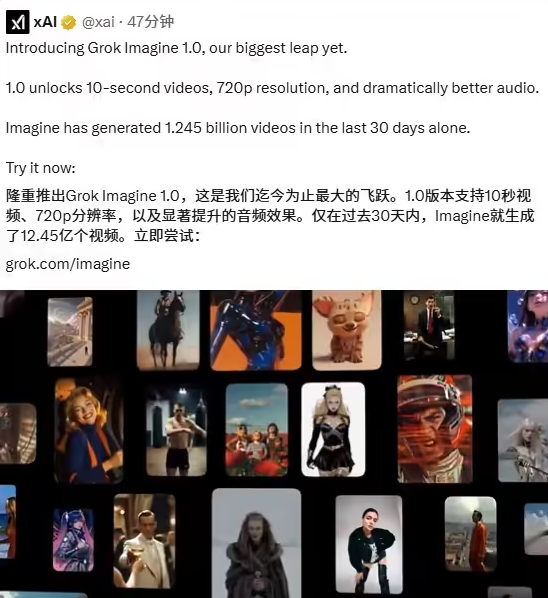
Elon Musk's xAI has officially launched Grok Imagine 1.0, marking a significant leap in AI video generation. The new version delivers crisp 720p videos up to 10 seconds long with enhanced audio quality. During its testing phase, the tool generated over a billion videos, showing strong user interest. This release follows xAI's strategic acquisition of video startup Hotshot last year, integrating their technology into the Grok ecosystem.

February 2, 2026
Artificial IntelligenceVideo TechnologyElon Musk
News

DeepMind Pioneer Bets on AI That Learns Like Humans

David Silver, the visionary behind DeepMind's AlphaGo, has left Google to pursue his bold new vision for artificial intelligence. His startup Ineffable Intelligence champions reinforcement learning - AI that learns through experience rather than just absorbing human knowledge. This departure signals a growing divide in AI research approaches as top talent explores alternatives to today's dominant large language models.

February 2, 2026
Artificial IntelligenceMachine LearningTech Startups
News

Alibaba Bets Big on AI with $420M Spring Festival Push

Alibaba is making its largest AI play yet, investing 3 billion yuan ($420M) to transform its Tongyi Qianwen platform during China's peak shopping season. The move shifts from traditional red envelope gifting to AI-powered lifestyle services, aiming to cement user habits and challenge existing app models. With deep ecosystem integration and stress-testing during high-traffic periods, this could redefine how Chinese consumers interact with technology.

February 2, 2026
AlibabaArtificial IntelligenceConsumer Tech
Major Security Flaw Leaves Thousands of AI Accounts Vulnerable
News

Major Security Flaw Leaves Thousands of AI Accounts Vulnerable

A shocking discovery has exposed sensitive data belonging to nearly 150,000 AI accounts on Moltbook, a platform often called 'AI Reddit.' Security researcher Jameson O'Reilly found the platform's entire database was publicly accessible due to a basic configuration error. This breach could allow attackers to hijack AI accounts, including influential ones with millions of followers. The incident highlights growing concerns about security shortcuts in AI development.

February 2, 2026
CybersecurityArtificial IntelligenceData Breach