Quark Unveils AI-Powered "Deep Research" for Automated Report Generation

Quark has introduced a groundbreaking AI feature called "Deep Research," designed to revolutionize how users approach complex research tasks. Powered by the Qwen large language model, the tool automates the entire research workflow—from gathering materials and analyzing data to extracting insights and generating polished reports.

Image

Currently accessible through limited invitations via Quark's app or desktop platform, users can submit research topics and receive structured reports within minutes. The system supports PDF exports, making it practical for academic investigations, market analyses, and professional presentations alike.

This release marks a significant evolution beyond Quark's earlier "Deep Search" capability. While the latter focused on breaking down queries and retrieving information, "Deep Research" tackles open-ended subjects requiring extended reasoning chains and sophisticated processing. The result? Higher-quality outputs that resemble professionally crafted documents rather than raw search results.

Imagine needing an in-depth industry analysis for an upcoming investor meeting—traditionally a days-long task. With this tool, you could have a draft ready before your next coffee break. Early adopters report the AI handles nuanced topics surprisingly well, though human review remains advisable for specialized subjects.

Quark positions this innovation as a shift from AI as merely an information tool to a collaborative content partner. The company plans continuous refinements based on user feedback, with roadmap items including expanded use cases and enhanced customization options.

For researchers drowning in data or professionals pressed for time, this could be a game-changer. But how will it impact traditional research roles? The answer may lie in how effectively humans leverage these tools rather than compete with them.

Key Points

  1. Automates end-to-end research processes including analysis and report generation
  2. Generates structured PDF outputs within minutes of topic submission
  3. Represents Quark's strategic pivot toward generative AI applications
  4. Currently available through invitation-only access with daily limits
  5. Targets complex, open-ended research tasks beyond simple information retrieval
Enjoyed this article?

Subscribe to our newsletter for the latest AI news, product reviews, and project recommendations delivered to your inbox weekly.

Weekly digestFree foreverUnsubscribe anytime

Related Articles

News

Google DeepMind CEO: 'We're Running Like a Startup Again'

Google DeepMind CEO Demis Hassabis reveals how breaking down internal barriers and focusing resources has transformed the company into an AI leader. By centralizing computing power and talent, DeepMind now operates with startup-like efficiency, enabling rapid breakthroughs. Hassabis claims about 90% of fundamental AI advances now originate from Google-affiliated labs, positioning them ahead of rivals like OpenAI.

April 9, 2026
AI ResearchCorporate InnovationTech Leadership
News

Alibaba's New AI Algorithm Pushes Reasoning Limits Beyond OpenAI's Mini Model

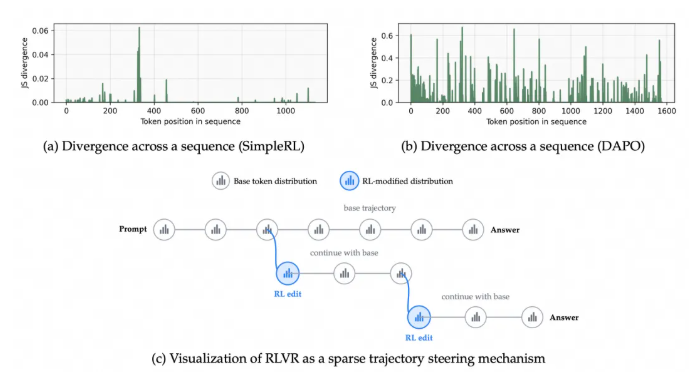
Alibaba's Tongyi Lab has unveiled FIPO, a groundbreaking algorithm that dramatically enhances AI reasoning capabilities. This innovation allows models to process over 10,000 tokens in complex problems, outperforming even OpenAI's o1-mini in certain benchmarks. The technology introduces clever mechanisms like Future-KL to help AI 'think ahead,' marking a significant leap in machine intelligence.

April 8, 2026
AI ResearchMachine LearningAlibaba
Alibaba's New Algorithm Helps AI Think More Like Humans
News

Alibaba's New Algorithm Helps AI Think More Like Humans

Alibaba's Tongyi Lab has developed a breakthrough algorithm called FIPO that helps large language models identify and focus on the most important parts of complex reasoning tasks. Unlike traditional methods that struggle to distinguish critical information, FIPO uses a novel 'Future-KL' mechanism to reward tokens that significantly impact later reasoning steps. Early tests show impressive results, with models handling reasoning chains over 10,000 tokens long while improving accuracy in mathematical problem-solving.

April 7, 2026
AI ResearchMachine LearningAlibaba
Beijing Greenlights 15 New AI Services in Latest Tech Push
News

Beijing Greenlights 15 New AI Services in Latest Tech Push

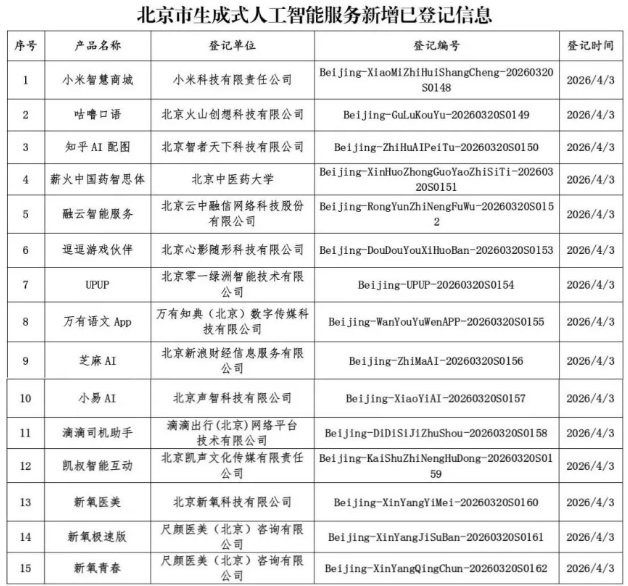
Beijing has approved 15 new generative AI services under its updated regulatory framework. The move signals China's continued commitment to AI development while implementing safeguards. Services must now display registration numbers and label AI-generated content clearly. This balancing act aims to foster innovation while protecting users in one of the world's most active AI markets.

April 3, 2026
AI RegulationGenerative AIChina Tech Policy
News

116 AI Innovations Honored with China's Prestigious Wu Wenjun Award

China's AI community celebrated its brightest minds as the 15th Wu Wenjun Artificial Intelligence Science and Technology Award recognized 116 groundbreaking projects. The awards highlight advancements in generative AI, large models, and embodied intelligence, with top honors going to Tsinghua's Professor Sun Fuchun and Chongqing University's Academician Song Yongduan. Industry applications in autonomous driving and healthcare signal China's growing AI ecosystem.

March 30, 2026
Artificial IntelligenceWu Wenjun AwardAI Research
OpenAI pulls plug on ChatGPT adult mode and Sora video tool in strategic pivot
News

OpenAI pulls plug on ChatGPT adult mode and Sora video tool in strategic pivot

OpenAI has abruptly halted plans for a controversial 'adult mode' in ChatGPT and shut down its Sora video generation model. The moves come as part of a broader strategic shift away from consumer-facing projects toward enterprise solutions. Industry analysts suggest the company is responding to competitive pressure from Anthropic's growing foothold in business applications.

March 27, 2026
OpenAIChatGPTAI Ethics