Peking University's Chip Breakthrough Slashes AI Power Needs Dramatically
Peking University Team Redefines AI Efficiency with Groundbreaking Chip
As artificial intelligence systems grow increasingly complex, their hunger for computing power threatens to become unsustainable. But researchers at Peking University's School of Artificial Intelligence may have found a solution that changes the game.
The Energy Dilemma in AI Computing
The team, led by Researcher Sun Zhong, tackled a fundamental problem: traditional digital chips struggle with the massive computations required by modern AI applications. "When processing large-scale data in real time," Sun explains, "digital chips hit walls - both in computational complexity and memory access limitations."
Their innovative approach? Turning to analog computing technology. Instead of relying solely on digital processing, the new chip harnesses physical laws to perform parallel computations directly. This fundamental shift reduces latency and power consumption at the hardware level.
Real-World Performance That Turns Heads
The numbers speak volumes about this breakthrough:
- 12x faster processing speeds compared to advanced digital chips
- 228x improvement in energy efficiency - a game-changer for sustainable AI development
- Maintains high precision while using half the storage space for image compression tasks
- Outperforms traditional hardware significantly in recommendation system training
The implications are profound. Imagine streaming services delivering personalized recommendations instantly while using a fraction of current energy costs, or medical imaging systems processing high-definition scans without overheating servers.
Why This Matters Beyond the Lab
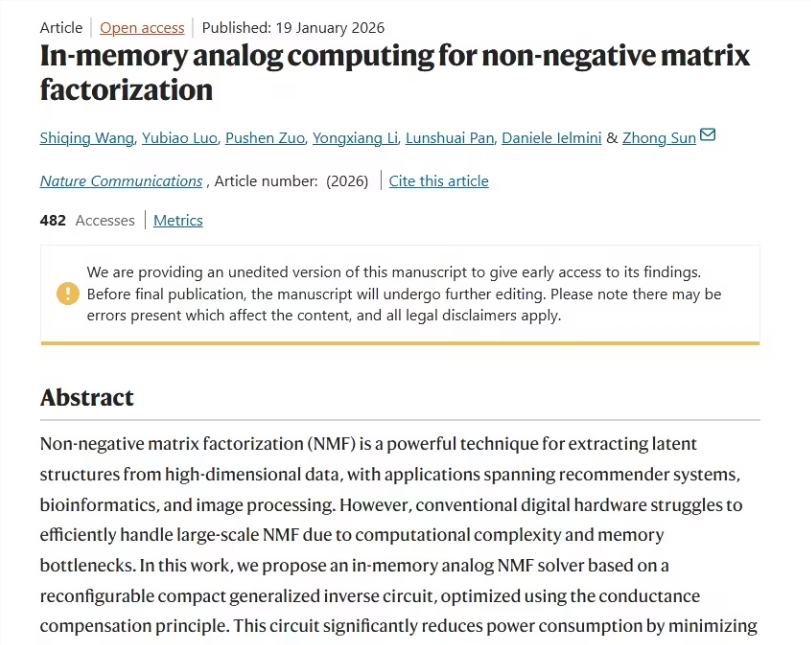
The research, published January 19th in Nature Communications, demonstrates how analog computing can handle real-world complex data with unprecedented efficiency. Sun Zhong sees broad applications ahead: "From real-time recommendations to high-definition image processing, this technology opens doors we couldn't previously imagine."
The timing couldn't be better. As global concerns grow about tech's environmental impact, solutions that deliver more computing power with less energy aren't just convenient - they're essential for sustainable technological progress.
Key Points:
- Analog Advantage: Physical-law-based parallel computing slashes power needs dramatically
- Performance Gains: Up to 12x speed boost and 228x better energy efficiency than digital chips
- Practical Applications: Excels in image compression (50% space savings) and recommendation systems
- Published Research: Findings appear in prestigious journal Nature Communications
- Future Potential: Could transform fields requiring intensive real-time data processing