Peking University and OceanBase Break New Ground in Long Video Search Technology

Revolutionizing Video Search: The LoVR Breakthrough

Imagine trying to find that perfect moment in a two-hour lecture video or locating a specific scene in a movie without scrubbing through endless footage. This frustrating experience might soon become history thanks to LoVR, a new benchmark developed by Peking University and OceanBase.

Solving the Long Video Puzzle

The digital world is drowning in video content - from online courses to surveillance footage - yet searching through lengthy videos remains surprisingly primitive. Traditional systems built for short clips falter when faced with feature-length content. LoVR changes this by addressing three fundamental challenges:

  • Granular Search Capability: Whether you need the entire video or just a 30-second clip, LoVR delivers precise results
  • Smart Annotation: Combining AI automation with human verification creates accurate descriptions at scale
  • Real-World Reliability: The system handles common issues like shifting contexts in long-form content

Behind the Technology

The numbers tell an impressive story:

  • 467 real-world long videos averaging 25 minutes each
  • Over 40,000 meticulously tagged segments with verified descriptions
  • Advanced semantic fusion that maintains context across entire videos

"This isn't just academic theory," explains one researcher involved in the project. "We've built practical tools that content platforms could implement tomorrow."

Why This Matters Now

The timing couldn't be better. As streaming services multiply and online education booms, the ability to navigate lengthy videos efficiently becomes crucial. Early tests show LoVR could power everything from smarter video search engines to AI-assisted editing tools.

The collaboration between academia and industry represented here signals an important shift - database companies moving beyond storage solutions into intelligent retrieval systems.

The WWW 2026 conference acceptance validates LoVR's potential to reshape how we interact with long-form video content.

Key Points:

  • First comprehensive standard for long video retrieval
  • Enables both broad searches and pinpoint accuracy
  • Combines AI efficiency with human verification
  • Practical applications across multiple industries
Enjoyed this article?

Subscribe to our newsletter for the latest AI news, product reviews, and project recommendations delivered to your inbox weekly.

Weekly digestFree foreverUnsubscribe anytime

Related Articles

News

DeepSeek V4 Arrives: A Multimodal AI Powerhouse

DeepSeek is gearing up to launch its V4 model, a significant upgrade featuring image, video, and text generation capabilities. The new version promises better compatibility with domestic chips and introduces a 'lite' variant with a massive 1 million token context window. With potential parameter counts reaching into the trillions, this release could redefine what's possible in multimodal AI applications.

March 2, 2026
AI innovationmultimodal technologydeep learning
Ant Group's Latest AI Model Breaks New Ground in Multimodal Tech
News

Ant Group's Latest AI Model Breaks New Ground in Multimodal Tech

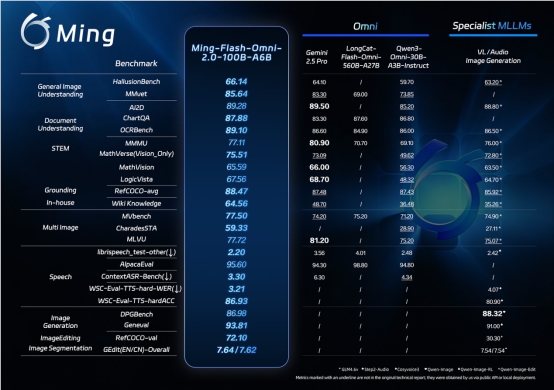
Ant Group has unveiled Ming-Flash-Omni 2.0, a cutting-edge multimodal AI model now available as open-source. This powerhouse outperforms competitors like Gemini 2.5 Pro in visual understanding and audio generation, while introducing groundbreaking features like unified audio track creation. Developers can now tap into these advanced capabilities for more integrated AI applications.

February 11, 2026
AI innovationmultimodal technologyopen-source AI
News

Robots Get a Sense of Touch with Groundbreaking New Dataset

A major leap forward in robotics arrived this week with the release of Baihu-VTouch, the world's first cross-body visual-tactile dataset. Developed collaboratively by China's National-Local Co-built Humanoid Robot Innovation Center and multiple research teams, this treasure trove contains over 60,000 minutes of real robot interaction data. What makes it special? The dataset captures not just what robots see, but how objects feel - enabling machines to develop human-like tactile sensitivity across different hardware platforms.

January 27, 2026
roboticsAI researchtactile sensing
Robots Get a Sense of Touch: Groundbreaking Dataset Bridges Vision and Feeling
News

Robots Get a Sense of Touch: Groundbreaking Dataset Bridges Vision and Feeling

Scientists have unveiled Baihu-VTouch, the world's most comprehensive dataset combining robotic vision and touch. This collection spans over 60,000 minutes of interactions across various robot types, capturing delicate contact details with remarkable precision. The breakthrough could revolutionize how robots handle delicate tasks - imagine machines that can actually 'feel' what they're doing.

January 26, 2026
roboticsAI researchtactile sensors
News

AI cracks famous math puzzle with a fresh approach

OpenAI's latest model has made waves in mathematics by solving a long-standing number theory problem. The solution to the Erdős problem caught the attention of Fields Medalist Terence Tao, who praised its originality. But behind this success lies a sobering reality - AI's overall success rate in solving such problems remains low, reminding us that these tools are assistants rather than replacements for human mathematicians.

January 19, 2026
AI researchmathematicsmachine learning
AI's Scientific Breakthrough: How FrontierScience Tests the Next Generation of Research Assistants
News

AI's Scientific Breakthrough: How FrontierScience Tests the Next Generation of Research Assistants

Artificial intelligence is making waves in scientific research, but how do we measure its true reasoning capabilities? The new FrontierScience benchmark puts AI models through rigorous testing in physics, chemistry, and biology. Early results show GPT-5.2 leading the pack, though human scientists still outperform when it comes to open-ended problem solving. This development could reshape how research gets done in labs worldwide.

December 17, 2025
AI researchscientific computingmachine learning benchmarks