OpenAI Takes Aim at Claude with Game-Changing 'Skills' Feature

OpenAI's Bold Move: Introducing Stackable AI Skills

In what could be ChatGPT's most significant upgrade since its launch, OpenAI is secretly developing a "Skills" feature that may redefine how we use AI assistants. Codenamed "Hazelnut," this innovation appears directly inspired by competitor Anthropic's successful implementation in Claude - but with some intriguing twists.
Image

Farewell to Static GPTs?

For years, ChatGPT users relied on customized GPTs - essentially predefined roles and knowledge sets. While useful, these remained somewhat rigid. The new Skills system represents a paradigm shift toward what insiders call "folder-based instruction." Instead of locking the AI into specific personas, Skills focuses on teaching adaptable capabilities.

Imagine training your AI assistant like you would a talented intern: showing it not just what to know, but how to think through problems in your field. That's the promise of Skills.

Learning from Claude - Then Raising the Stakes

Anthropic's Claude demonstrated the power of this approach with features like its front-end design plugin, which gives the AI remarkable intuition for web development tasks. OpenAI's version reportedly builds on this foundation while adding four key advantages:

  • Mix-and-match abilities: Need help analyzing data AND writing a report? The system intelligently combines relevant skills.
  • Universal compatibility: Build once, deploy everywhere - whether you're using ChatGPT via browser, app, or API.
  • Lightning-fast performance: Unlike memory-hogging alternatives, Skills load only when needed.
  • Real coding power: Forget fuzzy approximations - these skills can write and execute actual code snippets.

What Users Can Expect

Social media leaks from insider Tibor suggest some exciting practical features:

  • Slash commands (/analyze, /summarize) for near-instant access to frequently used skills
  • A dedicated skill editor for creating custom capabilities
  • One-click conversion tools to transform existing GPTs into dynamic skills The anticipated January 2026 release could mark ChatGPT's evolution from conversational bot to true intelligent assistant - one that doesn't just chat but genuinely works alongside you.

Key Points:

  • OpenAI developing "Skills" (codenamed Hazelnut) as successor to GPTs
  • Inspired by Claude but with enhanced flexibility and power
  • Enables teaching workflows rather than just static knowledge
  • Features include slash commands and GPT conversion tools
  • Expected release early 2026

Enjoyed this article?

Subscribe to our newsletter for the latest AI news, product reviews, and project recommendations delivered to your inbox weekly.

Weekly digestFree foreverUnsubscribe anytime

Related Articles

Sakana AI's Tiny Plugin Could Revolutionize How AI Handles Massive Documents
News

Sakana AI's Tiny Plugin Could Revolutionize How AI Handles Massive Documents

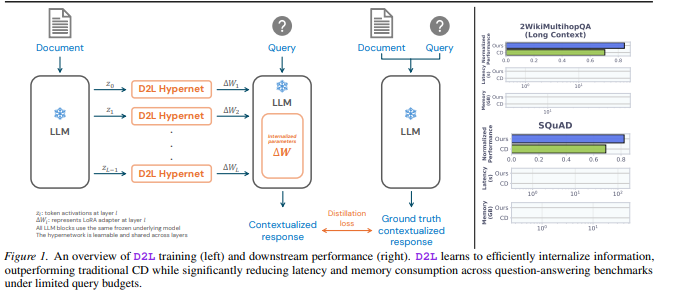
Tokyo-based Sakana AI has unveiled groundbreaking technologies that could solve large language models' notorious 'memory anxiety.' Their Text-to-LoRA and Doc-to-LoRA systems enable AI to digest lengthy documents in under a second, shrinking memory requirements from gigabytes to mere megabytes. This breakthrough promises to make customizing AI models dramatically cheaper and more accessible.

February 28, 2026
AI InnovationMachine LearningNatural Language Processing
Corgi Codes: How a Dog's Random Typing Spawned a Video Game
News

Corgi Codes: How a Dog's Random Typing Spawned a Video Game

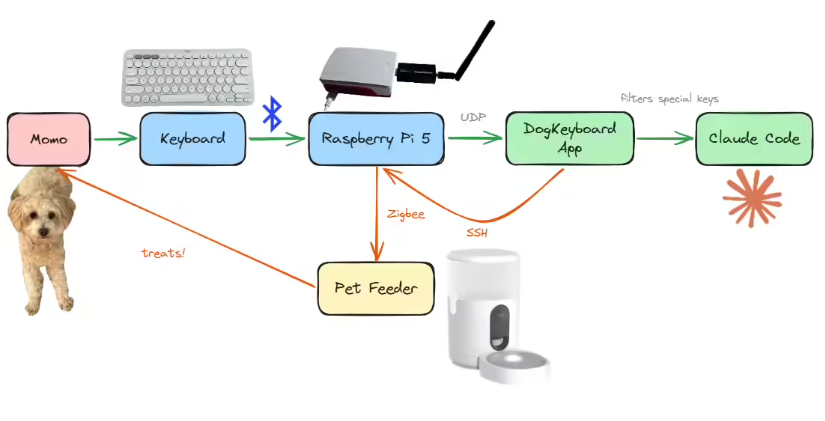
In an experiment that blurs the line between canine antics and AI innovation, former Meta engineer Caleb Leak turned his corgi Momo's keyboard taps into a fully functional video game. Using Claude Code and some clever programming tricks, Momo's random typing sessions produced 'Quasar Saz' - a cosmic adventure game complete with boss battles. This playful project raises fascinating questions about AI's creative potential when guided by unconventional inputs.

February 27, 2026
AI CreativityExperimental ProgrammingHuman-AI Collaboration
Google's Gemini 3.1 Pro Outshines Competitors With Breakthrough Reasoning Skills
News

Google's Gemini 3.1 Pro Outshines Competitors With Breakthrough Reasoning Skills

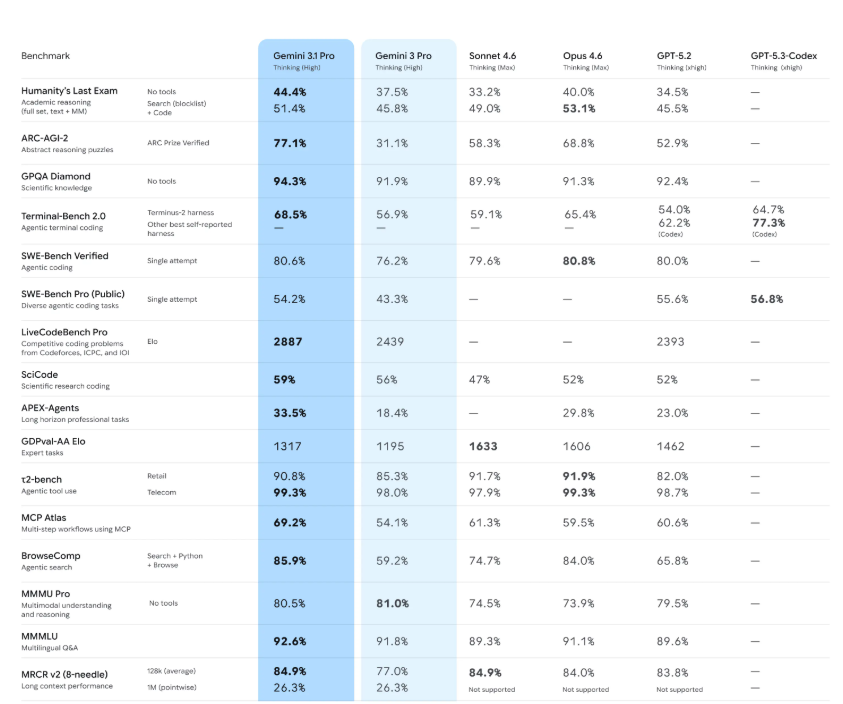
Google has unveiled Gemini 3.1 Pro, its most advanced AI model yet, showcasing remarkable improvements in logical reasoning and problem-solving. The new architecture delivers more than double the performance of its predecessor in critical tests, even surpassing GPT-5.2 in some benchmarks. Beyond raw power, Gemini 3.1 Pro introduces innovative multimodal capabilities, handling ultra-long contexts and generating visual representations of complex concepts.

February 24, 2026
AI InnovationGoogle TechMachine Learning
Google's Gemini 3.1 Pro Doubles Down on AI Reasoning Power
News

Google's Gemini 3.1 Pro Doubles Down on AI Reasoning Power

Google has unveiled Gemini 3.1 Pro, its latest AI model that dramatically improves reasoning capabilities. Benchmarks show it outperforms its predecessor by more than double in logical processing tests. The tech giant is making the model widely available through multiple platforms, offering enhanced features for premium subscribers.

February 20, 2026
AI InnovationGoogle TechMachine Learning
Alibaba's Qwen3.5-Plus Shatters Records as New Open-Source AI Champion
News

Alibaba's Qwen3.5-Plus Shatters Records as New Open-Source AI Champion

Just in time for Chinese New Year celebrations, Alibaba has unleashed Qwen3.5-Plus - an open-source AI powerhouse that outperforms industry giants while costing far less. This revolutionary model packs serious innovation into its compact framework, delivering multimodal capabilities and smashing benchmarks across the board. Developers worldwide now have free access to technology that rivals premium offerings from Google and OpenAI.

February 17, 2026
AI InnovationOpen Source TechnologyMachine Learning
News

JD.com Unveils Powerful JoyAI Model to Boost AI Innovation

Chinese e-commerce giant JD.com has open-sourced its new JoyAI-LLM-Flash model on Hugging Face. With 4.8 billion parameters and trained on 20 trillion text tokens, this AI powerhouse shows remarkable reasoning and programming capabilities. The innovative FiberPO framework helps solve traditional scaling issues while boosting efficiency.

February 16, 2026
JoyAILarge Language ModelsJD.com