
OpenAI Shifts Gears: Betting Big on American-Made AI Hardware

OpenAI Charts New Course Toward U.S. Manufacturing

In a bold strategic shift, OpenAI announced plans to deepen its investment in American-made artificial intelligence hardware. The move comes as the company seeks to build what it calls "a more complete AI ecosystem" that extends beyond software development.

Building Bridges Between Bits and Atoms

The initiative includes a new Request for Proposal (RFP) targeting U.S. businesses across three critical sectors:

  • Data center infrastructure: Seeking high-performance input devices optimized for AI workloads
  • Consumer electronics: Looking for hardware platforms that can integrate OpenAI's AI capabilities
  • Robotics technology: Calling for partners with precision manufacturing expertise

"We're not just talking about algorithms anymore," explained an industry analyst familiar with the plans. "When AI starts needing physical bodies—whether those are smart devices or robotic arms—where and how those components get made becomes strategically important."

Why Domestic Production Matters

The push aligns with broader trends:

  1. Supply chain resilience: Recent global disruptions have shown the risks of over-reliance on overseas manufacturing
  2. Technological sovereignty: Governments worldwide increasingly view AI hardware as critical infrastructure
  3. Performance optimization: Tight integration between hardware and software can unlock new capabilities

The RFP emphasizes "end-to-end controllability," suggesting OpenAI wants greater oversight of its entire production pipeline rather than just the software layer.

Reading Between the Lines

CEO Sam Altman has dropped hints about this direction for years, frequently stating that "AI needs physical carriers." His personal investments in hardware startups now appear prescient rather than peripheral.

The timing also seems significant—coming just months after major federal initiatives aimed at reshoring critical technologies. While OpenAI hasn't disclosed dollar figures, observers estimate hundreds of millions could flow into domestic manufacturing partnerships.

The implications extend beyond any single company: As AI matures, competitive advantage may depend as much on factory floors as on research labs.

Key Points:

  • OpenAI seeks U.S.-based partners for hardware production
  • Focus areas include data center equipment, consumer devices, and robotics
  • Move reflects broader industry shift toward vertical integration
  • Strategy aligns with government priorities around tech independence
  • Signals transition from pure software to embodied AI products
Enjoyed this article?

Subscribe to our newsletter for the latest AI news, product reviews, and project recommendations delivered to your inbox weekly.

Weekly digestFree foreverUnsubscribe anytime

Related Articles

News

OpenAI Seeks U.S. Partners to Strengthen AI Hardware Independence

OpenAI is actively recruiting American manufacturers to build a robust domestic supply chain for AI hardware. The initiative, open until June 2026, targets everything from data center cooling systems to robotics components. This strategic move aligns with U.S. re-industrialization efforts and aims to reduce reliance on foreign suppliers amid global supply chain shifts.

January 16, 2026
OpenAIAI HardwareSupply Chain
News

China's Smartphone Giants Race to Reinvent the Humble Button with AI

China's top smartphone brands are quietly revolutionizing mobile interaction through an unexpected feature - AI-powered physical buttons. Honor appears poised to lead this charge with its upcoming Magic8 RSR, building on its existing YOYO intelligent agent technology. While some dismiss it as just another shortcut key, industry insiders see potential for these buttons to transform passive AI into proactive assistance across devices.

January 15, 2026
Smartphone InnovationAI HardwareMobile Technology
News

OpenAI Bets Big on Cerebras' Giant Chips to Challenge NVIDIA

OpenAI is partnering with Cerebras Systems to build what could become the world's most powerful AI inference platform. The $10 billion deal will deploy wafer-scale chips that promise 15x faster performance than traditional GPUs, marking a significant shift in AI infrastructure strategy. This collaboration reflects growing industry demand for alternatives to NVIDIA's dominance as AI models scale.

January 15, 2026
AI HardwareSemiconductorsTech Partnerships
News

Dell's GB10 Brings Supercomputer Power to Your Desk

Dell's new Pro Max with GB10 system packs serious AI muscle into a desktop-sized package. With 128GB unified memory and NVIDIA's Blackwell architecture, developers can now fine-tune models up to 20 billion parameters locally - no cloud required. The compact powerhouse weighs just 1.2kg but delivers performance that could reshape how AI teams prototype and iterate.

January 9, 2026
AI HardwareLocal ComputingNVIDIA Blackwell
Baidu's AI Chip Arm Kunlun Takes Leap Toward Hong Kong IPO
News

Baidu's AI Chip Arm Kunlun Takes Leap Toward Hong Kong IPO

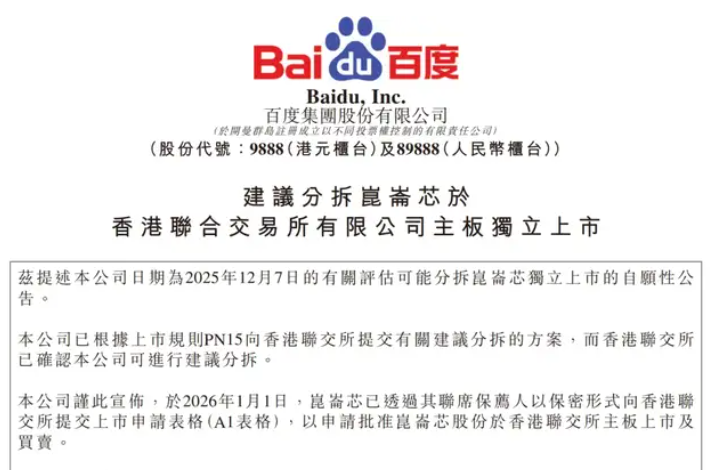
Baidu's semiconductor subsidiary Kunlun Xing has filed for a Hong Kong listing, marking a significant step in China's AI chip ambitions. The spin-off, which became China's second-largest AI chip shipper since operating independently in 2021, traces its roots to Baidu's early FPGA accelerator projects. Market watchers see the move as both a strategic play for Baidu and a potential game-changer for domestic chip innovation.

January 6, 2026
SemiconductorsAI HardwareTech IPOs
News

Nvidia's Rubin AI Chips Promise Quantum Leap in Computing Power

Nvidia has unveiled its groundbreaking Rubin chip architecture at CES, marking a significant leap forward in AI computing capabilities. The new system, already in production, delivers 3.5x faster training and 5x quicker inference than its predecessor. Major tech players like OpenAI and AWS are already on board, with supercomputer projects lining up to harness Rubin's power. This innovation comes as the AI infrastructure race heats up, with Nvidia predicting hundreds of billions in sector investments.

January 6, 2026
AI HardwareChip TechnologyNvidia