OpenAI's New AI Assistant Could Revolutionize Drug Discovery

OpenAI Takes Aim at Medical Research With New AI Model

In a move that could reshape pharmaceutical research, OpenAI launched GPT-Rosalind on April 16th - a specialized AI assistant for life sciences. The model honors Rosalind Franklin, whose crucial work led to understanding DNA's structure, and aims to bring similar breakthroughs to modern drug development.
Image

How GPT-Rosalind Works

The AI analyzes vast amounts of biochemical data to help researchers with:

  • Generating and testing hypotheses
  • Planning laboratory experiments
  • Engineering protein structures
  • Synthesizing existing medical literature

"What makes this exciting," explains a pharmaceutical researcher testing the model, "is how it bridges the gap between lab research and practical treatments. The AI doesn't replace scientists - it gives them superpowers."

Early Adopters and Capabilities

Currently available as a research preview, GPT-Rosalind's first partners read like a who's who of medical innovation:

  • Amgen (biopharmaceutical leader)
  • Moderna (pioneer in mRNA vaccines)
  • Thermo Fisher Scientific
  • Allen Institute (non-profit research organization)

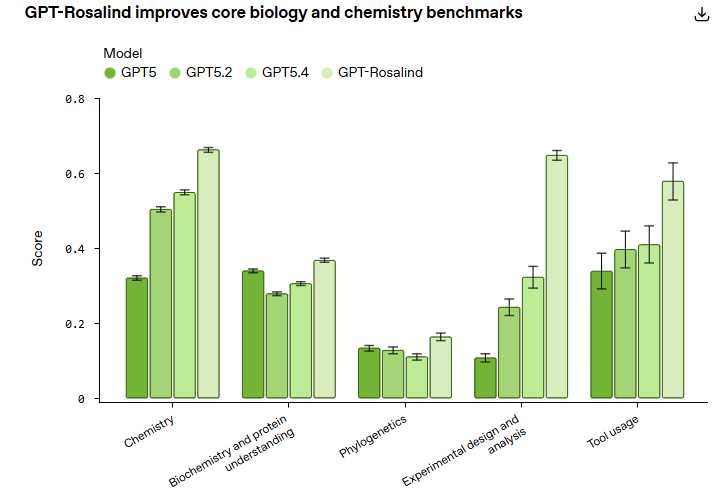
Early benchmarks show the model outperforming human experts in certain predictive tasks, particularly in genomics and chemistry. OpenAI also released complementary plugins connecting to 50+ scientific databases and tools, creating a comprehensive research ecosystem.

The Bigger Picture

This launch positions OpenAI directly against Google's DeepMind in the race to revolutionize scientific research through AI. As these models evolve from conversational tools to research assistants, they're changing how discoveries happen. The announcement sent ripples through biotech markets, with several companies' stock prices reacting to the news.

While some researchers caution that AI can't replace decades of laboratory experience, most agree tools like GPT-Rosalind will dramatically accelerate the pace of medical breakthroughs. For patients awaiting new treatments, that acceleration can't come soon enough.

Key Points:

  • OpenAI's new model specializes in pharmaceutical and life sciences research
  • Named after DNA pioneer Rosalind Franklin
  • Currently in limited release with major industry partners
  • Shows promise in genomics and chemistry applications
  • Complements existing research rather than replacing scientists
  • Part of growing trend of AI assisting scientific discovery
Enjoyed this article?

Subscribe to our newsletter for the latest AI news, product reviews, and project recommendations delivered to your inbox weekly.

Weekly digestFree foreverUnsubscribe anytime

Related Articles

News

OpenAI Bets Big on Cerebras with $2B Investment and Potential Stake

OpenAI is making a massive $2 billion investment in AI chipmaker Cerebras, securing computing power and potentially up to 10% equity. This deepens their existing partnership, following a previous $10 billion computing deal. The move comes as Cerebras prepares for an IPO, valuing the company at $35 billion. The deal highlights the intense demand for AI computing infrastructure as companies race to build next-generation AI systems.

April 17, 2026
OpenAICerebrasAI Chips
News

Cerebras and OpenAI Strike $20 Billion AI Chip Deal Ahead of IPO

In a landmark deal, AI chipmaker Cerebras has secured a $2 billion agreement with OpenAI, marking one of the largest partnerships in the AI hardware space. The three-year contract includes a $1 billion investment from OpenAI for data center development and potential equity stakes. Meanwhile, Cerebras eyes a public listing that could value the company at over $35 billion, signaling growing investor confidence in specialized AI processors.

April 17, 2026
Artificial IntelligenceSemiconductorsTech IPOs
ChatGPT Hits 1 Billion Users as Women Take the Lead
News

ChatGPT Hits 1 Billion Users as Women Take the Lead

OpenAI's latest figures reveal a major shift in ChatGPT's user base - women now make up over half of its nearly 1 billion weekly active users. This marks a dramatic change from its early days when male users dominated at 80%. The AI platform's computing power is also set for massive expansion, expected to grow nearly tenfold by 2025 as adoption surges across demographics.

April 17, 2026
ChatGPTAI TrendsOpenAI
OpenAI Unveils GPT-Rosalind: AI That Could Revolutionize Drug Discovery
News

OpenAI Unveils GPT-Rosalind: AI That Could Revolutionize Drug Discovery

OpenAI has taken a bold step into life sciences with GPT-Rosalind, a specialized AI model named after DNA pioneer Rosalind Franklin. Unlike general chatbots, this tool can analyze protein structures, predict gene functions, and suggest experimental pathways—outperforming human experts in some tests. Currently available only to select biotech firms, it promises to accelerate drug development while raising important questions about AI's role in scientific discovery.

April 17, 2026
AI-in-biotechdrug-discoveryOpenAI
OpenAI's Codex Gets Smarter: Now Controls Your Mac Like a Pro
News

OpenAI's Codex Gets Smarter: Now Controls Your Mac Like a Pro

OpenAI just gave its Codex AI assistant some serious upgrades. The tool can now control Mac applications independently, run multiple tasks simultaneously, and remember your workflow preferences for days. Imagine having a digital assistant that clicks, types, and browses for you - that's what Codex delivers with this update. Developers will particularly love how it seamlessly picks up paused projects and even suggests next steps.

April 17, 2026
AI ProgrammingMac AutomationOpenAI
AI Coding Assistants Clash: OpenAI's Codex Upgrade Takes On Anthropic's Claude
News

AI Coding Assistants Clash: OpenAI's Codex Upgrade Takes On Anthropic's Claude

The battle for dominance in AI-powered coding tools heats up as OpenAI unveils major upgrades to Codex, introducing background operation and browser integration. Meanwhile, Anthropic's Claude Code continues gaining enterprise traction. This latest volley brings enhanced memory features, image generation, and flexible pricing - pushing AI programming assistants into new territory.

April 17, 2026
AI programmingOpenAIdeveloper tools