OpenAI Brings Codex AI Assistant to Windows, Attracts 1.6 Million Developers

OpenAI's Codex Makes Windows Debut With Powerful New Features

The wait is over for Windows developers eager to tap into AI-assisted coding. OpenAI has officially launched its Codex application for Windows systems, bringing sophisticated AI capabilities directly to Microsoft's platform.
Image

Revolutionizing Developer Workflows

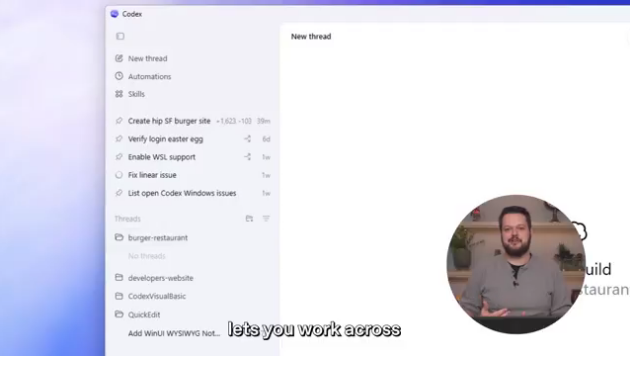
Codex represents more than just smart autocomplete—it's reshaping how developers work:

  • Multi-tasking made easy: Run multiple AI agents across different projects simultaneously
  • Automation at your fingertips: Delegate repetitive coding tasks while you focus on architecture
  • Seamless integration: Connect Codex with your existing tools through customizable plugins
  • Full control maintained: Monitor and guide AI agents without losing context mid-task

The response has been overwhelming. "We've seen developers gain back hours each day," says an OpenAI spokesperson. "It's like having an entire team of junior developers working alongside you."

Built Specifically for Windows Users

The Windows version introduces groundbreaking technical solutions:

Native Sandbox Environment Features:
✔ OS-level security isolation 
✔ Restricted token system 
✔ Dedicated file system access 
✔ Special sandbox user accounts 

The native sandbox means developers can work directly in PowerShell and other Windows environments—no need for WSL or virtual machines. OpenAI has even open-sourced the sandbox code on GitHub.

By the Numbers: Explosive Growth Continues

The adoption metrics tell a compelling story:

  • Mac version surpassed 1 million downloads in its first week alone
  • Over 500,000 developers signed up for the Windows waitlist pre-launch
  • Weekly active users now exceed 1.6 million globally

The tool remains available exclusively to ChatGPT paid subscribers—a strategic move that appears to be driving premium subscriptions.

Key Points:

✅ Native Windows support eliminates virtualization needs ✅ Secure sandbox environment protects developer systems ✅ Multi-agent processing boosts productivity significantly ✅ Growing community of 1.6M+ active weekly users


Enjoyed this article?

Subscribe to our newsletter for the latest AI news, product reviews, and project recommendations delivered to your inbox weekly.

Weekly digestFree foreverUnsubscribe anytime

Related Articles

ChatGPT rolls out smart age detection to protect young users
News

ChatGPT rolls out smart age detection to protect young users

OpenAI is introducing an innovative age prediction system for ChatGPT that analyzes user behavior to identify minors. When the AI detects someone under 18, it automatically activates protective filters that block sensitive content. The feature includes optional identity verification through Persona, requiring selfies or IDs for confirmation. Launching first in Europe, this move shows OpenAI's commitment to creating safer digital spaces for teenagers as AI becomes more prevalent in daily life.

April 20, 2026
ChatGPTonline safetyAI ethics
OpenAI Shake-Up: Three Top Executives Exit Amid Strategic Shifts
News

OpenAI Shake-Up: Three Top Executives Exit Amid Strategic Shifts

OpenAI faces a leadership crisis as three senior executives resigned simultaneously. Kevin Werth, Bill Pibbels, and Srinivas Narayanan - all key figures in the company's scientific research and product development - announced their departures on April 19. The shake-up comes as OpenAI discontinues its Sora video tool amid high operating costs and decentralizes its research department. Industry watchers see this as part of broader challenges facing the AI pioneer in a rapidly evolving market.

April 20, 2026
Artificial IntelligenceCorporate RestructuringExecutive Changes
News

OpenAI Bets Big on Cerebras with $2B Chip Deal and Potential Stake

In a major power move, OpenAI is investing over $20 billion in Cerebras Systems for AI chip technology, with the potential to acquire up to 10% equity. The deal expands their existing partnership and could total $30 billion when including data center development funding. This strategic play comes as Cerebras prepares for a possible IPO later this year, highlighting the intensifying race for AI computing power.

April 17, 2026
OpenAICerebrasAI Chips
OpenAI's New AI Model GPT-Rosalind Aims to Revolutionize Drug Discovery
News

OpenAI's New AI Model GPT-Rosalind Aims to Revolutionize Drug Discovery

OpenAI has unveiled GPT-Rosalind, a specialized AI model for life sciences research. Named after DNA pioneer Rosalind Franklin, this tool helps researchers analyze biochemical data, generate hypotheses, and accelerate drug development. Currently in limited preview with partners like Amgen and Moderna, it outperforms humans in some predictive tasks while raising questions about AI's role in scientific research.

April 17, 2026
AI in healthcareDrug discoveryOpenAI
News

ChatGPT's Gender Milestone: Women Now Majority in AI Adoption

In a significant shift for the AI landscape, women have surpassed men as the majority users of ChatGPT, marking a cultural turning point in technology adoption. The latest data reveals female users now represent over 50% of the platform's near-billion user base, a dramatic change from the 80-20 male dominance at launch. Meanwhile, OpenAI's computing power expansion signals aggressive plans for future AI development.

April 17, 2026
AI trendsChatGPTtechnology demographics
News

OpenAI Bets Big on Cerebras Chips with $2B Deal Ahead of IPO

In a major power play for AI hardware dominance, OpenAI has committed over $2 billion to Cerebras Systems in a three-year chip supply deal that doubles their previous agreement. The partnership goes beyond chips - OpenAI is investing $1 billion to help build Cerebras' data center infrastructure while securing warrants for up to 10% ownership. Meanwhile, Cerebras eyes a blockbuster IPO valuing the company at $35+ billion, looking to raise $3 billion as demand for specialized AI processors skyrockets.

April 17, 2026
AI chipsCerebrasOpenAI