OpenAI's New AI Model GPT-Rosalind Aims to Revolutionize Drug Discovery
OpenAI Takes AI Into the Lab With New Drug Discovery Model
In a move that could reshape pharmaceutical research, OpenAI has introduced GPT-Rosalind, a specialized artificial intelligence model designed specifically for life sciences. The announcement, made on April 16th, marks the company's bold entry into scientific AI - a field currently dominated by Google's DeepMind and Anthropic.
Honoring a Scientific Pioneer
The model's name pays tribute to Rosalind Franklin, the brilliant but often overlooked scientist whose work was crucial to understanding DNA's structure. Much like Franklin's groundbreaking discoveries, OpenAI hopes GPT-Rosalind will reveal hidden patterns in complex biological data that humans might miss.
"We're not just building another chatbot," explained an OpenAI representative. "This is about creating a research partner that can help scientists move from lab bench to bedside faster."
How It Works
Trained on massive datasets of biochemical information, GPT-Rosalind assists with:
- Synthesizing research evidence
- Generating testable hypotheses
- Planning experimental approaches
- Analyzing protein engineering challenges
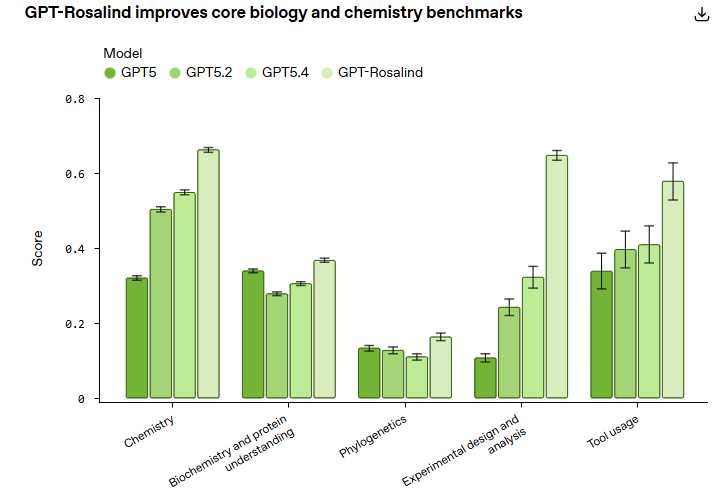
Early benchmarks show the model performing exceptionally well on LABBench2 tests, even surpassing human experts in certain predictive tasks. It comes paired with a plugin connecting to over 50 scientific databases and tools - think of it as a supercharged research assistant that never sleeps.
Industry Impact
The initial research preview includes heavyweight partners like Amgen, Moderna, and Thermo Fisher Scientific, along with the non-profit Allen Institute. Their involvement suggests serious industry interest, though some biotech stocks showed volatility following the announcement.
"There's healthy skepticism about whether AI can truly replace decades of R&D experience," noted a pharmaceutical analyst. "But nobody wants to be left behind if this technology delivers on its promise."
The Bigger Picture
This launch signals AI's evolution from conversational tools to specialized research infrastructure. As major labs increasingly adopt these technologies, we're witnessing a quiet revolution in how scientific discovery happens. The question isn't whether AI will change drug development, but how quickly - and who will lead that change.
Key Points
- Specialized focus: GPT-Rosalind targets life sciences, unlike general-purpose AI models
- Current partners: Includes major players like Amgen and Moderna
- Capabilities: Excels at data analysis, hypothesis generation, and experimental planning
- Industry reaction: Mixed responses with some stock market fluctuations
- Future implications: Could accelerate drug development timelines significantly