NVIDIA's Huang Calls for Calm in AI Debate: Separate Real Risks from Hype

Tech Leader Warns Against AI Fearmongering

San Jose, CA - In a packed keynote at this year's GTC technology conference, NVIDIA CEO Jensen Huang struck a measured tone about artificial intelligence risks that stood in stark contrast to the alarmist rhetoric dominating recent headlines.

"We need clear-eyed discussion, not science fiction nightmares," Huang told the audience of developers and industry executives. "AI doesn't have a heartbeat or consciousness - it's lines of code we wrote ourselves."

Ethics vs. Innovation Dilemma

The timing of Huang's remarks couldn't be more pointed. His call for restraint comes as AI startup Anthropic battles the U.S. government over contract terms prohibiting military use of its Claude chatbot. The standoff escalated last week when federal officials labeled Anthropic a "supply chain risk" and moved to cancel all government contracts.

Huang acknowledged the tension between ethical concerns and technological progress: "When discussions about safety turn into blanket prohibitions, we risk falling behind competitors who don't share our scruples."

Trillion-Dollar Predictions

Despite current controversies, Huang expressed bullish optimism about AI's economic potential. He projected that Anthropic alone could generate over $1 trillion in revenue by 2030 - a figure even higher than the company's own leadership has forecasted.

"The companies solving hard problems today will define tomorrow's landscape," he noted, pointing to NVIDIA's own 40% revenue growth last quarter driven by AI chip demand.

The Real Supply Chain Threat

Beyond philosophical debates, Huang emphasized concrete challenges in semiconductor manufacturing:

  • Geographic concentration risks with over 90% of advanced chips made in Taiwan
  • Strategic diversification efforts underway in South Korea, Japan and U.S. facilities
  • Long-term resilience as critical for national security interests

"Our biggest danger isn't rogue algorithms," Huang concluded, "but losing our technological edge because we spent more time worrying than building."

The hour-long speech drew sustained applause from an audience clearly hungry for balanced perspective amid increasingly polarized AI debates.

Key Points:

  • Huang urges distinguishing legitimate AI concerns from exaggerated fears
  • Anthropic government dispute highlights ethics vs security tensions
  • AI market potential remains enormous despite political headwinds
  • Chip supply chain diversification called critical national priority

Enjoyed this article?

Subscribe to our newsletter for the latest AI news, product reviews, and project recommendations delivered to your inbox weekly.

Weekly digestFree foreverUnsubscribe anytime

Related Articles

News

OpenAI Considers Adult Content Mode Amid Internal Debate

OpenAI CEO Sam Altman is pushing forward with plans for an 'adult mode' in ChatGPT, sparking intense internal debate. While promising to treat adult users 'as adults,' concerns persist about safety risks and ethical implications. The proposed feature would allow verified users access to romantic content, though disagreements within the company and regulatory hurdles may delay implementation.

March 17, 2026
OpenAIChatGPTAI Ethics
Apple Caught in AI Copyright Storm Over Questionable Training Data
News

Apple Caught in AI Copyright Storm Over Questionable Training Data

Tech giant Apple finds itself embroiled in a growing legal battle over AI training practices. Chicken Soup for the Soul has filed suit alleging Apple and other major tech companies used pirated books from the controversial 'Books3' dataset. While Apple claims its use was limited to research, legal experts warn the company could face complications through its partnership with Google. This case highlights the murky ethical waters of AI development as regulators tighten scrutiny.

March 19, 2026
AI EthicsCopyright LawTech Lawsuits
News

Japan's AI Ambitions Clouded by Copying Allegations

Rakuten's much-touted 'largest Japanese AI model' faces scrutiny after developers discovered striking similarities to China's Deepseek model. The tech giant stands accused of inadequate disclosure and questionable license handling, sparking debate about transparency in AI development. While Rakuten claims integration of open-source elements, critics argue the company crossed ethical lines in presenting the work as original research.

March 19, 2026
AI EthicsOpen SourceTech Controversy
News

Samsung and SK Hynix Bet Big on AI-Powered Chip Factories by 2030

South Korea's semiconductor giants Samsung and SK Hynix have unveiled ambitious plans to revolutionize chip manufacturing. By 2030, they aim to create fully automated 'AI autonomous factories' where human workers may become obsolete in cleanroom environments. The blueprint relies on three key technologies: digital twins for virtual rehearsals, AI agents for decision-making, and humanoid robots handling everything from materials to precision assembly. Early tests show promising results, with some processes already seeing efficiency gains of over 50%. This bold vision could redefine how we manufacture the silicon brains powering our digital world.

March 19, 2026
Semiconductor IndustryFactory AutomationAI Manufacturing
News

Encyclopedia Britannica Takes OpenAI to Court Over AI Training Dispute

Encyclopedia Britannica has filed a lawsuit against OpenAI, accusing the tech company of illegally using nearly 100,000 copyrighted articles to train its ChatGPT model. The legal complaint alleges that ChatGPT's outputs often mirror Britannica's content 'almost word for word,' potentially diverting readers from the original source. This case marks another chapter in the ongoing tension between content creators and AI developers over copyright boundaries.

March 17, 2026
Copyright LawAI EthicsChatGPT
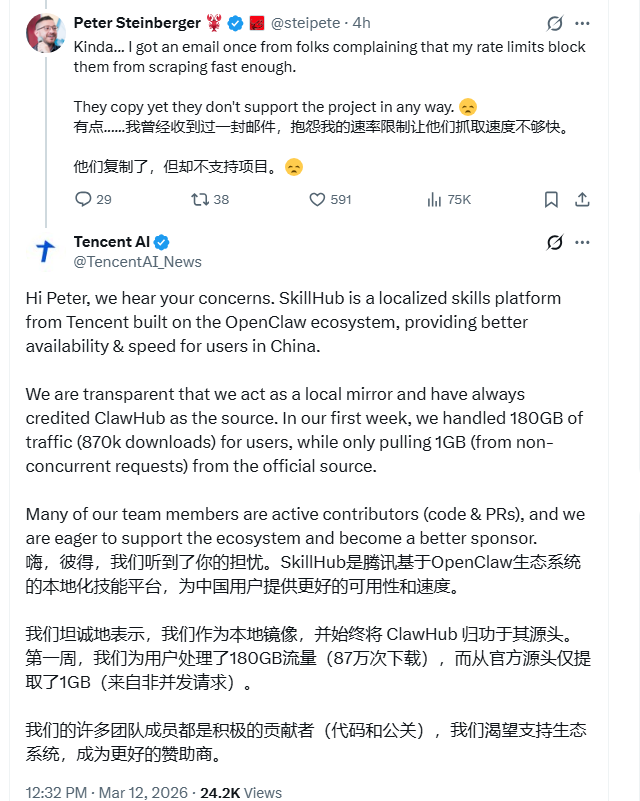
Tencent Defends Mirror Site Amid OpenClaw Data Scraping Controversy
News

Tencent Defends Mirror Site Amid OpenClaw Data Scraping Controversy

Tencent has responded to accusations from OpenClaw developer Peter Steinberger, who claims the tech giant scraped his platform's data without permission. While Tencent maintains its SkillHub mirror site actually reduced traffic pressure on the original by 99%, the dispute highlights ongoing tensions between open-source developers and corporate ecosystem expansion in the AI boom.

March 12, 2026
OpenClawTencentAI Ethics