Nvidia boosts open-source AI with SchedMD buy and new model releases

Nvidia Doubles Down on Open-Source AI Strategy

In a one-two punch for the open-source community, Nvidia has simultaneously expanded its software portfolio and AI capabilities. The company's latest acquisitions and releases reveal a clear strategy to dominate both high-performance computing infrastructure and cutting-edge artificial intelligence development.

The Slurm Factor: Acquiring SchedMD

The purchase of SchedMD gives Nvidia control over Slurm, the widely-used workload manager that's become essential in supercomputing circles since its 2002 debut. What makes this deal interesting? Nvidia has committed to keeping Slurm open-source and platform-neutral - a promise that could reassure the scientific computing community wary of vendor lock-in.

"Slurm is like the air traffic control system for supercomputers," explains industry analyst Mark Johnson. "By acquiring its developers but keeping it open, Nvidia gets influence without alienating users."

Nemotron 3: A Triple Threat of AI Models

Alongside the acquisition news, Nvidia lifted the curtain on its Nemotron 3 model family:

  • Nano: The compact specialist for focused tasks
  • Super: Built for coordinating multiple AI agents
  • Ultra: The heavyweight champion for complex challenges

CEO Jensen Huang framed these releases as part of Nvidia's broader philosophy: "True innovation happens in the open. With Nemotron, we're giving developers transparent building blocks to create at scale."

Driving Innovation Forward (Literally)

The announcements didn't stop there. Nvidia also introduced Alpamayo-R1, an open-source vision-language model specifically designed for autonomous vehicle research. Combined with new guides for their Cosmos world model, these tools suggest Nvidia sees physical AI - where digital intelligence meets real-world interaction - as the next frontier.

Industry watchers note this aligns perfectly with Nvidia's growing role in robotics and self-driving technology. "They're not just selling chips anymore," observes robotics engineer Lisa Chen. "They're building complete ecosystems."

Key Points:

  • 🖥️ SchedMD acquisition brings Slurm under Nvidia's wing while maintaining open-source status
  • 🤖 Nemotron 3 series offers specialized models for different AI development needs
  • 🚗 Alpamayo-R1 targets autonomous driving research as part of physical AI push
Enjoyed this article?

Subscribe to our newsletter for the latest AI news, product reviews, and project recommendations delivered to your inbox weekly.

Weekly digestFree foreverUnsubscribe anytime

Related Articles

Intel Throws Down the Gauntlet: Chip Giant Enters GPU Race Against Nvidia
News

Intel Throws Down the Gauntlet: Chip Giant Enters GPU Race Against Nvidia

Intel CEO Lip-Bu Tan has unveiled ambitious plans to challenge Nvidia's dominance in AI-focused GPUs. Speaking at the Cisco AI Summit, Tan announced Intel's entry into GPU production with a specialized team led by industry veterans. The move comes as companies scramble to address AI computing bottlenecks, with Intel betting big on its advanced packaging technologies to differentiate itself.

February 4, 2026
IntelGPUAI Chips
Ant Group's Robotics Leap: Open-Source AI Model Boosts Robot Intelligence
News

Ant Group's Robotics Leap: Open-Source AI Model Boosts Robot Intelligence

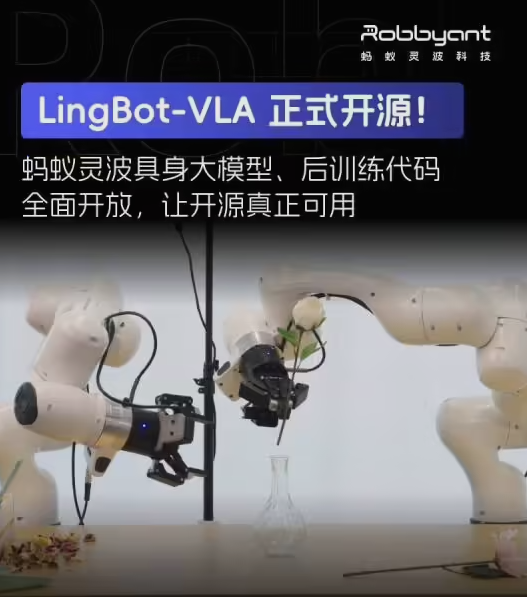
Ant Group's Lingbo Technology has made its embodied intelligence model LingBot-VLA fully open-source, marking a significant advancement in robotics. The model demonstrates remarkable cross-platform adaptability and training efficiency, outperforming existing frameworks. Alongside this release, their new LingBot-Depth spatial perception model enhances 3D environmental understanding for robots and autonomous vehicles. These developments could accelerate smart robotics adoption across industries.

January 28, 2026
roboticsAI innovationAnt Group
Tencent's Hunyuan Image 3.0 Goes Open-Source: A Game-Changer for AI Creativity
News

Tencent's Hunyuan Image 3.0 Goes Open-Source: A Game-Changer for AI Creativity

Tencent has made waves in the AI community by open-sourcing its powerful Hunyuan Image 3.0 model. With an impressive 80 billion parameters, this image-to-image tool ranks among the world's best, offering everything from meme creation to professional design enhancements. The company is putting its full weight behind the open-source movement, making both standard and lightweight versions available to developers worldwide.

January 28, 2026
AI creativityopen-sourceimage editing
Curl pulls plug on bug bounty program amid AI-generated report flood
News

Curl pulls plug on bug bounty program amid AI-generated report flood

The widely-used command line tool curl is shutting down its vulnerability reward program after being overwhelmed by low-quality AI-generated reports. Founder Daniel Stenberg says these 'AI slop' submissions sound professional but offer no real value, instead draining developers' time. Starting February 2026, curl will no longer pay for bug reports and warns that spam submitters may face public shaming.

January 23, 2026
open-sourceAI-challengescybersecurity
LTX-2 Opens New Era for AI Video Creation
News

LTX-2 Opens New Era for AI Video Creation

The Lightricks team has unleashed LTX-2, a groundbreaking open-source model that generates synchronized 4K video and audio in one shot. Running smoothly on consumer GPUs, this technology brings professional-grade video creation to your desktop. Developers are already celebrating its arrival with ready-to-use workflows and optimized performance.

January 7, 2026
AI-videoopen-sourcecreative-tools
News

Nvidia's Rubin AI Chips Promise Quantum Leap in Computing Power

Nvidia has unveiled its groundbreaking Rubin chip architecture at CES, marking a significant leap forward in AI computing capabilities. The new system, already in production, delivers 3.5x faster training and 5x quicker inference than its predecessor. Major tech players like OpenAI and AWS are already on board, with supercomputer projects lining up to harness Rubin's power. This innovation comes as the AI infrastructure race heats up, with Nvidia predicting hundreds of billions in sector investments.

January 6, 2026
AI HardwareChip TechnologyNvidia