Norton's New AI Browser Puts Privacy First

Norton Reinvents Web Browsing With AI-Powered Neo

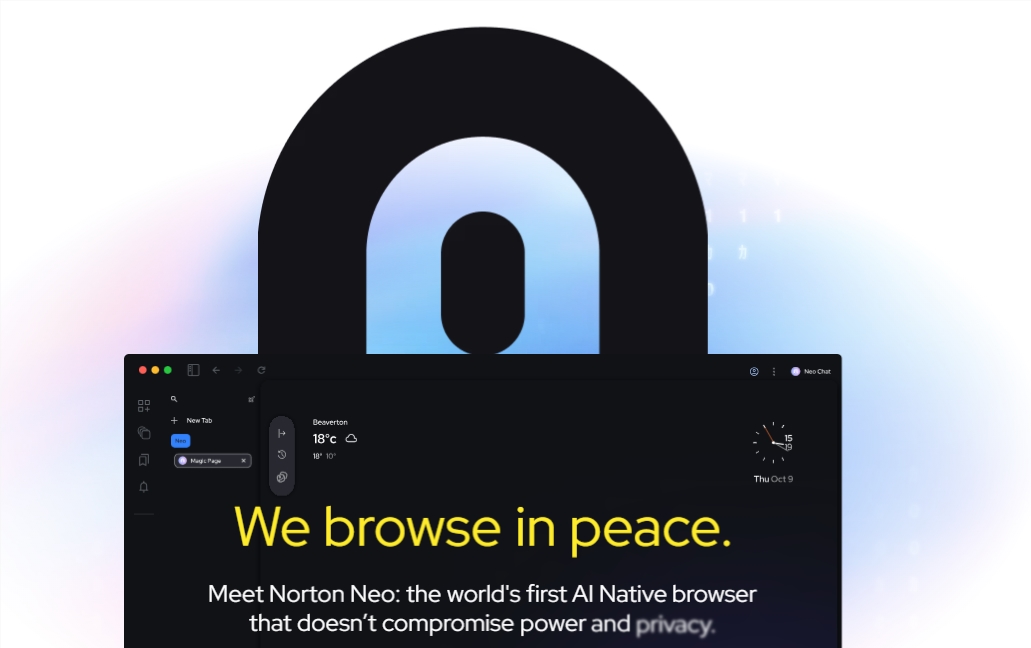
In an era where online threats grow more sophisticated daily, cybersecurity firm Norton has unveiled what could be the future of safe browsing. Their new Norton Neo browser combines artificial intelligence with robust security features - and it's completely free.
Image

A Browser That Thinks Ahead

Gone are the days of remembering complex commands or constantly adjusting settings. Norton Neo introduces a revolutionary "zero-command" approach where the browser proactively assists users. Need a summary of that lengthy article? Neo generates one automatically. Forgot to set a reminder from an email? The browser suggests adding it to your calendar.

"We're entering uncharted territory with AI transforming how we interact online," explains Norton's product team. "Neo isn't just another browser - it's designed to rebuild trust in our digital experiences."

Privacy You Can Control

The standout feature? Configurable memory gives users unprecedented control over their digital footprint. Through an intuitive chat interface, you decide exactly what information the browser retains or forgets - striking that delicate balance between personalization and privacy.

Security remains at Neo's core:

  • Built-in Web Shield blocks malicious sites and phishing attempts
  • Advanced ad-blocking minimizes tracking risks
  • Privacy-first design reduces exposure to digital threats

Available Now Worldwide

After successful testing through its preview version earlier this year, Norton Neo is now available globally across major platforms. Early adopters praise its seamless integration of AI assistance without compromising on security fundamentals.

The timing couldn't be better. As AI reshapes our online landscape daily, tools like Norton Neo demonstrate how technology can enhance - rather than endanger - our digital lives.

Key Points:

  • 🤖 Smart assistance: Automatic summaries and reminders reduce cognitive load
  • 🔐 Customizable privacy: Choose what your browser remembers
  • 🛡️ Built-in protection: Web Shield and ad-blocking come standard
  • 🌍 Free access: Available now worldwide across devices

Enjoyed this article?

Subscribe to our newsletter for the latest AI news, product reviews, and project recommendations delivered to your inbox weekly.

Weekly digestFree foreverUnsubscribe anytime

Related Articles

Douyin Assistant Denies Security Flaws Amid Online Controversy
News

Douyin Assistant Denies Security Flaws Amid Online Controversy

ByteDance's Douyin Assistant team has responded to recent online rumors about security vulnerabilities, calling them 'malicious hype' and 'black PR.' The company states it hasn't received any formal vulnerability reports and maintains its product complies with cybersecurity regulations. While acknowledging circulating demonstration videos, Douyin emphasizes these require active user participation and says it's already upgraded protective measures.

February 27, 2026
Douyin AssistantCybersecurityAI Controversy
Microsoft Sounds Alarm on OpenClaw AI Security Risks
News

Microsoft Sounds Alarm on OpenClaw AI Security Risks

Microsoft warns enterprises against deploying its OpenClaw AI assistant on standard workstations due to serious security vulnerabilities. The autonomous agent's high-privilege access makes it susceptible to indirect prompt injections and skill-based malware attacks. Recent findings reveal over 42,000 exposed control panels globally, prompting Microsoft to recommend strict isolation protocols.

February 24, 2026
AI SecurityMicrosoftEnterprise Technology
Anthropic's Claude Code Security: A Game-Changer for Developers Fighting Cyber Threats
News

Anthropic's Claude Code Security: A Game-Changer for Developers Fighting Cyber Threats

Anthropic has unveiled Claude Code Security, an AI-powered tool that's shaking up cybersecurity. Unlike traditional scanners, it thinks like a seasoned security engineer, spotting complex vulnerabilities others miss. Currently in limited preview for enterprises, this tool could redefine how developers protect their code.

February 23, 2026
CybersecurityAI ToolsDeveloper Tools
News

Google Chrome Gets Smarter: Your Browser Just Became an AI Assistant

Google is transforming Chrome from a simple web browser into a powerful AI assistant. The latest update introduces Gemini-powered features right in your sidebar - think real-time shopping comparisons, email summaries, and even trip planning without switching tabs. While these upgrades promise to streamline our digital lives, experts caution about privacy concerns as AI takes on more personal tasks.

February 10, 2026
Google ChromeAI AssistantBrowser Technology
OpenClaw Security Woes Deepen as New Vulnerabilities Emerge
News

OpenClaw Security Woes Deepen as New Vulnerabilities Emerge

OpenClaw, the AI project promising to simplify digital lives, finds itself in hot water again. Just days after patching a critical 'one-click' remote code execution flaw, its associated social network Moltbook exposed sensitive API keys through a misconfigured database. Security experts warn these recurring issues highlight systemic weaknesses in the platform's approach to safeguarding user data.

February 3, 2026
CybersecurityAI SafetyData Privacy
OpenClaw Security Woes Deepen as Social Network Exposes Sensitive Data
News

OpenClaw Security Woes Deepen as Social Network Exposes Sensitive Data

The OpenClaw ecosystem faces mounting security challenges, with researchers uncovering back-to-back vulnerabilities. After patching a critical 'one-click' remote code execution flaw, its affiliated social network Moltbook exposed confidential API keys through a misconfigured database. These incidents raise serious questions about security practices in rapidly developing AI projects.

February 3, 2026
CybersecurityAI SafetyData Privacy