New AI Content Labeling Rules Take Effect September 1
China Implements Strict AI Content Labeling Standards
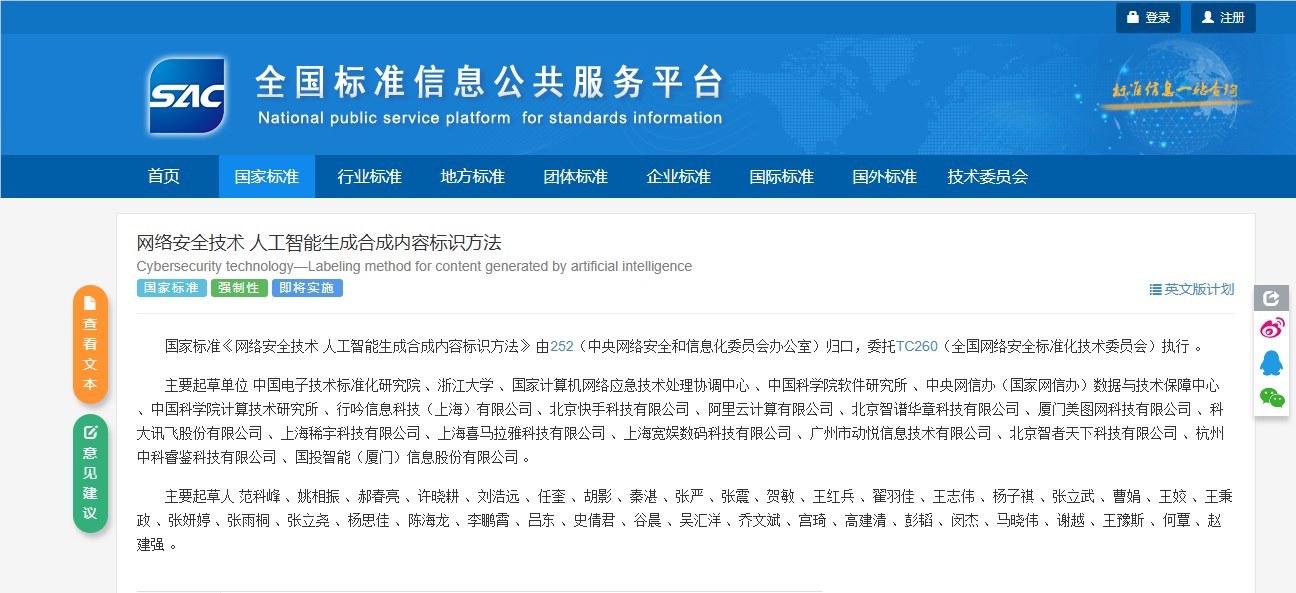
A significant regulatory change is coming to China's artificial intelligence sector as the national standard GB45438-2025, "Methods for Identifying Artificial Intelligence Generated and Synthesized Content," takes effect on September 1, 2025. This mandatory regulation will fundamentally alter how AI-generated content (AIGC) is identified and managed throughout the digital ecosystem.
Dual Identification System
The standard establishes a comprehensive dual identification framework:
Explicit Identification Requirements
- Text content: Must display "Artificial Intelligence" or "AI Generated" at beginning/end in clearly visible font
- Images: Require corner labels with font size ≥5% of shortest image side
- Video: Initial screen must show label for minimum 2 seconds
- Audio: Must include voice prompt "AI Generated" or specific Morse code rhythm (short-long-short-short)
- Interactive applications: Continuous display of "Provided by AI" in interface
Implicit Technical Standards
The regulation mandates embedded metadata in JSON format containing:
- AI generation confirmation status
- Service provider information
- Dissemination platform details
- Unique identification numbers
- Digital signatures/hash verification
The metadata fields must include the "AIGC" identifier for machine readability.
Expanded Accountability Framework
The standard creates a chain of responsibility that extends beyond content creators to include:
- AI generation service providers
- Content dissemination platforms
- Distribution channels
- End-user interfaces
Platforms of all sizes must implement identification management systems or face potential consequences including traffic restrictions, mandatory rectification, or service suspension.
Compliance Consequences
Non-compliant organizations risk:
- Rejection during industry entry/filing processes
- Automated risk control flags limiting content distribution
- Legal liabilities for fraudulent/misleading content
- Potential offline removal of services
The most severe penalties apply to cases involving deepfake technology, face-swapping, or misleading virtual human representations where complete content provenance cannot be established.
Industry Implementation Challenges
The regulation presents fundamental technical challenges requiring:
- Architectural redesigns to support structured identification
- Front-end display logic modifications
- Back-end metadata writing systems
- Content tracking throughout distribution chains
Existing products may require significant upgrades to meet the September 1 deadline.
Key Points:
- Mandatory compliance begins September 1, 2025 for all AI-generated content in China
- Dual labeling system combines human-readable tags with machine-readable metadata
- Chain of responsibility extends from creators through distribution channels
- Strict formatting rules vary by content type (text, image, video, audio)
- Non-compliance risks include operational restrictions and legal consequences