
MiniMax and HUST Open-Source Game-Changing Visual AI Tech

Visual AI Gets a Major Upgrade Without Growing Pains

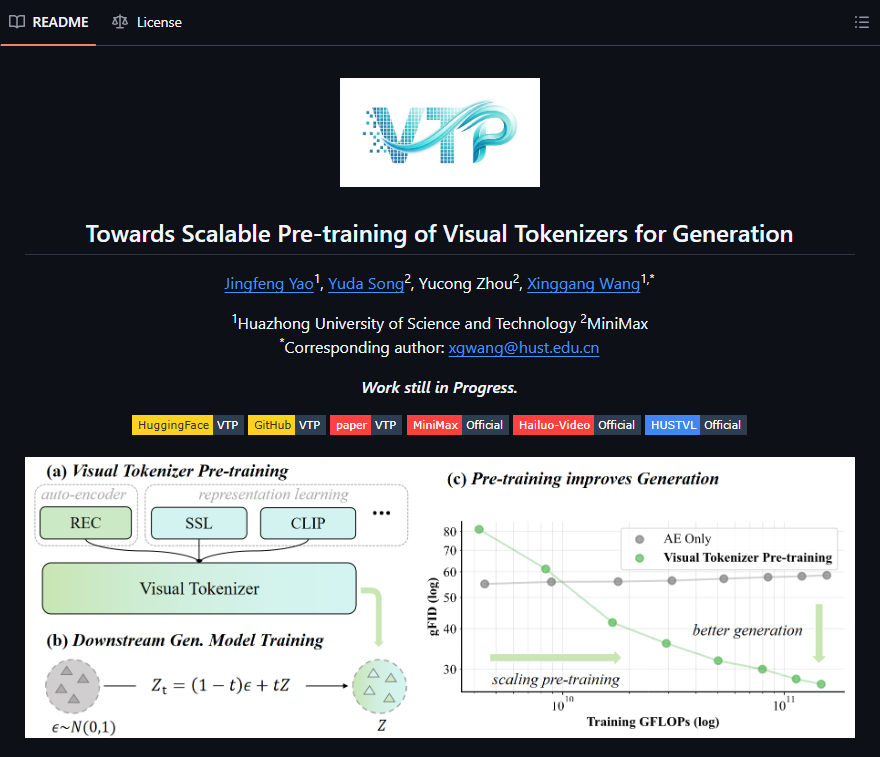
In a move that's shaking up artificial intelligence research, MiniMax has partnered with Huazhong University of Science and Technology to release VTP (Visual Tokenizer Pretraining) as open-source technology. What makes this development remarkable? It delivers staggering 65.8% improvements in image generation quality while leaving the core Diffusion Transformer (DiT) architecture untouched.

The Translator That Changed Everything

Imagine improving a car's performance not by adding horsepower but by refining its transmission system. That's essentially what VTP accomplishes for visual AI systems. Traditional approaches like DALL·E3 and Stable Diffusion3 focus on enlarging their main neural networks, but VTP takes a smarter path - optimizing how images get translated into the language AI understands.
Image

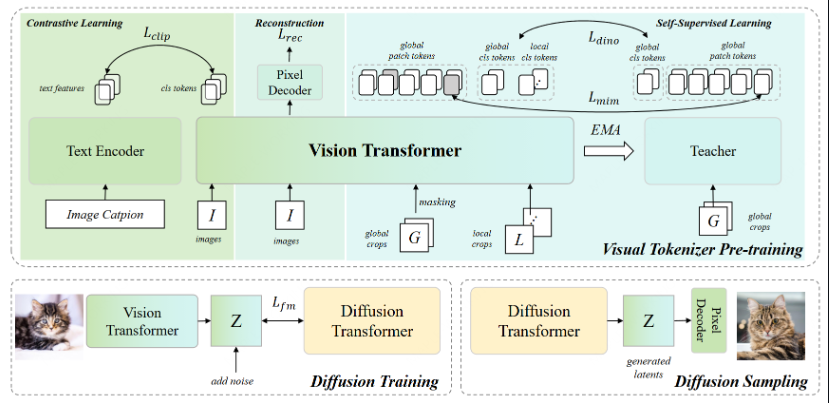
The secret sauce lies in VTP's ability to create better "visual dictionaries" during pretraining. These optimized tokenizers produce representations that downstream systems find easier to work with, effectively letting existing DiT models punch well above their weight class.

More Than Just Better Numbers

VTP isn't just another incremental improvement - it represents a fundamental shift in how we think about scaling AI capabilities:

  • It establishes the first theoretical framework linking tokenizer quality directly to generation performance
  • Demonstrates clear "tokenizer scaling" laws similar to those observed in model size increases
  • Opens new efficiency frontiers beyond the endless parameter arms race

The implications are profound. Instead of constantly demanding more computing power, future improvements might come from smarter preprocessing - potentially democratizing high-quality visual AI.
Image

Open Source for Wider Impact

The research team isn't keeping this breakthrough locked away. They've released everything - code, pretrained models, and training methodologies - ensuring compatibility with existing DiT implementations. This means even small teams can potentially achieve results rivaling much larger competitors.

The timing couldn't be better as the industry shifts focus from pure scale to system-wide efficiency. VTP exemplifies how thoughtful engineering can sometimes outperform brute computational force.

Key Points:

  • 66% boost achieved through tokenizer optimization alone
  • No DiT modifications required - works with existing implementations
  • Full open-source release lowers barriers to adoption
  • Challenges assumptions about where performance gains must come from
  • Potential paradigm shift toward more efficient AI development paths

The complete technical details are available in their research paper, with implementation code on GitHub.
Enjoyed this article?

Subscribe to our newsletter for the latest AI news, product reviews, and project recommendations delivered to your inbox weekly.

Weekly digestFree foreverUnsubscribe anytime

Related Articles

News

Cohere Takes on Speech AI Giants with Open-Source Edge Model

Cohere shakes up the speech recognition market by releasing Transcribe, a lightweight open-source model optimized for edge devices. Supporting 14 languages and outperforming competitors, this 2B-parameter model promises low-latency processing without cloud dependency. The move signals Cohere's strategic expansion from text to voice AI as it positions itself against tech heavyweights in the intelligent agent race.

March 27, 2026
speech recognitionedge AIopen source AI
News

AI Takes a Leap: MiniMax's New Model Can Now Improve Itself

MiniMax has unveiled M2.7, a groundbreaking AI model that actively participates in its own development. Unlike traditional models that rely solely on human programmers, M2.7 can build testing frameworks, collaborate with other AI agents, and optimize its performance autonomously. This self-improving capability could significantly enhance how AI handles complex tasks. Meanwhile, the AI industry continues to evolve rapidly, with major players securing funding and adjusting prices in response to growing demand.

March 18, 2026
AI innovationself-learning systemsMiniMax
NVIDIA's Nemotron 3 Series: AI Gets a Fivefold Speed Boost
News

NVIDIA's Nemotron 3 Series: AI Gets a Fivefold Speed Boost

At the 2026 GTC conference, NVIDIA unveiled its Nemotron 3 series of open-source AI models, with the flagship Ultra version delivering five times faster processing. The release also includes innovative multimodal tools for audio-visual integration and real-time conversation, plus breakthroughs in robotics and medical research. Major industry players are already adopting these cutting-edge technologies.

March 17, 2026
AI innovationNVIDIAmachine learning
News

NVIDIA Takes AI to Space with New Orbital Computing Platform

NVIDIA has launched its groundbreaking Space Computing Service at the 2026 GTC conference, bringing advanced AI capabilities directly to low Earth orbit. The initiative features specialized hardware including the powerful Space-1 Vera Rubin Module and edge computing platforms IGX Thor and Jetson Orin. This technological leap transforms satellites from simple relays into intelligent orbital data centers capable of real-time decision making - potentially revolutionizing space operations and geospatial analysis.

March 17, 2026
space technologyAI innovationedge computing
News

Google's AI Turns News Reports into Flood Warnings for Vulnerable Regions

Google has developed an innovative flood prediction system by analyzing millions of news articles with its Gemini AI. The technology transforms qualitative reports into quantitative data, creating early warnings for areas lacking traditional weather monitoring. Already implemented in 150 countries, this approach marks a breakthrough in using language models for disaster prevention while addressing global inequality in weather forecasting capabilities.

March 13, 2026
AI innovationdisaster preventionclimate technology
News

Hume AI's TADA Brings Lightning-Fast, Hallucination-Free Speech to Your Phone

Hume AI has unveiled TADA, a groundbreaking text-to-speech system that runs efficiently on mobile devices. Unlike traditional models, it eliminates content hallucinations while delivering audio five times faster. What really sets it apart? The ability to generate 700-second audio clips and provide real-time transcriptions simultaneously - no extra processing needed. Early tests show it outperforms larger models in voice quality too.

March 12, 2026
AI speech synthesismobile technologyopen source AI