Miclaw's Big Leap: Your AI Assistant Now Works Seamlessly Across All Devices

Miclaw Bridges the Device Divide

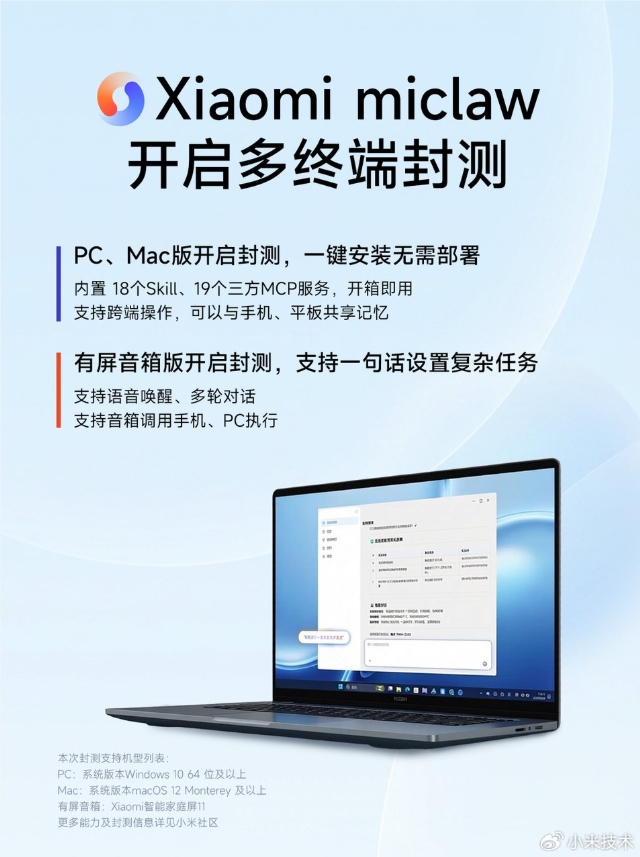
Gone are the days when your AI assistant lived in just one device. Miclaw's April 2026 update has shattered those limitations, creating a unified experience across smartphones, computers, and even Xiaomi's smart speakers. Image
Your Digital Life, Synchronized

Ever switched from phone to computer only to repeat everything to your AI? Those frustrations are history. Miclaw now maintains continuous context across all your devices. Start a task on your phone during your commute, and pick up right where you left off on your office computer - no explanations needed.

"It's like having one brain that lives everywhere," explains a Miclaw developer. "Your preferences, ongoing tasks, and even conversational context move with you."

Voice Control That Actually Works

The integration with Xiaoai Speakers might be the most impressive upgrade. Now you can:

  • Remotely access files on your computer while lounging on the couch
  • Control phone functions without touching the device
  • Have natural back-and-forth conversations that remember context

"We've moved beyond simple voice commands," says the Miclaw team. "This is true conversational control that understands what you want before you finish asking."

Real-World Magic

Picture this: You're heading out the door when you remember needing a work file. Just tell your living room speaker: "Send yesterday's presentation to my phone." Before you've put on your shoes, the file arrives - no computer wake-up required.

Or imagine preparing dinner while asking your speaker to organize desktop files and email you a summary. These aren't hypotheticals - they're everyday possibilities with Miclaw's new capabilities.

The Bigger Picture

This isn't just about convenience; it represents a fundamental shift in how we interact with technology. By removing device barriers, Miclaw is creating what experts call "ambient computing" - where technology fades into the background of our lives.

The implications extend beyond personal use too. Businesses could see productivity gains as employees move seamlessly between office computers and mobile devices without losing workflow continuity.

What's Next?

The Miclaw team hints at expanding compatibility to more smart home devices and wearables. "We're just scratching the surface," they note. As more devices join this ecosystem, our digital experiences will become increasingly fluid.

Key Points:

  • Cross-device memory sync eliminates repetitive setup
  • Voice control via Xiaoai Speakers enables hands-free operation
  • Natural language processing allows complex multi-step commands
  • Potential to transform both personal and professional tech use
Enjoyed this article?

Subscribe to our newsletter for the latest AI news, product reviews, and project recommendations delivered to your inbox weekly.

Weekly digestFree foreverUnsubscribe anytime

Related Articles

Emergent's Wingman AI blends into your messaging apps to handle tasks quietly
News

Emergent's Wingman AI blends into your messaging apps to handle tasks quietly

Indian startup Emergent has unveiled Wingman, an AI assistant that operates discreetly within popular messaging platforms like WhatsApp and Telegram. Unlike flashy standalone apps, Wingman works behind the scenes to manage emails, calendars and more through simple chat commands. The launch signals a shift toward more natural AI integration into our daily digital routines, though the technology still struggles with complex human judgment calls.

April 16, 2026
AI assistantsEmergentproductivity tech
News

AI Glasses Race Heats Up as Qwen's S1 Launches and Apple Prepares 2027 Entry

The AI glasses market is accelerating at breakneck speed, with Qwen's new S1 model hitting shelves just weeks after their G1 dominated online sales. These smart devices now handle everything from bike rentals to food orders with voice commands. While Meta leads in unit sales, all eyes are on Apple's rumored 2027 entry that could redefine the category. The technology's growth outpaces traditional smart glasses eightfold, signaling a major shift in how we interact with wearable tech.

April 15, 2026
wearable technologyAI assistantssmart glasses
News

MiniMax Agent Gets Smarter: Now Works Inside Your Favorite Apps

MiniMax's latest desktop update brings two game-changing features: Pocket, which lets you access the AI assistant from within Feishu and WeChat, and Computer Use, enabling the agent to perform tasks just like a human. These upgrades signal a shift from simple chatbots to true digital assistants that integrate seamlessly into our daily workflows. With these tools, MiniMax is positioning itself at the forefront of practical AI applications.

April 14, 2026
MiniMaxAI assistantsproductivity tools
News

Google's Gemini 'Notebooks' Brings Order to AI Chaos

Google's latest update to Gemini introduces 'Notebooks,' a feature that transforms the AI assistant into a powerful project management tool. Unlike fleeting chat interactions, Notebooks allow users to organize files, conversations, and personal instructions into dedicated workspaces. The feature, currently rolling out to premium subscribers, marks Google's push to make AI more personalized and productive for serious work.

April 9, 2026
Google GeminiAI productivityNotebooks feature
Meta's Muse Spark: A Smarter, Leaner AI Assistant for Everyday Tasks
News

Meta's Muse Spark: A Smarter, Leaner AI Assistant for Everyday Tasks

Meta has unveiled Muse Spark, a new AI model that promises professional-grade performance with surprising efficiency. Trained by over 1,000 doctors, it can analyze health data visually and even solve Sudoku from photos. What sets it apart? It delivers comparable results to top models while using just one-tenth the computing power of Meta's own Llama4Maverick.

April 9, 2026
AI assistantscomputer visionhealth tech
Taobao Merchants Get Voice-Activated AI Assistant for Faster Operations
News

Taobao Merchants Get Voice-Activated AI Assistant for Faster Operations

Taobao Flash Sales has introduced a voice-activated AI assistant for catering merchants, allowing complex tasks to be completed with simple voice commands. The new feature helps business owners manage orders, adjust inventory, and block problematic customers hands-free. Powered by Alibaba's Bailian and Qwen large language models, this innovation aims to streamline backend operations so merchants can focus on serving customers.

April 9, 2026
e-commerce innovationAI assistantsvoice technology