Meta's Muse Spark: A Smarter, Leaner AI Assistant for Everyday Tasks
Meta Debuts Muse Spark: The Efficient AI That Sees and Reasons Like a Human
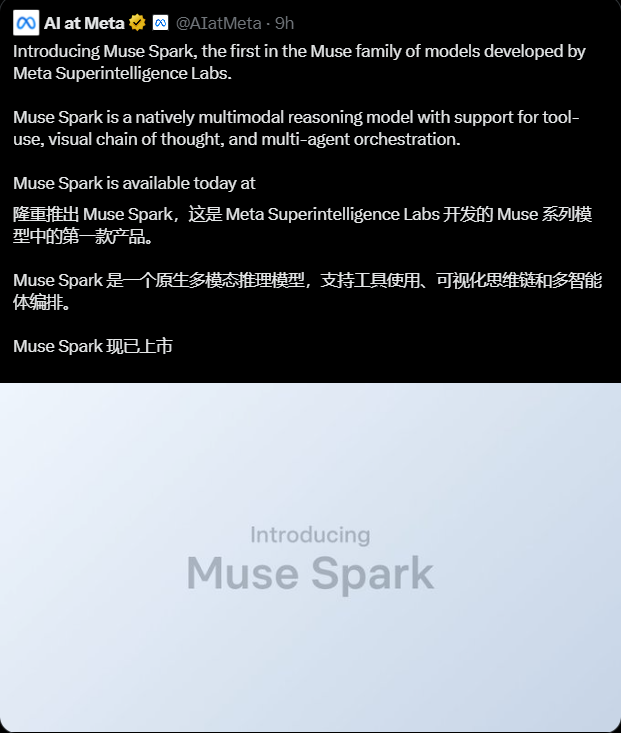
Imagine snapping a photo of a half-finished Sudoku puzzle and getting instant solutions. Or uploading pictures of your meals to receive personalized nutrition advice highlighted in simple red and green dots. These are just some everyday applications of Meta's newly launched Muse Spark, a personal AI assistant that combines visual understanding with deep reasoning capabilities.
Thinking Differently: How Muse Spark Stands Out
At its core, Muse Spark employs an innovative "Contemplating Mode" that uses multiple AI agents working in parallel. This approach earned it respectable scores of 58% on the Humanity's Last Exam benchmark and 38% on FrontierScience Research tests - putting it in direct competition with industry leaders like Gemini3.1Deep Think and GPT5.4Pro.
But perhaps more impressive is what's happening under the hood. While delivering comparable performance to Meta's own Llama4Maverick model, Muse Spark requires just one-tenth the computing power. This efficiency breakthrough could make sophisticated AI assistance accessible on more personal devices without draining batteries or requiring expensive hardware.
Seeing Is Understanding: Built for Visual Tasks from the Ground Up
Unlike many AI models that add visual capabilities as an afterthought, Muse Spark was designed from day one to process images alongside text. Its native multi-modal architecture shows particularly strong results in STEM problems involving diagrams or spatial relationships.
The Sudoku example isn't just a party trick - it demonstrates the model's ability to recognize patterns, interpret visual data, and generate structured responses. Early testers report similarly impressive results with tasks like interpreting medical scans or analyzing engineering schematics.
Your Personal Health Advisor: Backed by Real Medical Expertise
Meta collaborated with over 1,000 physicians to train Muse Spark's health reasoning capabilities. The result? An AI that doesn't just spit out generic advice but creates interactive visual displays tailored to individual needs.
"The color-coded food analysis has already helped me make better lunch choices," shares beta tester Michael Chen. "Seeing those red dots pile up when I uploaded photos of my fast-food habit was... eye-opening."
What's Next for Muse Spark?
The model is already available through Meta.ai and the Meta AI app, with API access opening soon for developers. As businesses and individuals begin experimenting with this leaner, more visually-aware AI, we're likely to see innovative applications emerge - especially in fields like education, healthcare diagnostics, and creative design.
Key Points:
- Efficient Performance: Matches premium models using 90% less computing power than Llama4Maverick
- Visual First: Native multi-modal design excels at image interpretation and generation tasks
- Health Focus: Training from 1,000+ doctors enables personalized medical insights
- Available Now: Accessible through Meta.ai website and mobile app