Meta's New Tool Turns Photos Into 3D Worlds Instantly

Meta's Latest AI Magic: Photos Become 3D Worlds

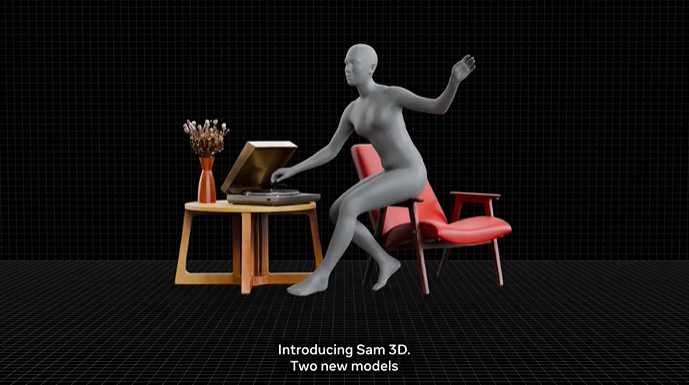
Imagine snapping a picture of your living room and instantly seeing how a new sofa would look in the space - complete with realistic shadows and textures. That future arrived today as Meta open-sourced SAM3D, their revolutionary image-to-3D conversion technology.
Image

How It Works

The system uses what developers call "spatial-semantic joint encoding," which essentially means it understands both what objects are (semantic) and where they exist in space. This dual understanding allows SAM3D to predict surface details and lighting with remarkable accuracy.

"We're not just creating rough shapes," explains Meta's technical lead. "SAM3D produces production-ready assets with proper materials and geometry that can slot directly into games, AR experiences, or film productions."

Two Specialized Models

Meta released two distinct versions:

  • SAM3D Objects: Handles everyday items and environments
  • SAM3D Body: Focused specifically on human figure reconstruction

The Body version shows particular promise for digital artists, automatically rigging models to work with popular animation tools like Mixamo - a process that typically takes hours now happens instantly.

Real-World Applications Already Live

The technology isn't just theoretical. Meta has already deployed SAM3D features:

  • Facebook Marketplace's "View in Room" lets sellers upload product photos that buyers can then project into their actual spaces
  • Quest 3 creation tools integrate SAM3D for rapid VR environment building
  • An upcoming mobile SDK will bring this power to smartphones by early 2026

Developers can currently access the API through Edits and Vibes apps at $0.02 per model generated.

Performance That Speaks Volumes

The numbers demonstrate SAM3D's leap forward:

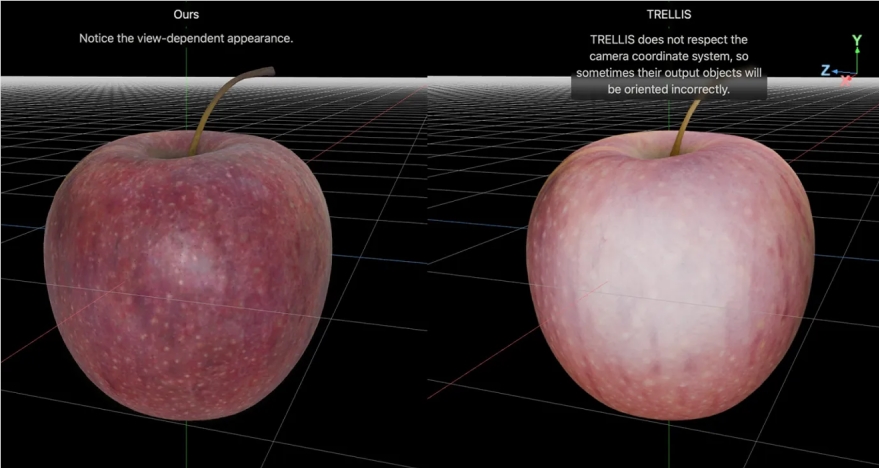
  • 28% improvement in shape accuracy over previous methods
  • 19% better surface detail reproduction
  • Human models show 14% more accurate joint positioning than competitors

These metrics translate to noticeably more realistic results that hold up under close inspection.

What This Means Going Forward

The implications span industries:

  • E-commerce: Try before you buy becomes truly seamless
  • Game Development: Rapid prototyping reaches new speeds
  • Film/TV: Quick generation of background assets saves countless hours
  • Robotics: Better spatial understanding improves machine perception

With the technology now open-sourced, we're likely to see creative applications emerge that even Meta hasn't anticipated.

Key Points:

  • Converts single images to textured 3D models instantly
  • Outperforms existing NeRF and Gaussian Splatting methods
  • Already powering Facebook Marketplace AR features
  • Open-source release encourages broad developer adoption The project is available now at Meta's research blog
Enjoyed this article?

Subscribe to our newsletter for the latest AI news, product reviews, and project recommendations delivered to your inbox weekly.

Weekly digestFree foreverUnsubscribe anytime

Related Articles

News

Moonshot AI Founder Unveils Next-Gen Model Strategy at NVIDIA Event

Yang Zhilin, founder of Moonshot AI, made waves at the NVIDIA GTC2026 conference with his vision for the future of large language models. Moving beyond simple computing power scaling, he proposed a three-pronged approach focusing on token efficiency, long context processing, and agent clusters. The strategy behind their Kimi K2.5 model suggests we're entering an era where intelligence density matters more than raw parameter counts.

March 18, 2026
AI InnovationMoonshot AINVIDIA GTC
Apple's LiTo AI Turns Photos Into 3D Worlds With Stunning Lighting
News

Apple's LiTo AI Turns Photos Into 3D Worlds With Stunning Lighting

Apple's research team has unveiled LiTo, a groundbreaking AI model that transforms single images into detailed 3D scenes with remarkably accurate lighting. The technology achieves a 37% improvement in light consistency compared to existing solutions, potentially revolutionizing AR content creation for devices like Vision Pro. By compressing complex lighting data into efficient mathematical representations, LiTo solves long-standing challenges in 3D reconstruction.

March 18, 2026
Apple AI3D ReconstructionComputer Vision
News

Claude AI Spots 100 Firefox Flaws in Record Time

In a cybersecurity breakthrough, Mozilla partnered with Anthropic's Claude AI to uncover over 100 Firefox vulnerabilities within two weeks. The AI detected 14 critical security risks along with numerous lesser issues, demonstrating superior efficiency compared to traditional testing methods. These findings have already been patched in Firefox's latest update.

March 9, 2026
CybersecurityAI InnovationBrowser Safety
Sakana AI's Tiny Plugin Could Revolutionize How AI Handles Massive Documents
News

Sakana AI's Tiny Plugin Could Revolutionize How AI Handles Massive Documents

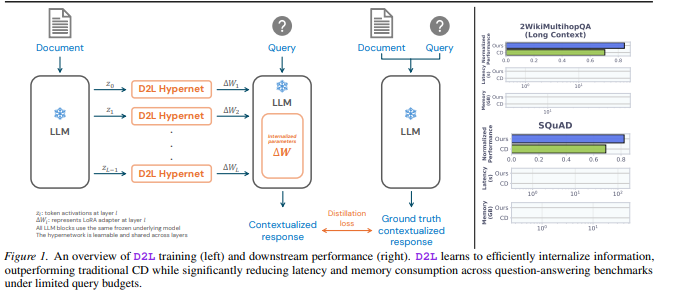
Tokyo-based Sakana AI has unveiled groundbreaking technologies that could solve large language models' notorious 'memory anxiety.' Their Text-to-LoRA and Doc-to-LoRA systems enable AI to digest lengthy documents in under a second, shrinking memory requirements from gigabytes to mere megabytes. This breakthrough promises to make customizing AI models dramatically cheaper and more accessible.

February 28, 2026
AI InnovationMachine LearningNatural Language Processing
Google's Gemini 3.1 Pro Outshines Competitors With Breakthrough Reasoning Skills
News

Google's Gemini 3.1 Pro Outshines Competitors With Breakthrough Reasoning Skills

Google has unveiled Gemini 3.1 Pro, its most advanced AI model yet, showcasing remarkable improvements in logical reasoning and problem-solving. The new architecture delivers more than double the performance of its predecessor in critical tests, even surpassing GPT-5.2 in some benchmarks. Beyond raw power, Gemini 3.1 Pro introduces innovative multimodal capabilities, handling ultra-long contexts and generating visual representations of complex concepts.

February 24, 2026
AI InnovationGoogle TechMachine Learning
Google's Gemini 3.1 Pro Doubles Down on AI Reasoning Power
News

Google's Gemini 3.1 Pro Doubles Down on AI Reasoning Power

Google has unveiled Gemini 3.1 Pro, its latest AI model that dramatically improves reasoning capabilities. Benchmarks show it outperforms its predecessor by more than double in logical processing tests. The tech giant is making the model widely available through multiple platforms, offering enhanced features for premium subscribers.

February 20, 2026
AI InnovationGoogle TechMachine Learning