
Marital spat turns bizarre as man fakes suicide with AI photo

Domestic dispute escalates into AI deception

What began as a typical marital argument in Qinghai Province spiraled into a modern-day cautionary tale about technology misuse. A local man, embroiled in a heated dispute with his wife, turned to artificial intelligence to craft an elaborate - and ultimately costly - revenge scheme.

The shocking photo that triggered panic

On April 14, Xunhua County police received a distraught woman's report showing what appeared to be her husband submerged in the Yellow River. "I thought I was watching my marriage end in the worst possible way," the shaken woman told officers. The image, convincingly altered through AI tools, showed the man waist-deep in the famous river's currents with a despondent expression.

Authorities immediately mobilized search teams along the riverbanks, deploying emergency protocols typically reserved for genuine suicide attempts. For hours, officers combed the area while the woman waited in anguish.

The digital deception unravels

As the search continued with no results, investigators grew suspicious. "The details weren't adding up," explained Police Captain Li Wei. "No witnesses reported seeing anyone enter the river, and the photo had some peculiar digital artifacts upon closer inspection."

When confronted with evidence of digital manipulation, the husband confessed to creating the AI-generated image as an emotional ploy. "I just wanted to scare her after our fight," the man admitted during questioning. "I never thought it would go this far."

Consequences of a tech-enabled hoax

The elaborate ruse came at significant cost - both emotionally and legally. Emergency response teams wasted precious hours on a fabricated crisis, while the wife endured unnecessary trauma. Authorities charged the man under China's Public Security Administration Penalty Law, resulting in administrative detention.

"This case highlights the dark side of accessible AI tools," noted technology ethics professor Zhang Ming. "What might seem like a harmless prank can have real-world consequences, wasting emergency resources and playing with people's emotions."

Key Points:

  • AI deception backfires: Husband's revenge plot using fake suicide photos triggers major police response
  • Wasted resources: Emergency teams spent hours searching before discovering the hoax
  • Legal repercussions: Perpetrator faces detention under public order laws
  • Ethical concerns: Experts warn about irresponsible use of increasingly sophisticated AI tools
  • Emotional toll: Wife endured significant distress before truth emerged

As AI manipulation tools become more sophisticated and accessible, this incident serves as a stark reminder that technology should complement human relationships - not weaponize them.

Enjoyed this article?

Subscribe to our newsletter for the latest AI news, product reviews, and project recommendations delivered to your inbox weekly.

Weekly digestFree foreverUnsubscribe anytime

Related Articles

News

Apple Nearly Booted Grok Over Deepfake Failures

Apple came close to pulling Elon Musk's AI app Grok from the App Store earlier this year after the platform failed to rein in non-consensual deepfake content. While parent company X addressed Apple's concerns, Grok reportedly still doesn't meet the tech giant's content moderation standards - particularly around AI-generated images targeting women and minors.

April 16, 2026
AI ethicscontent moderationdeepfake technology
News

AI Lab Denies Code Copying Claims as Developer Drama Heats Up

Silicon Valley's Nous Research faces plagiarism accusations from Chinese AI team EvoMap over their Hermes Agent project. EvoMap alleges striking similarities in architecture with their Evolver engine, sparking a fiery exchange. With nearly 190,000 social media views, the dispute highlights growing tensions in competitive AI development circles.

April 16, 2026
AI ethicsopen sourcetech disputes
News

Apple Pressured Musk's X to Fix Grok's AI Image Risks or Face App Store Ban

Behind closed doors, Apple warned Elon Musk's X platform that its Grok AI tool violated App Store policies by generating inappropriate images. Internal documents reveal a months-long battle where Apple repeatedly rejected X's content moderation fixes before approving a revised version. While incidents have decreased, recent tests show users can still circumvent safeguards to create explicit content.

April 15, 2026
AI ethicsApp Store policiescontent moderation
DeepMind's Philosopher Hire: Why AI Labs Need More Than Engineers
News

DeepMind's Philosopher Hire: Why AI Labs Need More Than Engineers

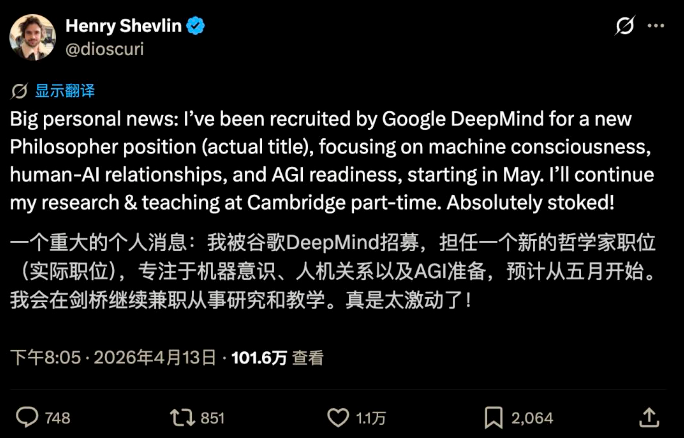
Google DeepMind has made an unusual move by hiring philosopher Henry Shevlin in a full-time position - a first for leading AI labs. His focus on machine consciousness and human-AI relationships signals a shift from viewing AGI as purely an engineering challenge to recognizing its profound philosophical implications. As AI systems grow more sophisticated, questions about consciousness boundaries and ethical frameworks can no longer be avoided.

April 15, 2026
AI ethicsMachine consciousnessAGI development
Voice Actors Sound Alarm Over AI Voice Theft Epidemic
News

Voice Actors Sound Alarm Over AI Voice Theft Epidemic

Prominent Chinese voice actors are fighting back against rampant AI voice cloning that's stealing their livelihoods. Zhang Jiaming, famous for voicing Taiyi Zhenren in 'Ne Zha,' reveals he found over 700 unauthorized uses of his voice in a single day. The industry is rallying with legal action as AI-generated voices flood the market, leaving human performers struggling to compete with free digital replicas of their own talent.

April 13, 2026
AI voice cloningvoice actor rightsdigital copyright
News

Voice Actors Fight Back as AI Steals Their Livelihoods

Popular voice actors, including the voice of Taiyi Zhenren from 'Ne Zha,' are losing work to AI clones of their voices. With contracts canceled and infringements rampant, the industry is uniting to push back. Legal battles highlight the deep challenges of protecting vocal identities in the AI era.

April 13, 2026
AI voice theftvoice acting crisisdigital rights