Jack Ma Says Heart Matters More Than Tech in AI Age

Alibaba Leaders Gather at School to Rethink AI Future

In an unusual move this March, Alibaba's founder Jack Ma brought his entire leadership team - including CEOs from both Alibaba and Ant Group - to Hangzhou's Yungu School. The high-profile visit sent clear signals about where China's tech giant sees the future of AI competition heading.

Beyond Computer Chips

"AI has chips," Ma told educators during an hour-long discussion, "but humans have hearts." He challenged the obsession with technical benchmarks, arguing that true progress lies in how we educate children differently in the AI era.

The billionaire entrepreneur envisions schools shifting from memorization factories to creativity incubators. "We're wasting precious time drilling facts into kids' heads when machines do that better," he observed. "That saved time should go toward developing what makes us uniquely human - curiosity, imagination, and independent thinking."

Executive Insights on Human Advantage

The leadership team shared diverse perspectives:

  • Ma stressed questioning skills: "Future leaders won't be judged by answers they know, but by questions they ask."
  • CEO Mei Yongming highlighted physical education and arts: "Empathy grows when children collaborate on plays or sports teams - something AI can't replicate."
  • Ant Group's Jing Xiandong warned against over-reliance: "AI should be our tool, not our crutch. We must keep thinking for ourselves."

Education as Competitive Edge

The visit reinforced Alibaba's "inclusive AI" philosophy - technology serving human development rather than dominating it. As classrooms worldwide grapple with ChatGPT, Ma's team suggests looking beyond panic about cheating to more fundamental questions: What should humans excel at when machines handle information?

Yungu School, known for progressive methods, becomes a testing ground for these ideas. Its emphasis on project-based learning and critical thinking aligns with Alibaba's vision for future-ready education.

Key Points:

  • Human qualities like creativity and empathy will define success in AI era
  • Education reform needed to focus less on memorization, more on higher skills
  • Tech giants increasingly see talent development as strategic priority
  • Balanced approach advocated between utilizing AI and preserving human initiative
Enjoyed this article?

Subscribe to our newsletter for the latest AI news, product reviews, and project recommendations delivered to your inbox weekly.

Weekly digestFree foreverUnsubscribe anytime

Related Articles

Shanghai Schools Roll Out Mandatory AI Classes for Young Students
News

Shanghai Schools Roll Out Mandatory AI Classes for Young Students

Shanghai is taking AI education to the next level by making it a compulsory subject for fourth and seventh graders. Students will receive at least 30 hours of instruction annually in the 'Fundamentals of Artificial Intelligence' course. Schools are encouraged to develop unique AI programs tailored to their strengths, with some already using AI tools for creative projects like music composition and 3D modeling. This initiative aims to equip students with essential skills for the digital age while fostering innovation.

January 21, 2026
AI educationShanghai schoolsdigital literacy
NVIDIA's Huang Calls OpenClaw a Game-Changer After Record Adoption
News

NVIDIA's Huang Calls OpenClaw a Game-Changer After Record Adoption

At the Morgan Stanley conference, NVIDIA CEO Jensen Huang made waves praising OpenClaw's unprecedented adoption rate - surpassing Linux's 30-year journey in just three weeks. He outlined AI's 'five-layer cake' theory and revealed how agentic AI like OpenClaw is reshaping computing demands, prompting NVIDIA to develop specialized hardware solutions.

March 6, 2026
AI innovationtech leadershipcomputing infrastructure
News

Teens Embrace AI Chatbots: Study Shows Over 60% Now Regular Users

A new Pew Research Center report reveals that AI chatbots have become a staple in American teens' lives, with 64% regularly using tools like ChatGPT. While many see AI as a study aid, concerns linger about cheating and critical thinking skills. The study also highlights a surprising gap between parents' awareness and teens' actual AI usage.

February 25, 2026
AI educationteen technology usedigital parenting
News

Former Google Exec's AI Platform Aims to Cultivate Young Scientists, Not Just Answer Machines

A new AI education platform called Fermi.ai is taking a different approach to student learning. Founded by ex-Google executive Piyush Ranjan, it focuses on developing deep thinking skills in STEM subjects rather than simply providing answers. Early results show students becoming more independent learners as they use the system's intelligent canvas and adaptive tutoring features. With headquarters in Singapore and initial launches in the U.S. and India, this innovative approach might just change how we think about AI in education.

February 9, 2026
AI educationSTEM learningeducational technology
News

UK Rolls Out Free AI Training to Empower Workforce

Britain is betting big on artificial intelligence education with a bold new initiative offering free online courses to all adults. The government program focuses on practical skills like using AI tools for writing, content creation, and administrative tasks. With bite-sized 20-minute lessons and an ambitious goal to train 10 million workers within a decade, this move could boost the UK economy by £14 billion annually while preparing citizens for an AI-driven future.

January 28, 2026
AI educationUK workforce developmentdigital skills training
AI Teaching Outperforms Humans in Groundbreaking Education Study
News

AI Teaching Outperforms Humans in Groundbreaking Education Study

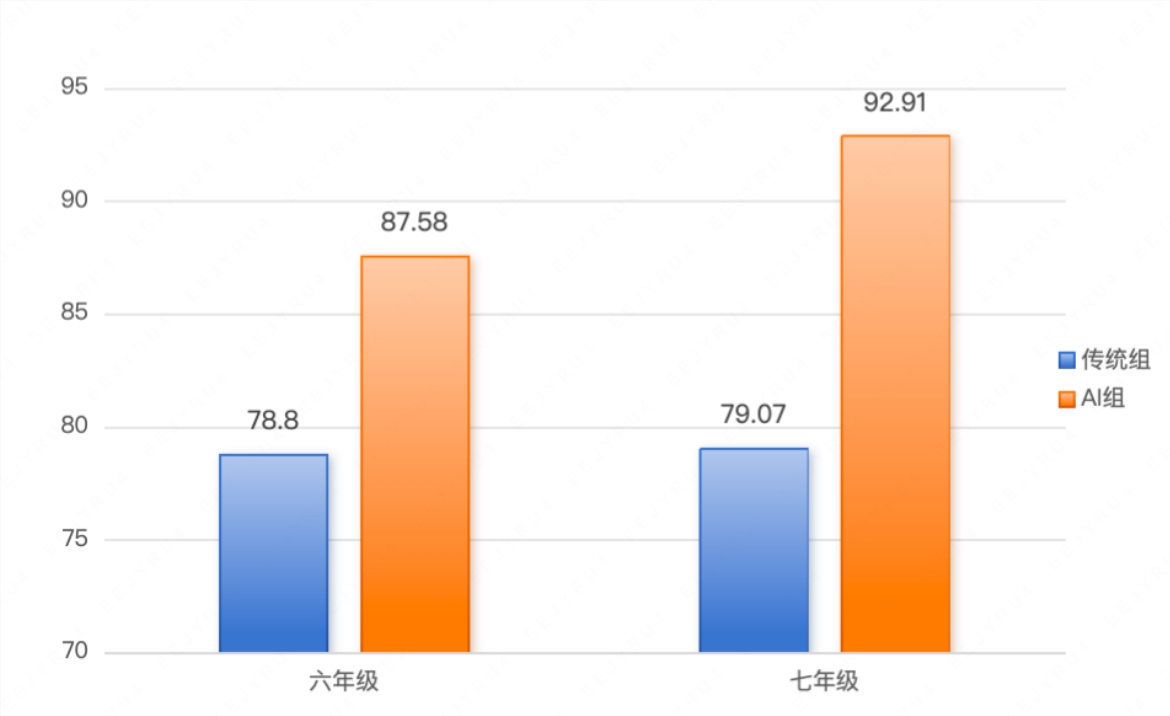
A landmark education experiment has shown AI-powered teaching can outperform traditional methods. Involving over 1,600 students, the study found those taught by Squirrel Ai's adaptive system scored significantly higher than peers learning from human teachers. The results suggest AI could help bridge educational gaps, particularly benefiting students struggling academically.

January 16, 2026
AI educationadaptive learningeducation technology