
Hugging Face's LeRobot Revolutionizes AI Robotics with Open-Source Platform

The robotics field has reached a pivotal moment with Hugging Face's release of LeRobot, an open-source platform that promises to democratize AI robotics development. By combining cutting-edge machine learning algorithms with developer-friendly tools, this project is being hailed as the "Transformer moment" for robotics.
Image

Unified Hardware Integration

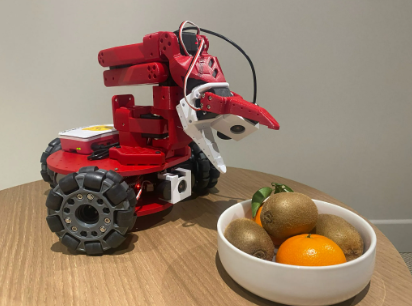
LeRobot's breakthrough lies in its universal hardware interface, which seamlessly connects diverse robotic components including arms, cameras, and motors. This eliminates the need for developers to create custom interfaces from scratch, allowing them to focus on algorithm development instead of hardware integration. The platform supports everything from basic Koch v1.1 robot kits to advanced dual-arm systems.

Pre-Trained Model Library

Developers gain immediate access to state-of-the-art robotics algorithms like Diffusion Policy and ACT (Action Chunking with Transformers) through Hugging Face Hub integration. These optimized models can be implemented with minimal code, creating a plug-and-play environment that accelerates development cycles.

Standardized Data Tools

The platform simplifies research entry with unified dataset handling, supporting formats like alohahdf5 and pushtzarr. The LeRobotDataset class enables single-line data loading, while built-in augmentation tools streamline processing of multimodal time-series data. Community sharing is encouraged through Hugging Face Hub uploads.

Collaborative Innovation

LeRobot introduces "memory transfer" - a game-changing feature where developers share trained models via the Hub. This collaborative approach has already produced benchmark results in PushT tasks and ALOHA robotic arm operations, demonstrating superior performance in complex scenarios.

Performance Optimization

Integrated evaluation tools generate real-time training curves and performance reports. When combined with AMP (Automatic Mixed Precision) technology, LeRobot achieves 3x faster training speeds, dramatically reducing development timelines for both academic and industrial applications.

The project's success in diverse applications - from simple manipulation tasks to sophisticated bimanual operations - suggests broad potential for real-world implementation. As the community grows, LeRobot may become the standard platform for next-generation robotics research.

Key Points

  1. Universal hardware interface supports diverse robotic components
  2. Extensive library of pre-trained models accelerates development
  3. Memory transfer enables collaborative model sharing
  4. Integrated evaluation tools provide real-time performance tracking
  5. Demonstrated SOTA results in benchmark robotics tasks

Enjoyed this article?

Subscribe to our newsletter for the latest AI news, product reviews, and project recommendations delivered to your inbox weekly.

Weekly digestFree foreverUnsubscribe anytime

Related Articles

Google's Gemini 3.1 Flash-Lite: Faster, Smarter, But Pricier
News

Google's Gemini 3.1 Flash-Lite: Faster, Smarter, But Pricier

Google DeepMind unveils Gemini 3.1 Flash-Lite, boasting impressive speed and intelligence gains over its predecessor. While processing over 360 tokens per second with quick response times, the model shines in complex tasks like scientific reasoning. However, these improvements come at a cost - pricing has nearly tripled, signaling a shift in the AI market towards premium performance.

March 4, 2026
AI DevelopmentGoogle DeepMindMachine Learning
DeepSeek V4 Lite: The Compact AI Model Making Waves
News

DeepSeek V4 Lite: The Compact AI Model Making Waves

DeepSeek V4 Lite, a surprisingly powerful AI model with just 200 billion parameters, is turning heads in the tech community. Originally launched in February with strong long-context processing capabilities, recent updates have dramatically improved its performance. Developers report it now rivals top international models like Anthropic Claude 3.5 Sonnet in logic, programming, and aesthetics. This unexpected leap forward has sparked excitement about what its full version might achieve.

March 3, 2026
Artificial IntelligenceMachine LearningDeepSeek
Meituan's AI Browser Faces Code Controversy, Responds with Full Open-Sourcing
News

Meituan's AI Browser Faces Code Controversy, Responds with Full Open-Sourcing

Meituan's Guangnian Zhiwai team has addressed allegations of code copying in its Tabbit AI browser, removing disputed translation features and open-sourcing the project. The dispute arose when developers spotted similarities with the open-source 'Read-Frog' project. While Meituan claims the fork occurred before licensing was clear, the incident highlights growing tensions between rapid AI development and open-source compliance.

March 3, 2026
AI EthicsOpen SourceTech Controversy
News

Alibaba's Qwen AI Models Dominate Global Rankings While Lunar New Year Usage Soars

Alibaba's Qwen series of AI models has taken the open-source world by storm, securing the top four spots on Hugging Face's global rankings. Meanwhile, consumer adoption skyrocketed during Lunar New Year celebrations, with daily active users jumping nearly tenfold. The models' ability to handle complex tasks through simple voice commands suggests AI assistants are moving beyond novelty status into practical everyday use.

March 2, 2026
Artificial IntelligenceAlibaba CloudOpen Source
Sakana AI's Tiny Plugin Could Revolutionize How AI Handles Massive Documents
News

Sakana AI's Tiny Plugin Could Revolutionize How AI Handles Massive Documents

Tokyo-based Sakana AI has unveiled groundbreaking technologies that could solve large language models' notorious 'memory anxiety.' Their Text-to-LoRA and Doc-to-LoRA systems enable AI to digest lengthy documents in under a second, shrinking memory requirements from gigabytes to mere megabytes. This breakthrough promises to make customizing AI models dramatically cheaper and more accessible.

February 28, 2026
AI InnovationMachine LearningNatural Language Processing
Anthropic Gives Back: Free Claude Max for Open Source Heroes
News

Anthropic Gives Back: Free Claude Max for Open Source Heroes

Anthropic is rolling out the red carpet for open source contributors with a generous new program. Maintainers of popular projects can now score six months of free access to Claude Max20x, Anthropic's top-tier AI model. The move recognizes how crucial these developers are to the tech ecosystem, offering them powerful tools to streamline code reviews and community management. Projects need at least 5,000 GitHub stars or a million monthly NPM downloads to qualify - though there's flexibility for critical infrastructure projects that don't meet these benchmarks.

February 27, 2026
AnthropicOpen SourceAI Development