Google's Gemma 4 Goes Open Source with Apache 2.0, Rivals Top AI Models

Google Opens the Floodgates with Gemma 4

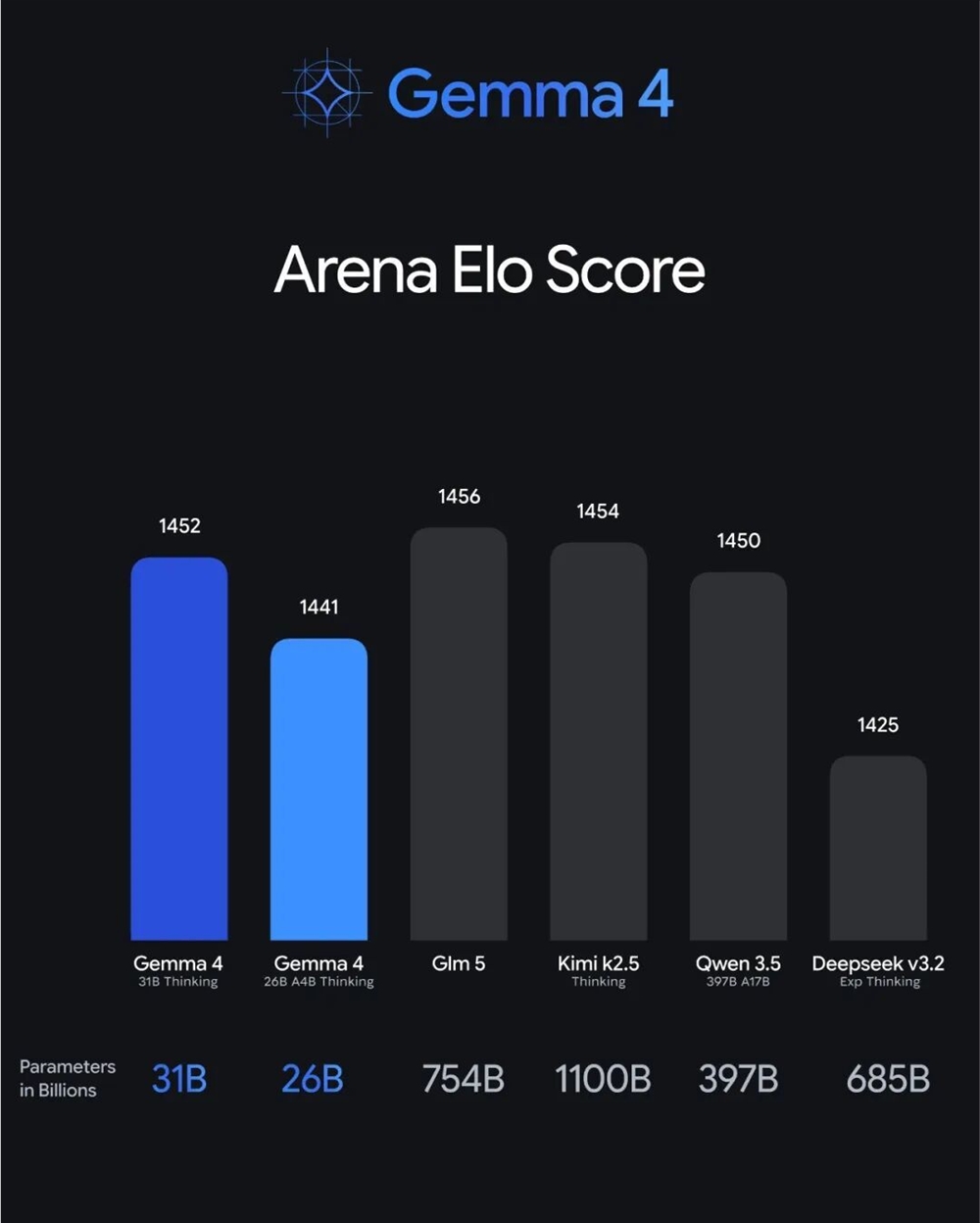
In an early morning announcement on April 3, Google DeepMind unveiled its latest open-source AI model series - Gemma 4. What makes this release particularly noteworthy isn't just the technical specs (though those are impressive), but Google's decision to switch from proprietary licensing to the widely-adopted Apache 2.0. This move removes commercial use restrictions, giving developers unprecedented freedom to build upon Google's work.
Image

A Model for Every Need

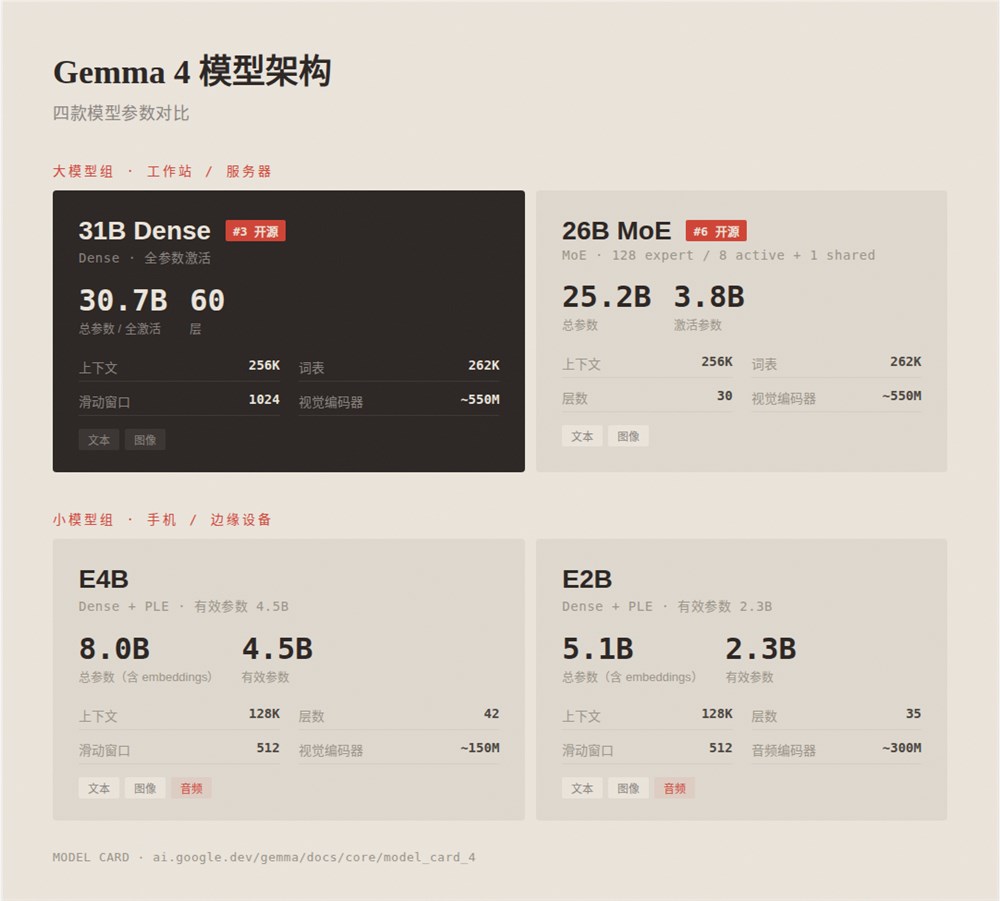
Gemma 4 arrives not as a single model, but as a carefully curated family designed for different applications:

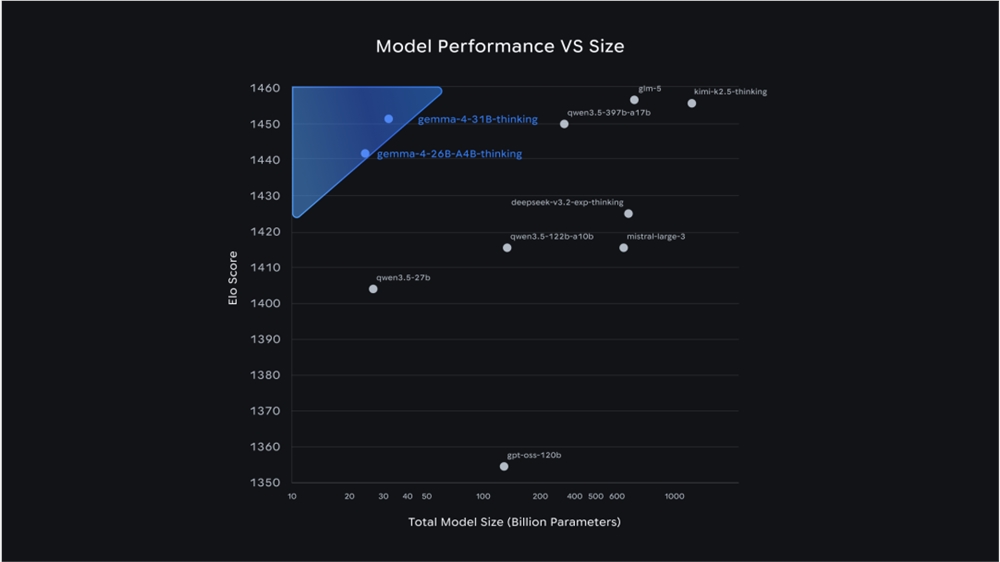
  • 31B Dense (Flagship Edition): The heavyweight champion with full parameter activation and support for ultra-long context (256K). Surprisingly efficient, it runs on just one H100 GPU.
  • 26B A4B MoE: The cost-efficient option using mixture-of-experts architecture - think of it as activating only the relevant parts of the model when needed.
  • E-Series (Edge Elite): These compact models bring AI capabilities to mobile devices, with memory footprints as low as 1.5GB.
Image

Performance That Turns Heads

The numbers tell a compelling story of progress:

  • Math skills jumped from scoring 20% on advanced tests to nearly 90%
  • Programming ability now rivals many human developers, with Codeforces ratings soaring past 2000
  • Graduate-level science comprehension nearly doubled to 84.3%
  • Native support for 140+ languages makes this truly global AI

The improvements aren't just quantitative - qualitative changes like built-in "thinking mode" allow the model to reason through problems before answering, much like its flagship Gemini counterpart.

More Than Just Parameters

What sets Gemma 4 apart goes beyond raw computational power:

  • Agent-ready architecture: Built-in support for function calls and structured outputs means these models can power intelligent assistants right out of the box.
  • Multimodal from the ground up: Even the smallest versions handle images, video, and audio - no afterthoughts here.
  • Developer-friendly tools: Google released an accompanying Agent Development Kit (ADK) to help creators build practical applications.
Image

Shaking Up Open Source AI

The timing of this release is strategic. As regional open-source models like China's DeepSeek gained momentum, Google needed to reaffirm its position in this space. By combining cutting-edge engineering with genuine openness (that Apache license matters), Gemma 4 represents both a technical achievement and a philosophical statement about accessible AI.

Key Points:

  • Open access: Apache 2.0 license enables commercial use and modification
  • Performance leap: Dramatic improvements in math, coding, and reasoning tasks
  • Scalable options: From data centers to smartphones in one model family
  • Future-ready: Native agent support and multimodal capabilities built in
Enjoyed this article?

Subscribe to our newsletter for the latest AI news, product reviews, and project recommendations delivered to your inbox weekly.

Weekly digestFree foreverUnsubscribe anytime

Related Articles

Google's Gemma4 AI Model Goes Open-Source with Impressive Capabilities
News

Google's Gemma4 AI Model Goes Open-Source with Impressive Capabilities

Google has unveiled Gemma4, its latest open-source AI model series featuring four variants with groundbreaking capabilities. The lineup includes efficient E2B and E4B models for edge devices and powerful 26B MoE and 31B dense versions that rank among the world's top open-source models. What makes Gemma4 special? It supports images, videos, and even real-time voice processing while being remarkably accessible for local deployment.

April 3, 2026
Gemma4OpenSourceAIGoogleAI
Google's Gemma4 Goes Truly Open: What It Means for Developers
News

Google's Gemma4 Goes Truly Open: What It Means for Developers

Google has taken a bold step with its latest AI model Gemma4, adopting the Apache 2.0 license to give developers unprecedented freedom. This marks a significant shift from previous restrictive policies, allowing commercial use and modification without legal hurdles. The new model boasts improved performance and seamless integration with existing developer tools, potentially leveling the playing field for smaller companies in the AI race.

April 3, 2026
Gemma4Open Source AIGoogle
News

Anthropic's GitHub Cleanup Backfires, Wiping Thousands of Legit Repos

In a dramatic case of overzealous damage control, AI company Anthropic accidentally deleted thousands of legitimate GitHub repositories while trying to remove leaked source code. What began as an effort to contain a security breach turned into a PR disaster when automated tools misfired, wiping out unrelated projects. The incident has sparked outrage among developers and raised questions about how tech giants handle crisis management in the open-source community.

April 2, 2026
AnthropicGitHubOpenSource
Gaode's ABot-M0 Gives Robots a Universal Brain
News

Gaode's ABot-M0 Gives Robots a Universal Brain

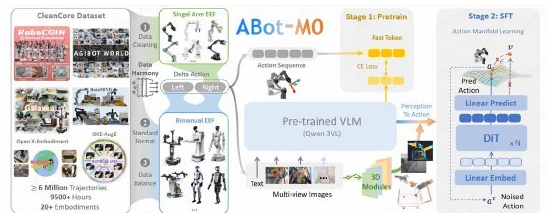
In a major leap for robotics, Gaode has open-sourced ABot-M0, the world's first unified architecture for robot intelligence. This 'universal brain' outperforms previous models by 30% on key benchmarks, while its complete open-source package—including algorithms and training data—could revolutionize how we develop smart robots for homes and industries.

April 1, 2026
roboticsAIopen-source
DeepSeek Stumbles Through Three-Day Service Disruption, Now Back Online
News

DeepSeek Stumbles Through Three-Day Service Disruption, Now Back Online

China's AI leader DeepSeek faced its longest service disruption yet, with systems down for over 10 hours during a three-day outage affecting web chat, mobile apps, and API services. While the company has restored operations, the incident raises questions about infrastructure resilience as AI adoption grows. The tech community is watching closely - can these platforms keep up with exploding demand?

April 1, 2026
AITechOutageCloudComputing
Xiaomi's AI Model Climbs Global Rankings with User-Driven Success
News

Xiaomi's AI Model Climbs Global Rankings with User-Driven Success

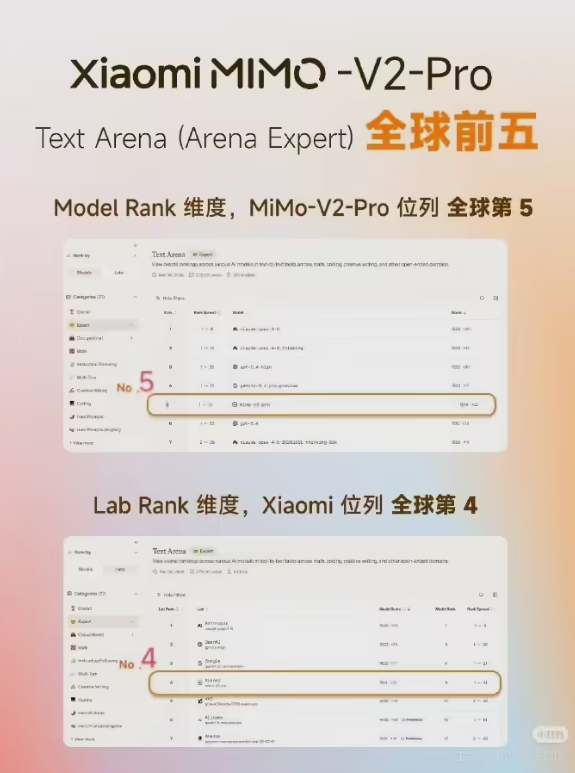
Xiaomi's MiMo-V2-Pro has secured a spot among the world's top five AI models in Text Arena's rigorous evaluation, a testament to its advanced reasoning and dialogue capabilities. CEO Lei Jun highlights the significance of user votes over traditional rankings, showcasing Xiaomi's commitment to real-world performance. The achievement reflects the company's substantial investments in AI and its strategy to integrate these technologies across its ecosystem.

March 31, 2026
XiaomiAIMiMo-V2-Pro