Eureka AI Agent: Revolutionizing R&D with AI-Powered Innovation
Why Eureka AI Agent Stands Out in R&D Innovation
In an era where technological advancement dictates market leadership, the Eureka AI Agent emerges as a game-changer for research and development teams. Developed by Patsnap, this platform addresses a critical pain point: the 40% of R&D time typically wasted on manual information gathering and analysis. By automating these processes, Eureka delivers efficiency gains of 300-500%, allowing scientists and engineers to focus on breakthrough innovations rather than administrative tasks.
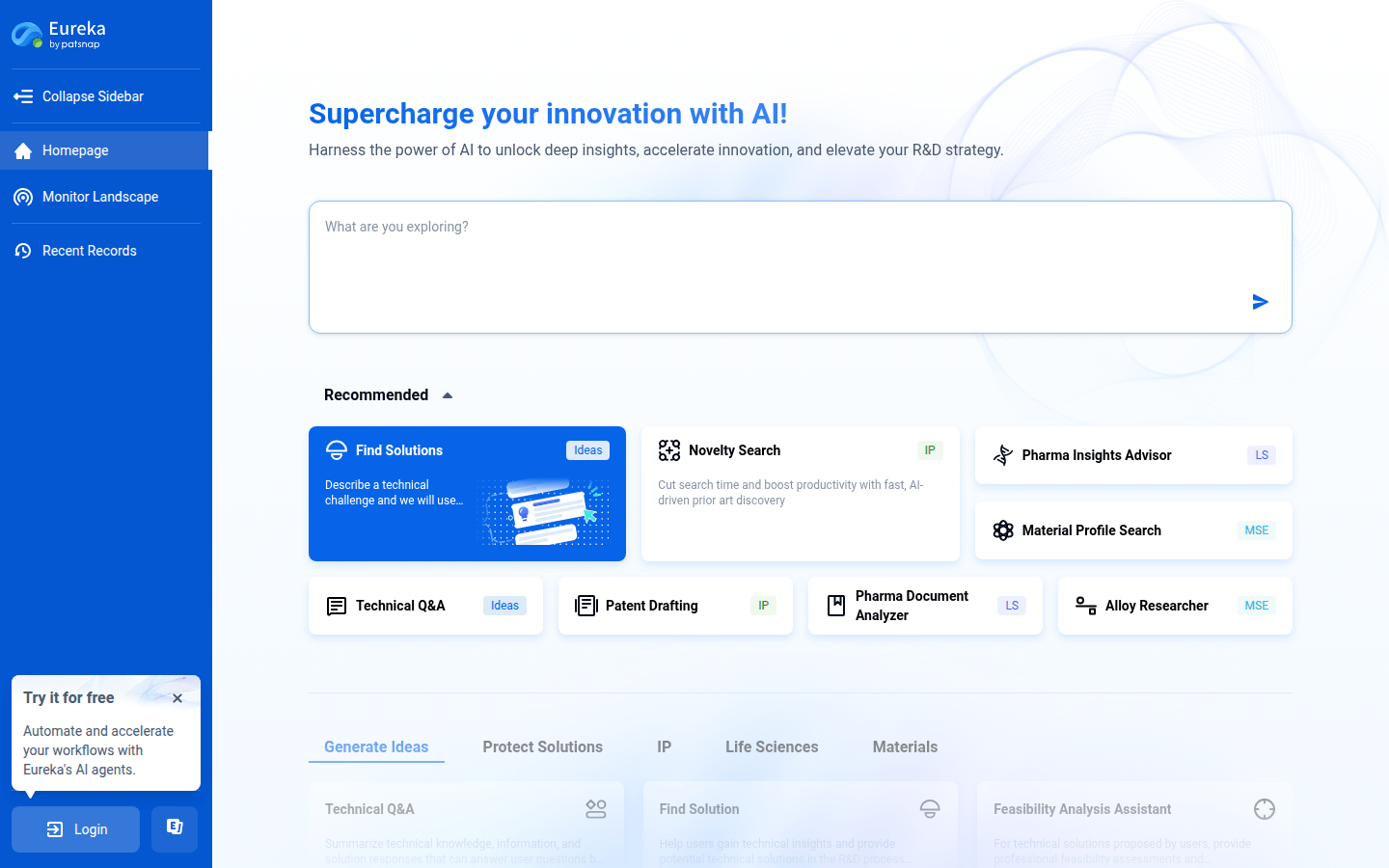
Core Capabilities: Beyond Basic Automation
Eureka distinguishes itself from conventional AI tools through its comprehensive approach to the innovation lifecycle:
- Intelligent Idea Generation: Leveraging deep learning models to analyze millions of patents and scientific papers, suggesting novel solutions researchers might overlook.
- Feasibility Prediction: The system evaluates technical proposals against historical data to forecast implementation challenges before resources are committed.
- IP Protection Suite: Automated patent drafting and Freedom-to-Operate analysis help secure innovations while avoiding infringement risks.
- Material Science Breakthroughs: By mapping composition-property relationships, Eureka accelerates new material development cycles that traditionally take years.
The platform offers specialized agents tailored to industries like life sciences (for clinical data analysis) and electronics engineering (for patent strategy development), demonstrating remarkable adaptability across technical domains.
Real-World Impact: Case Studies Reveal Tangible Benefits
Material Development Test Case When challenged to develop a new thermal conductive material, Eureka's Materials Science Agent:
- Generated 27 viable component combinations in under a minute
- Identified 143 relevant research papers and patents automatically
- Predicted performance characteristics with 85% accuracy compared to lab results The process reduced literature review time by 80%, compressing months of work into days.
Patent Application Scenario For an electronic device innovation, the platform:
- Drafted comprehensive patent claims covering key aspects
- Flagged five potentially conflicting existing patents
- Suggested design modifications to avoid infringement The output proved accurate enough for legal teams to use with minimal revision.
Enterprise-Grade Features for Collaborative Innovation
Beyond individual productivity gains, Eureka shines in team environments with:
- Real-time collaborative workspaces for distributed R&D teams
- Dynamic knowledge graphs that reveal unexpected technical connections
- Proactive alerts tracking competitor patent activities through API integrations with existing PLM systems These features explain why midsize-to-large R&D organizations report the strongest ROI from adoption.
Pricing Structure: From Exploration to Enterprise Deployment
The free tier allows basic exploration (5 daily queries), while the $9,600/year enterprise version unlocks unlimited access to advanced analytics and dedicated support. Compared to traditional patent attorney fees ($400/hour), companies typically recoup their investment after just three complex FTO analyses.
Competitive Landscape: Where Eureka Leads
The platform's edge becomes clear when comparing key features:
| Feature | Eureka | Competitors |
|---|
This comprehensive approach explains its rapid adoption across technology-driven sectors.
Future Roadmap: Expanding the AI Advantage
The next six months will bring enhanced capabilities including experimental data interpretation modules and technology commercialization assessments. These upgrades promise to further cement Eureka's position as the premier AI partner for research organizations. For teams serious about maintaining technological leadership, piloting Eureka on targeted projects offers a low-risk way to experience its transformative potential firsthand. Experience the free version
Key Points
- Reduces R&D administrative workload by up to 80% through intelligent automation
- Specialized agents deliver domain-specific insights for materials science, life sciences, and engineering
- Enterprise features support collaborative innovation across distributed teams
- ROI becomes evident within weeks for patent-intensive organizations
- Upcoming features will expand into experimental analysis and commercialization planning