

DeepSeek-V4 Set to Revolutionize Code Generation This February
DeepSeek's Next-Gen AI Coder Arrives for Lunar New Year
Tech circles are buzzing with anticipation as DeepSeek prepares to roll out its flagship DeepSeek-V4 model in mid-February. This isn't just another incremental update - early tests suggest it could redefine what we expect from AI-assisted coding.
Why Developers Should Pay Attention
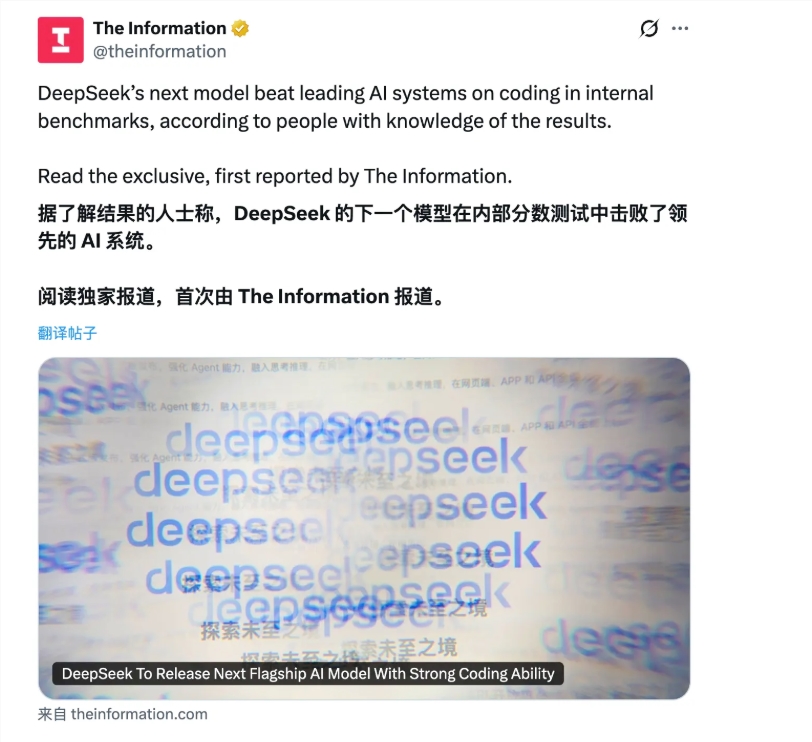
The new model builds on December's V3.2 release but packs substantially more power under the hood. Internal benchmarks show it outperforming established players like Anthropic's Claude and OpenAI's GPT series, particularly when wrestling with lengthy, complex code prompts. Imagine an AI that doesn't just complete your code snippets but truly understands the architecture of your entire project.
"Users will notice immediately how much more structured the responses are," reveals an insider familiar with the development. This isn't just about speed - it's about precision. The model's revamped architecture allows it to spot patterns in data sequences that would trip up earlier versions, all while making smarter use of computing resources.
Following in Successful Footsteps
The release strategy mirrors last year's hit R1 model, which sparked an open-source revolution among Chinese AI developers. DeepSeek has been on a roll lately, launching specialized models for everything from mathematical operations to multimodal processing. Each release seems to push boundaries further.
While company officials remain tight-lipped about specific features, the tech community is already speculating about potential applications. Could this be the tool that finally bridges the gap between conceptual design and production-ready code? Many developers think so.
What This Means for AI's Future
Beyond immediate practical applications, DeepSeek-V4 represents another leap forward in artificial intelligence capabilities. Its ability to maintain context across long code sequences suggests we're moving closer to AI that can genuinely collaborate on complex engineering challenges rather than just assisting with discrete tasks.
The launch timing - coinciding with Lunar New Year celebrations - feels symbolic. Just as the holiday marks renewal and progress in many Asian cultures, this release could signal a new chapter in how humans and machines create software together.
Key Points:
- Launch scheduled for mid-February 2026
- Significant improvements in code generation and long-sequence processing
- Outperforms Claude and GPT series in internal tests
- New architecture enables better pattern recognition
- Follows successful R1 open-source model strategy