DeepSeek Finds Smarter AI Doesn't Need Bigger Brains

AI Gets Smarter Without Growing Bigger

In a finding that could reshape how we build artificial intelligence, DeepSeek researchers have demonstrated that smarter AI doesn't necessarily require bigger models. Their groundbreaking study shows thoughtful architectural tweaks can outperform brute-force parameter increases.

Rethinking How AI Learns

The team focused on solving fundamental issues plaguing large language models. "We noticed traditional architectures struggle with unstable signal propagation," explains lead researcher Dr. Li Wei. "It's like trying to have a coherent conversation while standing in a wind tunnel - the message gets distorted."

Their solution? Introducing carefully designed "constraint" mechanisms that stabilize information flow while maintaining flexibility. Imagine giving AI both better highways and traffic control systems rather than just adding more lanes.

Measurable Improvements Across the Board

The results speak volumes:

  • 7.2% boost in complex reasoning (BIG-Bench Hard)
  • Notable gains in mathematical problem-solving (GSM8K)
  • Improved logical reasoning scores (DROP)

What makes these numbers remarkable? They came with just 6-7% additional training cost - pocket change compared to traditional scaling approaches.

Challenging Industry Assumptions

For years, the AI field operated on a simple premise: more parameters equal smarter systems. DeepSeek's work proves there's another way. "We're showing you can teach an old dog new tricks," jokes Dr. Li, "or rather, teach existing architectures to perform much better."

The implications are significant for companies struggling with ballooning AI development costs. This approach offers a path to better performance without requiring exponentially more computing power.

What This Means Going Forward

The research suggests we may be entering an era of "smarter scaling" where architectural innovation complements traditional model growth. As companies face practical limits on how big models can get, solutions like DeepSeek's will become increasingly valuable.

Key Points:

  • 🧠 Quality Over Quantity: Architectural refinements outperform simple parameter increases
  • 📊 Measurable Gains: Clear improvements across reasoning, math and logic tests
  • 💰 Cost-Effective: Major performance boosts for minimal additional training expense
Enjoyed this article?

Subscribe to our newsletter for the latest AI news, product reviews, and project recommendations delivered to your inbox weekly.

Weekly digestFree foreverUnsubscribe anytime

Related Articles

Sakana AI's Tiny Plugin Could Revolutionize How AI Handles Massive Documents
News

Sakana AI's Tiny Plugin Could Revolutionize How AI Handles Massive Documents

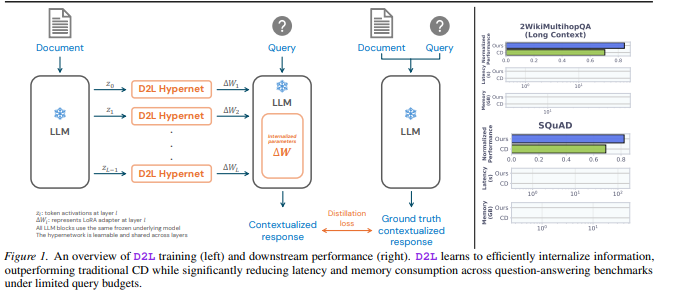
Tokyo-based Sakana AI has unveiled groundbreaking technologies that could solve large language models' notorious 'memory anxiety.' Their Text-to-LoRA and Doc-to-LoRA systems enable AI to digest lengthy documents in under a second, shrinking memory requirements from gigabytes to mere megabytes. This breakthrough promises to make customizing AI models dramatically cheaper and more accessible.

February 28, 2026
AI InnovationMachine LearningNatural Language Processing
Chinese AI Models Outpace US Competitors in Global Adoption
News

Chinese AI Models Outpace US Competitors in Global Adoption

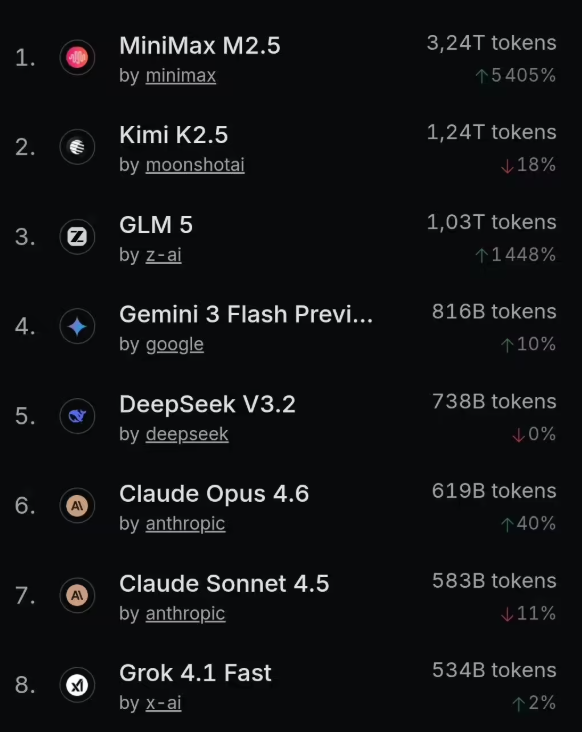
In a surprising shift, Chinese AI models have overtaken their US counterparts in global usage for the first time. Platforms like MiniMax and Moonshot AI are leading the charge, with Chinese models accounting for over 5 trillion weekly tokens - nearly double American offerings. This milestone reflects China's growing influence in artificial intelligence development.

February 27, 2026
AI CompetitionChinese TechMachine Learning
Moonshot AI's Kimi K2.5 Achieves Remarkable Profitability Milestone
News

Moonshot AI's Kimi K2.5 Achieves Remarkable Profitability Milestone

Moonshot AI's latest model, Kimi K2.5, has stunned the tech world by generating more revenue in its first 20 days than all of 2025 combined. The breakthrough comes primarily from overseas users and developers embracing its API services, propelling the company's valuation past $10 billion. Founder Yang Zhilin confirms the company is well-funded with no immediate IPO plans.

February 24, 2026
Artificial IntelligenceTech StartupsMachine Learning
News

Chinese AI Models Capture Global Spotlight During Lunar New Year

Chinese artificial intelligence models made waves internationally during the 2026 Spring Festival, capturing over 60% market share on OpenRouter's developer platform. Three domestic models - MiniMax M2.5, Kimi K2.5, and Zhipu GLM-5 - dominated the rankings by offering superior coding and automation capabilities at remarkably low costs. Their success highlights China's growing influence in AI productivity tools.

February 24, 2026
Artificial IntelligenceChinese TechDeveloper Tools
Google's Gemini 3.1 Pro Outshines Competitors With Breakthrough Reasoning Skills
News

Google's Gemini 3.1 Pro Outshines Competitors With Breakthrough Reasoning Skills

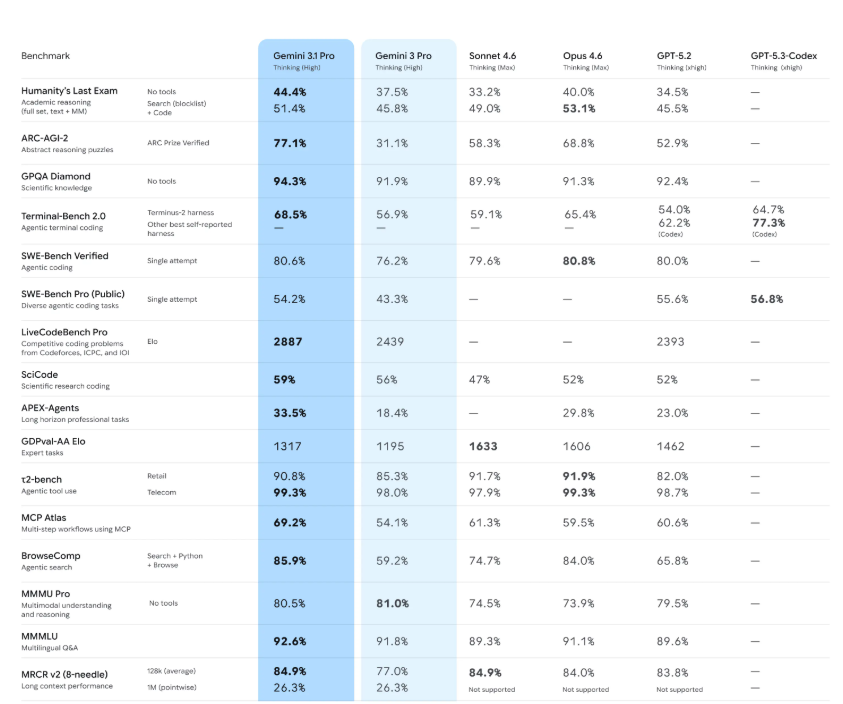
Google has unveiled Gemini 3.1 Pro, its most advanced AI model yet, showcasing remarkable improvements in logical reasoning and problem-solving. The new architecture delivers more than double the performance of its predecessor in critical tests, even surpassing GPT-5.2 in some benchmarks. Beyond raw power, Gemini 3.1 Pro introduces innovative multimodal capabilities, handling ultra-long contexts and generating visual representations of complex concepts.

February 24, 2026
AI InnovationGoogle TechMachine Learning
Google's Gemini 3.1 Pro Doubles Down on AI Reasoning Power
News

Google's Gemini 3.1 Pro Doubles Down on AI Reasoning Power

Google has unveiled Gemini 3.1 Pro, its latest AI model that dramatically improves reasoning capabilities. Benchmarks show it outperforms its predecessor by more than double in logical processing tests. The tech giant is making the model widely available through multiple platforms, offering enhanced features for premium subscribers.

February 20, 2026
AI InnovationGoogle TechMachine Learning