China Targets False Info in Self-Media with AI Labeling Rules

China Cracks Down on Self-Media Misinformation with New AI Regulations

Beijing, July 29, 2025 — The Cyberspace Administration of China (CAC) has initiated a nationwide campaign to address the growing problem of false information disseminated through self-media platforms. The two-month special operation, which began July 24, represents one of the most comprehensive efforts to date to regulate digital content creation and distribution.

Campaign Scope and Objectives

The campaign will be implemented across all provincial-level administrative regions, including the Xinjiang Production and Construction Corps. Authorities aim to tackle misinformation through a dual approach combining technological governance measures with enhanced platform accountability.

Image

Four Key Focus Areas

  1. Hot Topic Exploitation: Targeting accounts that impersonate individuals involved in trending events or fabricate "authoritative data" in sensitive fields like finance and military affairs.
  2. Data Fraud Techniques: Addressing AI-synthesized fake news, edited footage creating false narratives, and manipulation of trending lists through artificial engagement.
  3. Labeling Violations: Combating accounts that spread unverified content through obscured sources or use matrix accounts to conceal origins.
  4. False Expertise: Cracking down on unqualified individuals posing as specialists to promote unconventional theories or create fabricated influencer personas for commercial gain.

Platform Requirements

The CAC has mandated three critical mechanisms for all digital platforms:

  • Mandatory source labeling for all content entering recommendation algorithms
  • Enhanced verification of professional credentials tied to account activities
  • Streamlined reporting systems with graduated penalties ranging from guidance for first-time offenders to permanent bans for malicious actors

Platforms must also strengthen their negative list management and revenue permission systems. Those failing to comply face significant legal consequences.

Long-Term Strategy

An CAC official emphasized the campaign's "treating both symptoms and root causes" approach:

"Through technical measures like improved AI detection and by reinforcing platform responsibilities, we aim to establish sustainable industry standards that prioritize authenticity and professionalism in digital content creation."

The initiative will work in tandem with ongoing supervision efforts while developing a credit evaluation system for self-media operators.

Key Points:

  • Two-month national campaign against self-media misinformation begins July 24
  • Four primary violation categories identified for enforcement action
  • Platforms required to implement new verification and labeling systems
  • Combination of technical solutions and regulatory oversight planned
  • Long-term goal of establishing industry-wide credibility standards

Enjoyed this article?

Subscribe to our newsletter for the latest AI news, product reviews, and project recommendations delivered to your inbox weekly.

Weekly digestFree foreverUnsubscribe anytime

Related Articles

X cracks down on unmarked AI war videos with revenue bans
News

X cracks down on unmarked AI war videos with revenue bans

Social media platform X is tightening its rules around AI-generated conflict footage. Creators who post unlabeled synthetic war videos will face a 90-day suspension from revenue sharing, with permanent bans for repeat offenders. The move comes as concerns grow about AI's role in spreading wartime misinformation.

March 4, 2026
social media policyAI regulationmisinformation
ChatGPT's Split Personality: Why Web and API News Recommendations Differ
News

ChatGPT's Split Personality: Why Web and API News Recommendations Differ

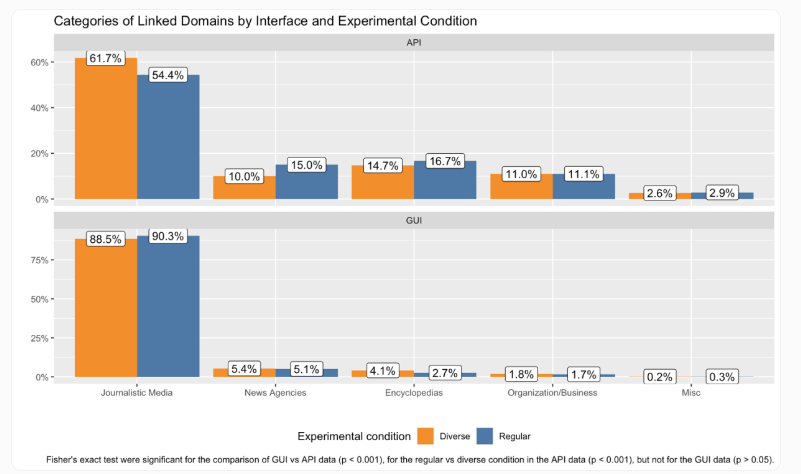
A new study reveals ChatGPT recommends different news sources depending on how you access it. The web version favors mainstream German outlets like Bild and Tagesschau, while the API leans toward Wikipedia and niche tech sites. Researchers warn that requests for 'diverse sources' may actually increase exposure to unreliable information, highlighting transparency concerns in AI news recommendations.

November 10, 2025
ChatGPTAI transparencymedia bias
New AI Content Labeling Rules Take Effect September 1
News

New AI Content Labeling Rules Take Effect September 1

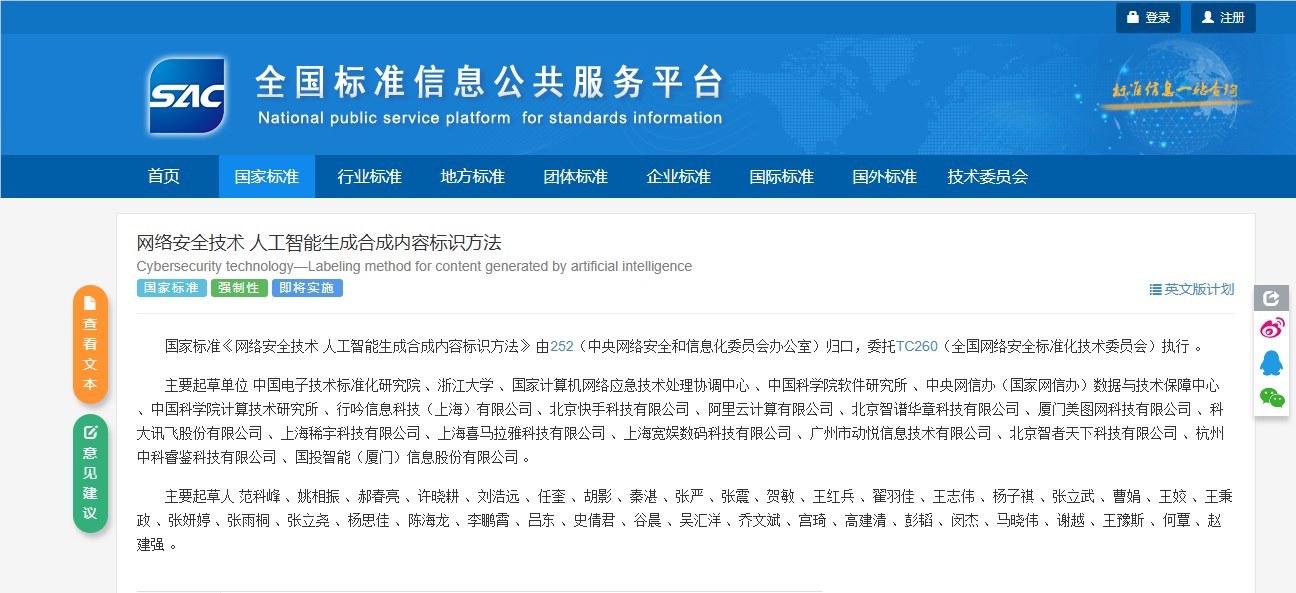
China's mandatory GB45438-2025 standard for AI-generated content identification takes effect September 1, requiring clear labeling of all AI-produced material. The regulation establishes explicit and implicit identification systems, with strict formatting requirements across text, images, video, and audio content. Non-compliance carries significant legal and operational risks for both content creators and platforms.

August 29, 2025
AI regulationcontent labelingGB45438
TikTok VP Denies 7-Month Turnover Claim, Cites AI-Generated Content
News

TikTok VP Denies 7-Month Turnover Claim, Cites AI-Generated Content

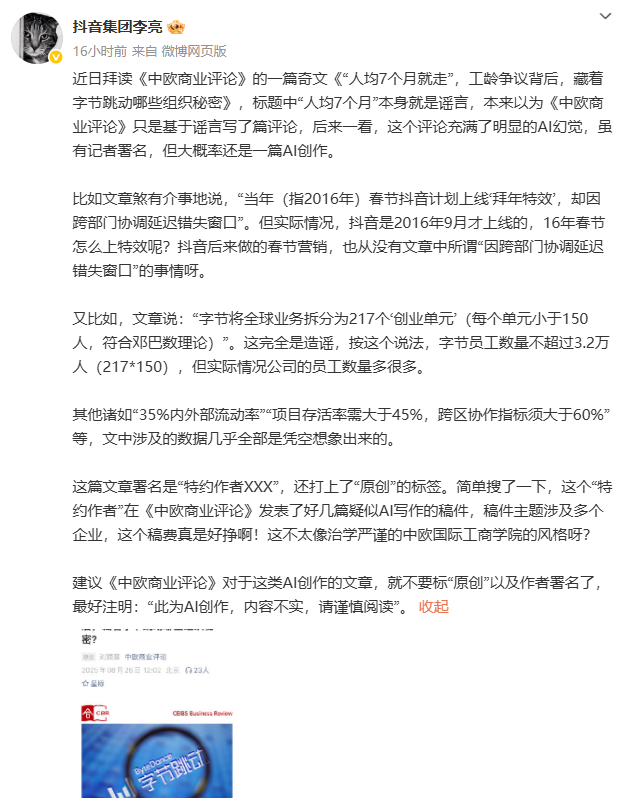
ByteDance VP Li Liang refuted claims of high employee turnover at TikTok, attributing the misinformation to an AI-generated article. He clarified TikTok's launch timeline and called for transparency in media labeling of AI content to prevent reader misinformation.

August 27, 2025
TikTokAIethicsByteDance
Google AI Errors Spark Backlash from Businesses
News

Google AI Errors Spark Backlash from Businesses

Google's AI Overview feature is facing criticism after repeatedly providing incorrect information to users, leading to frustration for small businesses. A Montana restaurant owner reports angry customers due to fabricated menu items and false promotions. This highlights ongoing issues with AI 'hallucinations' and raises concerns about reliability as tech giants push AI adoption.

August 25, 2025
GoogleAIAIhallucinationbusinessimpact
Study: AI Models More Likely to Spread Misinformation When Asked for Short Answers
News

Study: AI Models More Likely to Spread Misinformation When Asked for Short Answers

A French AI research institute found that language models produce less accurate responses when users request brief answers, with some models showing a 20% drop in factual accuracy. User phrasing and tone also significantly impact model performance.

May 12, 2025
AI researchlanguage modelsmisinformation