ChatGPT Hits 1 Billion Users as Women Take the Lead
ChatGPT's User Base Reaches New Heights
OpenAI's flagship AI chatbot has officially joined the billion-user club. Recent data reveals ChatGPT now boasts nearly 1 billion weekly active users worldwide, cementing its position as one of the most widely used AI applications in history.
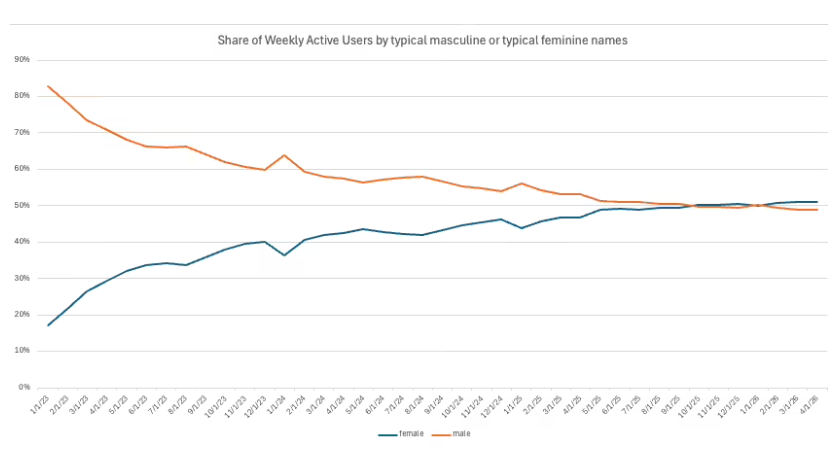
Gender Shift in AI Adoption
The most striking development comes from the platform's evolving user demographics. Women now represent over 50% of ChatGPT users - a remarkable turnaround from 2022 when female users accounted for just 20% of the user base. This translates to approximately 500 million women regularly engaging with the AI assistant.
"This shift reflects how AI technology is becoming truly mainstream," notes tech analyst Maria Chen. "We're seeing artificial intelligence move beyond its early adopter phase to become a tool for everyone."
Computing Power Surge
Behind the scenes, OpenAI is making massive investments in infrastructure:
- Current computing power: 1.9 gigawatts (up from 0.2 gigawatts in 2023)
- Annual growth rate: 300%
- Major partnerships with NVIDIA and other tech giants
- 2030 goal: 30 gigawatts of computing capacity
These upgrades mean users can expect faster, more sophisticated responses as ChatGPT handles its rapidly growing user base.
What This Means for the Future
The platform's expansion comes at a crucial moment in the AI race. With major competitors like Google's Gemini and Anthropic's Claude gaining traction, OpenAI's ability to maintain service quality while scaling up will be critical.
Industry observers point to several key factors in ChatGPT's success:
- Accessibility: Simple interface lowers barriers to entry
- Versatility: Useful for both work and personal tasks
- Continuous improvement: Regular updates keep users engaged
Key Points
- 💡 User milestone: Nearly 1 billion weekly active users worldwide
- 👩💻 Demographic shift: Female users now exceed 50% of total
- ⚡ Power boost: Computing capacity growing at 300% annually
- 🚀 Future plans: Targeting 30 gigawatts by 2030