ChatGPT Gets Smarter: OpenAI's New Skills Feature Takes AI to the Next Level
OpenAI's Game-Changing Update: ChatGPT Learns New Tricks
ChatGPT is about to get significantly smarter. OpenAI is quietly testing a revolutionary new "skills" feature that could transform how we interact with artificial intelligence—and it might just leave competitors scrambling to catch up.
From Simple Prompts to Powerful Skills
Currently, ChatGPT relies on "GPTs"—essentially packaged prompt engineering—to handle specialized tasks. But this new system takes customization to unprecedented levels. 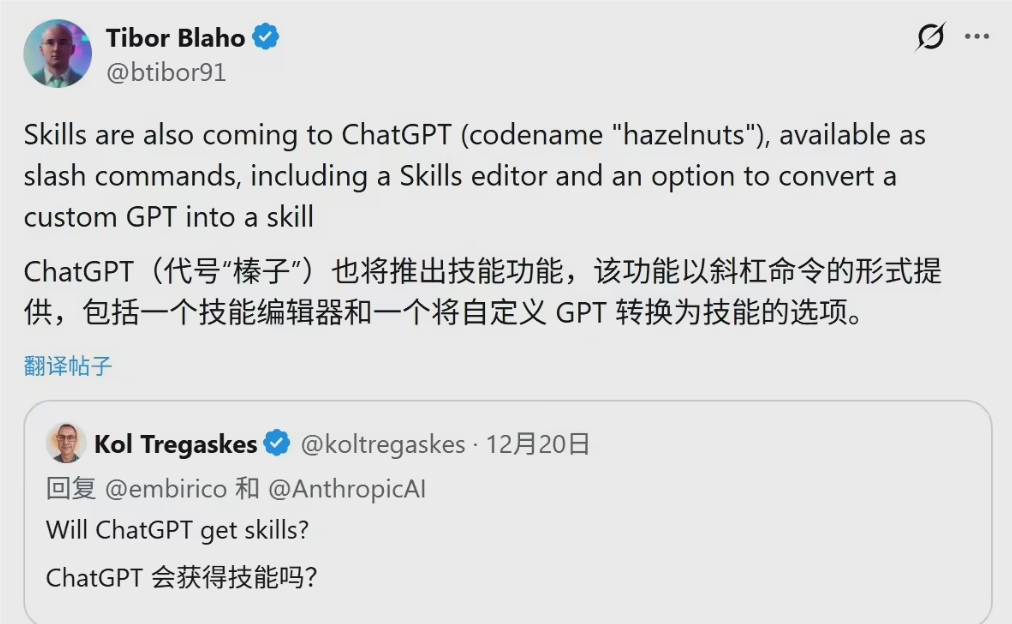
Insiders report the feature (codenamed "hazelnuts") borrows cleverly from Anthropic's Claude, implementing a folder-based instruction model. Imagine not just tweaking prompts, but actually teaching ChatGPT complete workflows tailored to your needs.
"This isn't just another incremental update," explains tech analyst Mark Chen. "We're seeing ChatGPT evolve from a brilliant conversationalist into something resembling a true digital assistant."
Four Pillars of Power
The leaked details reveal four core strengths:
- Composability: AI automatically combines relevant skills for complex tasks
- Portability: Skills transfer seamlessly between conversations
- Efficiency: Dramatically reduced setup time for specialized uses
- Power: Includes executable code capabilities for precision work
Picture this: Ask ChatGPT to design a website, and it instinctively layers coding knowledge with UI/UX principles—no manual skill-switching required.
Slash Commands Meet Serious Brains
The update introduces intuitive slash commands (/design, /analyze) while maintaining natural conversation flow. More impressively, certain skills will execute actual code snippets when needed—perfect for calculations or logic verification where guessing won't cut it.
OpenAI plans smooth onboarding tools too:
- A dedicated Skill Editor for crafting custom workflows
- One-click conversion of existing GPTs into new-style skills
- Deep integration with current chat interfaces
The implications? Professionals could build legal research assistants that actually understand case law hierarchies, or marketing bots fluent in campaign analytics—all without touching a line of code.
The Future Feels Closer
While OpenAI hasn't announced an official rollout date, industry watchers predict we'll see this feature debut within months. When it arrives, expect ChatGPT to handle complex requests with newfound sophistication—making today's version seem almost quaint by comparison.
The AI arms race just got more interesting.
Key Points:
- Structural shift: Moves beyond simple prompts to teachable workflows
- Competitive inspiration: Adopts successful elements from Claude's architecture
- Real-world ready: Executable code features boost reliability for professional use
- User-friendly transition: Conversion tools preserve existing customizations
- Hidden potential: Could enable truly specialized AI assistants across industries