ChatGPT Gains Gender Parity as Female Users Top 500 Million

ChatGPT's Gender Shift Reflects AI's Mainstream Moment

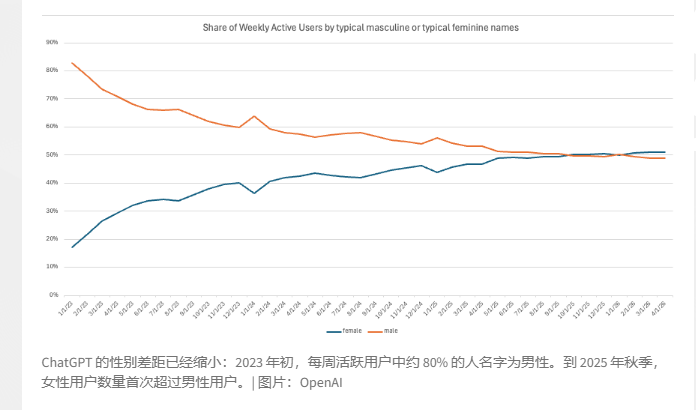
In a striking demonstration of how far artificial intelligence has come, OpenAI's latest user statistics show women now represent the majority of ChatGPT's active users. From making up just 20% of users at launch in late 2022, female engagement has steadily climbed to surpass the 50% mark by autumn 2025.

Image

With ChatGPT's monthly active user base nearing 1 billion globally, this means approximately 500 million women worldwide now regularly use the AI assistant. "This isn't just about numbers - it's about AI crossing a fundamental adoption threshold," an OpenAI spokesperson noted. "When any technology achieves gender parity, it's a clear sign it's moved beyond early adopters to become a true mainstream tool."

The Global AI Power Struggle

Beyond user demographics, OpenAI's report sheds light on the intensifying competition between the US and China in artificial intelligence development. By 2025, China's total AI investment is projected to reach between $97.2 billion and $125.3 billion. While the US still leads in absolute spending (expected to hit $527 billion by 2026), China's lower infrastructure costs give each dollar more purchasing power.
Image

Chinese tech giants Alibaba, ByteDance, Huawei, and Tencent are driving much of this investment, positioning the country as a formidable AI competitor. "The playing field isn't as uneven as raw dollar figures might suggest," observes tech analyst Mei Lin. "China's ability to maximize its AI budget through efficient infrastructure spending makes this race far closer than many assume."

Computing Power: The Engine of AI Development

At the heart of this technological arms race lies computing capacity. OpenAI's own computing scale has seen explosive growth, jumping from 0.2 GW in 2023 to 1.9 GW in 2025. While earlier ambitions targeted 10 GW or more, the company has adopted a more measured approach, now aiming for 30 GW by 2030.

This strategic shift reflects the practical challenges of scaling AI infrastructure. "It's not just about building bigger - it's about building smarter," explains OpenAI's infrastructure lead. "Our revised targets balance ambition with what's realistically achievable given current technological and environmental constraints."

Key Points:

  • Gender milestone: Female users now surpass 50% of ChatGPT's active user base
  • Global reach: Approximately 500 million women worldwide regularly use ChatGPT
  • US-China race: China's AI investment could reach $125B by 2025, leveraging cost efficiencies
  • Tech leaders: Alibaba, ByteDance, Huawei, and Tencent drive China's AI spending
  • Computing growth: OpenAI's capacity grew from 0.2GW to 1.9GW in two years
  • Future goals: Company targeting 30GW computing capacity by 2030
Enjoyed this article?

Subscribe to our newsletter for the latest AI news, product reviews, and project recommendations delivered to your inbox weekly.

Weekly digestFree foreverUnsubscribe anytime

Related Articles

News

ZTE's Co-Claw AI System Boosts Computing Power Revenue by 150%

ZTE has launched its Co-Claw AI Appliance, designed to tackle security and compliance challenges in enterprise AI applications. The company's computing power business has seen a remarkable 150% revenue growth in 2025, now accounting for nearly a quarter of total revenue. This strategic move positions ZTE at the forefront of AI infrastructure development.

April 10, 2026
AI infrastructureenterprise technologycomputing power
News

Meituan Exec: Restaurants Must Digitize Before AI Can Serve Up Success

At China's Restaurant Chain Summit, Meituan's Li Shubin revealed why digitizing basic business information - not flashy AI tools - is the real first course for restaurants. As diners' requests grow more complex ('Find me a pet-friendly French bistro with sunset views under ¥200'), AI needs accurate digital menus, inventory and ambiance tags to make smart matches. Meituan's investing billions to build this 'local life information infrastructure' so every eatery can eventually have an AI sous-chef handling customer quirks.

April 8, 2026
restaurant technologyAI adoptionbusiness digitization
Microsoft's Superconductor Breakthrough Could Revolutionize Data Centers
News

Microsoft's Superconductor Breakthrough Could Revolutionize Data Centers

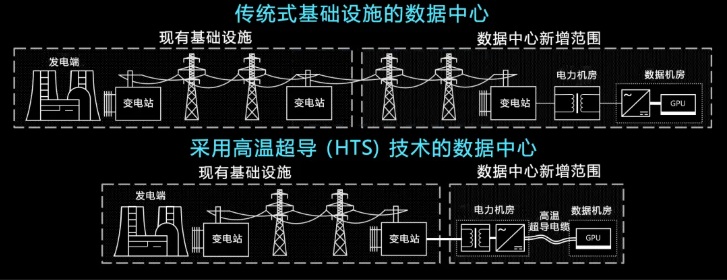
Microsoft is making waves with its high-temperature superconductivity technology that promises to transform how data centers handle power. By eliminating energy loss during transmission, these ultra-efficient cables could solve the growing power demands of AI infrastructure while reducing environmental impact. The tech giant has already begun real-world testing with partners, signaling a potential shift in how we power our digital future.

April 7, 2026
superconductorsMicrosoftdata centers
News

Google's Texas Gas Plant Fuels AI Boom, Sparks Climate Concerns

Google is building a 933-megawatt natural gas plant in Texas to power its AI data centers, raising questions about tech giants' climate commitments. The project, developed with Crusoe Energy, could emit 45 million tons of CO2 annually - a sharp contrast to Google's net-zero pledges. As AI's energy demands skyrocket, even Silicon Valley's green champions are turning to fossil fuels to keep servers running.

April 3, 2026
AI infrastructureTech sustainabilityEnergy policy
AI Adoption Divide: How China and the U.S. Approach AI Tools Differently
News

AI Adoption Divide: How China and the U.S. Approach AI Tools Differently

OpenClaw founder Peter Steinberger reveals stark contrasts in AI adoption between China and the U.S. While Chinese companies mandate AI tool usage, some American firms restrict them over security concerns. Steinberger shares insights on workplace impacts and his vision for personal AI agents that could reshape how we work and interact with technology.

March 27, 2026
AI adoptionOpenClawtech policy
Alibaba Cloud hikes AI service prices amid computing crunch
News

Alibaba Cloud hikes AI service prices amid computing crunch

Alibaba Cloud is raising prices for its AI computing and storage services by up to 34%, signaling tightening supply in the cloud infrastructure market. The increases affect core products including the Pingtouge Zhenwu series and specialized storage solutions, driven by surging global demand for AI capabilities. This move reflects the growing strain on computing resources as generative AI applications scale up worldwide.

March 18, 2026
cloud computingAI infrastructureAlibaba Cloud