Anthropic's Conway: Claude Gets Its Own Workspace and App Store

Anthropic Takes Claude to the Next Level with Conway

Artificial intelligence research company Anthropic is quietly working on what could be a game-changer for its Claude AI system. Codenamed Conway, this persistent agent solution aims to evolve Claude from a conversational partner into something more akin to a digital coworker.

Breaking Free from the Chat Window

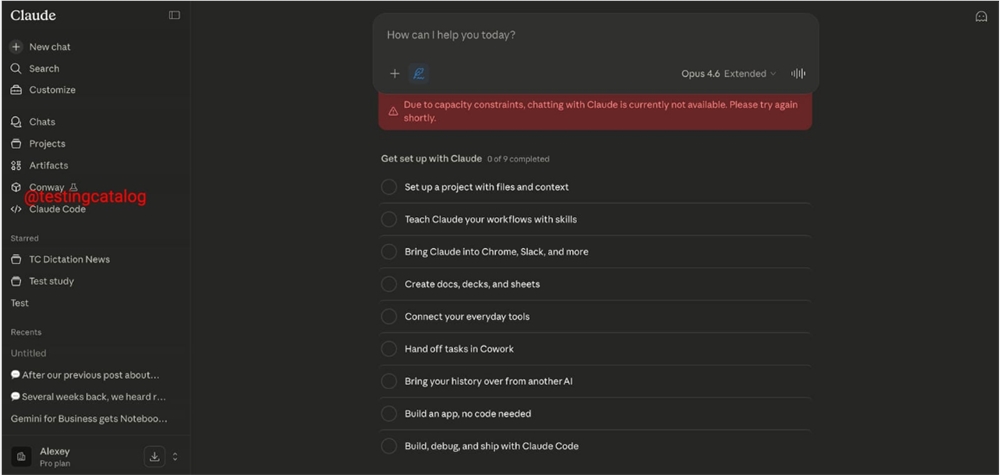
The most striking change? Conway won't be confined to chat interfaces. Instead, it will function as an independent workspace where Claude can operate more autonomously. Imagine an AI that doesn't just respond when pinged but maintains its own persistent environment - complete with browser access and external service connections.

Image

"This moves us beyond the question-and-answer paradigm," explains one industry observer who asked to remain anonymous. "Conway suggests Anthropic sees Claude becoming more of an active participant than just a responsive tool."

Always On, Always Ready

Key features include:

  • Webhook integration allowing external services to trigger Claude's actions
  • Native Claude Code functionality for deeper programming tasks (possibly linked to Epitax)
  • A forthcoming extension system using the CNW ZIP standard

The extension system particularly stands out - it promises to let developers create custom tools and interface elements, effectively building an ecosystem around Claude. Think app store meets AI assistant.
Image

Why This Matters

The move positions Anthropic squarely in competition with projects like OpenClaw while pushing the entire field toward "always-on" AI agents. For users, it means Claude could soon handle multi-step workflows without constant prompting - scheduling meetings while researching background information, then drafting follow-up emails, all in one continuous process.

"We're seeing the beginnings of true digital assistants," notes tech analyst Miranda Cho. "Not just tools that answer when called, but partners that maintain context and initiative."

Key Points:

  • Workspace not chatbot: Conway gives Claude its own persistent environment beyond chat windows
  • Developer ecosystem: Coming extension standard (CNW ZIP) will allow third-party add-ons
  • Automation boost: Webhook support enables event-triggered actions from other services
  • Code integration: Native Claude Code functionality hints at deeper programming capabilities
Enjoyed this article?

Subscribe to our newsletter for the latest AI news, product reviews, and project recommendations delivered to your inbox weekly.

Weekly digestFree foreverUnsubscribe anytime

Related Articles

News

Hackers Exploit Claude Code Leak in Sophisticated GitHub Phishing Scheme

A major security breach has put developers at risk after Anthropic's Claude Code tool accidentally exposed over half a million lines of source code. Cybercriminals have seized the opportunity, creating fake GitHub repositories that distribute malware disguised as 'unlocked' versions of the leaked code. Security experts warn these traps install Vidar trojan malware capable of stealing sensitive data including cryptocurrency wallets. The attackers are using search engine optimization to make their malicious repositories appear legitimate, prompting urgent warnings for developers to stick to official channels.

April 3, 2026
CybersecurityAI DevelopmentPhishing Attacks
Google's Gemma4 Goes Truly Open: What It Means for Developers
News

Google's Gemma4 Goes Truly Open: What It Means for Developers

Google has taken a bold step with its latest AI model Gemma4, adopting the Apache 2.0 license to give developers unprecedented freedom. This marks a significant shift from previous restrictive policies, allowing commercial use and modification without legal hurdles. The new model boasts improved performance and seamless integration with existing developer tools, potentially leveling the playing field for smaller companies in the AI race.

April 3, 2026
Gemma4Open Source AIGoogle
News

Microsoft Bets Big on Homegrown AI to Challenge Industry Leaders

Microsoft is making an aggressive push into developing its own AI models, aiming to compete head-to-head with OpenAI and Anthropic by 2027. The tech giant is investing heavily in computing power with NVIDIA's latest chips and has already seen promising results with a new speech transcription model. This strategic shift comes after Microsoft gained more independence from its partnership with OpenAI, signaling its ambition to become a leader rather than just an integrator of AI technology.

April 3, 2026
MicrosoftAI DevelopmentTech Competition
News

Google's Gemma 4: A Powerhouse AI Model Set to Shake Up Open-Source Landscape

Google is gearing up to unveil Gemma 4, its next-generation open-source AI model that promises four times the parameters of its predecessor. With a rumored 120 billion parameters and innovative MoE architecture, this release marks Google's strategic move to reclaim influence in the open-source AI space. The tech world watches closely as this development could redefine the balance between commercial and open-source AI models.

April 2, 2026
AI DevelopmentOpen Source TechMachine Learning
News

Anthropic's GitHub Cleanup Backfires, Wiping Thousands of Legit Repos

In a dramatic case of overzealous damage control, AI company Anthropic accidentally deleted thousands of legitimate GitHub repositories while trying to remove leaked source code. What began as an effort to contain a security breach turned into a PR disaster when automated tools misfired, wiping out unrelated projects. The incident has sparked outrage among developers and raised questions about how tech giants handle crisis management in the open-source community.

April 2, 2026
AnthropicGitHubOpenSource
Claude Code's Security Flaw: When Too Many Commands Overwhelm AI Defenses
News

Claude Code's Security Flaw: When Too Many Commands Overwhelm AI Defenses

A newly discovered vulnerability in Anthropic's Claude Code tool reveals how hackers can bypass its security measures simply by flooding it with commands. When the system receives more than 50 sub-commands at once, its automatic rejection mechanism fails, potentially exposing users to dangerous operations. Security experts warn this flaw could be particularly risky in automated development environments where permission checks might be skipped.

April 2, 2026
AI SecurityAnthropicSoftware Vulnerabilities