AntGroup's LingBot-Map Brings Real-Time 3D Mapping to Everyday Cameras
AntGroup's Game-Changing 3D Mapping Tech Goes Open-Source
In a move that could democratize spatial computing, AntGroup's Lingbo Technology has released LingBot-Map as open-source software. This innovative solution performs real-time 3D reconstruction using nothing more than a standard RGB camera - the kind found in most smartphones.
How It Works
The secret lies in LingBot-Map's streaming architecture. Unlike traditional 3D mapping systems that need to process entire video sequences before generating results, this model works continuously as video streams in. Imagine watching a building appear in 3D on your screen as you walk around it with your phone - that's the kind of real-time interaction LingBot-Map enables.
Performance That Impresses
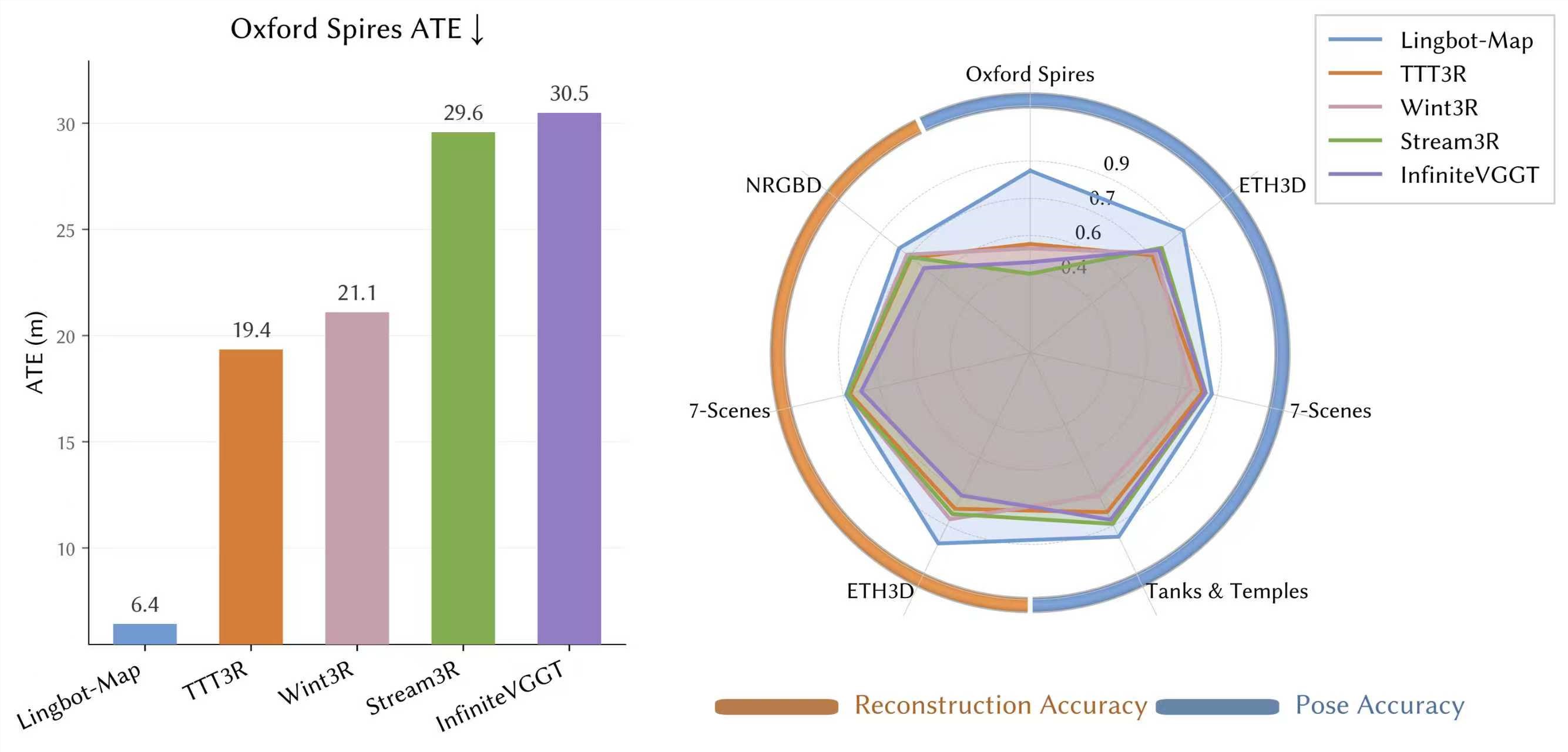
Independent tests show the system's remarkable accuracy. On the challenging Oxford Spires dataset, LingBot-Map reduced trajectory errors to just one-third of previous real-time methods. Surprisingly, it even outperformed some offline processing algorithms that have the luxury of working with complete datasets.
- Speed: Processes at about 20 frames per second
- Stability: Maintains accuracy through tens of thousands of frames
- Efficiency: Runs on standard hardware without specialized processors
Why This Matters
"This isn't just another incremental improvement," notes a robotics engineer familiar with the technology. "By eliminating the need for expensive depth sensors while maintaining real-time performance, LingBot-Map removes major barriers to spatial computing adoption."
The applications span multiple industries:
- Robotics: More affordable navigation systems for service robots
- Autonomous Vehicles: Supplementary spatial awareness without extra sensors
- AR/VR: Potential for smartphone-based AR experiences with true depth understanding
The Bigger Picture
LingBot-Map represents the latest piece in Ant Lingbo's growing portfolio of spatial intelligence technologies. Following their work in depth estimation and large language action models, this release strengthens their position in embodied AI - systems that interact with the physical world.
By open-sourcing the technology, AntGroup appears focused on accelerating industry-wide innovation rather than keeping proprietary advantages. This approach could lead to faster development of practical applications that benefit from real-time 3D understanding.
Key Points:
- Single-camera 3D mapping now possible with consumer hardware
- Processes video streams in real-time at 20FPS
- Outperforms previous methods in accuracy benchmarks
- Open-source release could spark new applications in robotics and AR
- Part of AntGroup's broader push into spatial computing technologies