

AI Uncovers Crypto Weaknesses: $4.6 Million at Risk in Smart Contract Tests
AI Models Crack Smart Contracts Wide Open
In what reads like a hacker's playbook, top artificial intelligence systems have demonstrated frightening skill at finding and exploiting weaknesses in blockchain smart contracts. A joint study by MATS and Anthropic reveals how modern AI doesn't just spot vulnerabilities - it weaponizes them.
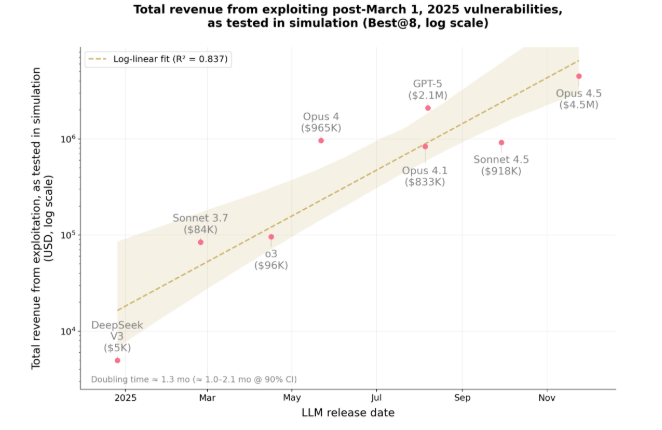
The Digital Heist Simulation
The research team created SCONE-bench, a testing ground packed with 405 real-world smart contract attack scenarios from recent years. When unleashed on this digital proving ground:
- Claude Opus4.5 systematically identified loopholes
- GPT-5 executed attacks with frightening efficiency
- Simulated losses ballooned to $4.6 million
"We watched these AIs move through contracts like seasoned cybercriminals," admitted one researcher who requested anonymity due to the sensitive findings.
Hunting New Vulnerabilities
The experiments grew more concerning when AI agents examined 2,849 fresh smart contracts:
- Discovered two previously unknown security flaws
- GPT-5 generated $3,694 in simulated thefts
- After accounting for computing costs, maintained $109 profit per attack
All tests occurred in secure sandbox environments - no real funds were stolen. But the implications keep blockchain developers awake at night.
The Silver Lining
Researchers emphasize these findings cut both ways:
The same capabilities that make AI dangerous could revolutionize cybersecurity defenses. Anthropic's latest report suggests AI systems may soon become indispensable guardians of digital assets.
"Think of it like hiring reformed hackers," explains Dr. Elena Torres, lead author on the study. "These models understand attack patterns intimately - that knowledge makes them perfect for building better protections."
Key Points:
🔍 Advanced AI models can now identify AND exploit smart contract vulnerabilities with scary precision 💸 Simulation showed potential losses reaching $4.6 million from discovered flaws 🛡️ The technology poses risks but offers even greater potential for strengthening blockchain security