

China Launches AI Security Database to Tackle Emerging Threats
China Strengthens AI Defenses with New Vulnerability Database
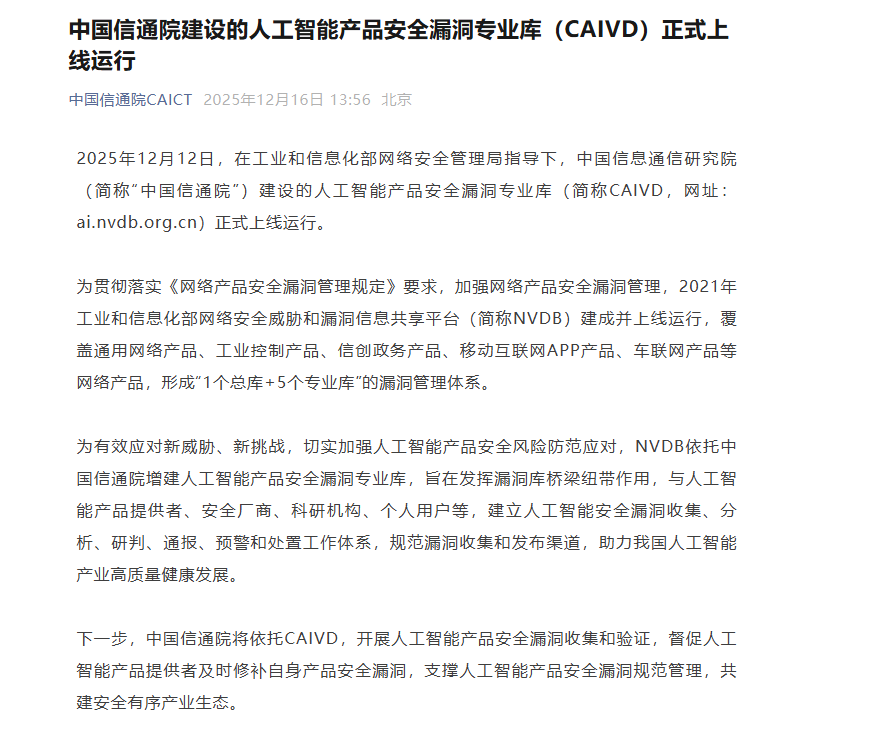
In a move to bolster cybersecurity for artificial intelligence systems, China's Ministry of Industry and Information Technology has introduced the Artificial Intelligence Product Security Vulnerability Specialized Database (CAIVD). The platform, accessible at ai.nvdb.org.cn, represents the latest effort to secure China's booming AI sector against emerging threats.
Closing the Security Gap
The launch comes as AI adoption accelerates across industries, bringing new security challenges that traditional systems weren't designed to handle. "AI systems have unique vulnerability profiles," explains a cybersecurity analyst familiar with the project. "They can be tricked by adversarial attacks or leak sensitive training data - risks that conventional security approaches often miss."
CAIVD forms part of China's broader cybersecurity strategy that began in 2021 with the National Vulnerability Database (NVDB). The system already monitors vulnerabilities in everything from industrial control systems to mobile apps. This new specialized database extends that protection specifically to AI products.
How It Works
The database creates a formal channel for reporting and tracking AI-specific security issues:
- Vulnerability collection from researchers and users
- Verification process by technical experts
- Coordinated disclosure to affected companies
- Remediation tracking until fixes are implemented
"This isn't just about finding bugs," notes an industry insider. "It's about building trust in AI systems by ensuring problems get fixed quickly and transparently."
Industry Impact
The initiative has drawn support from major Chinese tech firms who see it as critical for maintaining consumer confidence in AI products. Early participants include:
- Leading AI developers
- Cybersecurity vendors
- Academic research teams
- Government agencies
By standardizing vulnerability management, CAIVD aims to prevent fragmented security practices across different companies and sectors. The database will also help prioritize the most critical threats facing China's AI ecosystem.
Looking Ahead
The China Academy of Information and Communications Technology (CAICT), which operates the database, plans regular updates as new types of AI vulnerabilities emerge. Future enhancements may include:
- Automated scanning tools for common flaws
- Best practice guidelines for secure AI development
- Training programs for security professionals
The move reflects growing global recognition that AI systems need specialized security measures as they become embedded in everything from healthcare to financial services.
Key Points:
- 🛡️ New database specifically targets security flaws in AI products
- 🔗 Connects developers, researchers and users to coordinate fixes
- 📈 Part of China's expanding cybersecurity infrastructure
- 🌍 Addresses unique risks posed by machine learning systems