AI's Surprising Struggle: Why Even the Smartest Models Can't Match a Child's Vision

When AI Meets Childhood Puzzles: The Visual Gap No One Expected

Picture this: the world's most advanced AI models, capable of beating grandmasters at chess and writing Shakespearean sonnets, stumbling over simple "spot the difference" puzzles that any kindergartener could solve. That's exactly what researchers discovered in a recent study comparing artificial and human visual reasoning.

The BabyVision Benchmark: A Reality Check for AI

The study, conducted by teams from UniPat AI, xbench, Alibaba and others, put leading models through their paces using a specially designed test called BabyVision. The results were humbling - even Gemini 3 Pro Preview, one of today's most capable models, barely outperformed a three-year-old and fell short by about 20% when measured against six-year-old cognition.

"We assumed these models would breeze through basic visual tasks," said one researcher. "Instead, we found them struggling with challenges that human children master naturally through play."

Lost in Translation: Why AI Can't 'See' Like We Do

The core issue lies in how AI processes visual information. Unlike humans who intuitively understand shapes and spaces, current models rely on what researchers call the "language trap" - converting images into text descriptions before attempting to reason about them.

This approach works fine for identifying obvious objects but fails when dealing with:

  • Subtle geometric differences
  • Complex spatial relationships
  • Visual patterns that don't translate well into words

Imagine trying to describe every curve and angle of a puzzle piece using only words - that's essentially what these models are attempting to do.

Four Key Areas Where Child Beats Machine

The study identified specific weaknesses in AI visual reasoning:

1. Missing the Fine Print Models often overlook tiny but crucial details in images, like slight shape variations that determine whether puzzle pieces fit together.

2. Getting Lost in the Maze When tracking paths or connections across complex diagrams, AIs tend to lose their way at intersections - much like a child might in an actual maze.

3. Flat Imagination Without true 3D understanding, models frequently miscount layers or make errors when imagining how objects look from different angles.

4. Pattern Blindness Where children quickly grasp underlying rules in visual sequences, AIs tend to rigidly count features without understanding how they relate.

What This Means for the Future of AI

The findings raise important questions about current approaches to artificial intelligence. If we want machines that can truly interact with our world - whether assisting elderly people at home or navigating city streets - they'll need to develop more human-like visual understanding.

Researchers suggest two promising directions:

  1. Reinforcement learning that provides clearer feedback about perceptual uncertainties
  2. Native multimodal systems that process visuals directly rather than converting them to text first (like newer video generation models)

The path forward might look less like advanced mathematics and more like childhood playtime - an ironic twist in our quest for artificial general intelligence.

Key Points:

  • Top AI models perform worse than six-year-olds on basic visual reasoning tests
  • The "language trap" forces models to describe rather than directly understand images
  • Spatial relationships and subtle details prove particularly challenging
  • Future development may require fundamentally different approaches to visual processing
Enjoyed this article?

Subscribe to our newsletter for the latest AI news, product reviews, and project recommendations delivered to your inbox weekly.

Weekly digestFree foreverUnsubscribe anytime

Related Articles

News

AI cracks famous math puzzle with a fresh approach

OpenAI's latest model has made waves in mathematics by solving a long-standing number theory problem. The solution to the Erdős problem caught the attention of Fields Medalist Terence Tao, who praised its originality. But behind this success lies a sobering reality - AI's overall success rate in solving such problems remains low, reminding us that these tools are assistants rather than replacements for human mathematicians.

January 19, 2026
AI researchmathematicsmachine learning
News

AI Models Stumble Over Simple Calendar Question

In a surprising turn of events, leading AI models including Google's AI Overviews, ChatGPT, and Claude struggled with basic calendar logic when asked whether 2027 is next year. While some corrected themselves mid-conversation, the initial errors revealed unexpected gaps in these systems' understanding of time and sequence. Only Google's Gemini 3 answered correctly, highlighting ongoing challenges with AI reasoning capabilities.

January 19, 2026
AI limitationsmachine learningtechnology fails
DeepSeek's Memory Boost: How AI Models Are Getting Smarter
News

DeepSeek's Memory Boost: How AI Models Are Getting Smarter

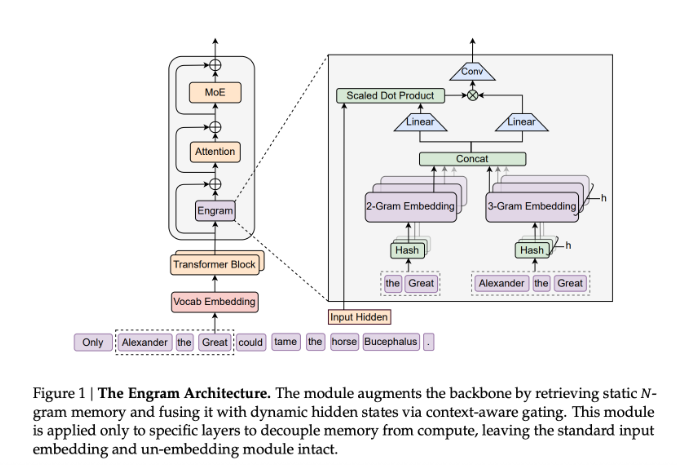
DeepSeek researchers have developed a clever solution to make large language models more efficient. Their new Engram module acts like a mental shortcut book, helping AI quickly recall common phrases while saving brainpower for tougher tasks. Early tests show impressive gains - models using Engram outperformed standard versions in reasoning, math, and coding challenges while handling longer texts with ease.

January 15, 2026
AI efficiencylanguage modelsmachine learning
Chinese Researchers Teach AI to Spot Its Own Mistakes in Image Creation
News

Chinese Researchers Teach AI to Spot Its Own Mistakes in Image Creation

A breakthrough from Chinese universities tackles AI's 'visual dyslexia' - where image systems understand concepts but struggle to correctly portray them. Their UniCorn framework acts like an internal quality control team, catching and fixing errors mid-creation. Early tests show promising improvements in spatial accuracy and detail handling.

January 12, 2026
AI innovationcomputer visionmachine learning
Fine-Tuning AI Models Without the Coding Headache
News

Fine-Tuning AI Models Without the Coding Headache

As AI models become ubiquitous, businesses face a challenge: generic models often miss the mark for specialized needs. Traditional fine-tuning requires coding expertise and expensive resources, but LLaMA-Factory Online changes the game. This visual platform lets anyone customize models through a simple interface, cutting costs and technical barriers. One team built a smart home assistant in just 10 hours - proving specialized AI doesn't have to be complicated or costly.

January 6, 2026
AI customizationno-code AImachine learning
Falcon H1R7B: The Compact AI Model Outperforming Larger Rivals
News

Falcon H1R7B: The Compact AI Model Outperforming Larger Rivals

The Abu Dhabi Innovation Institute has unveiled Falcon H1R7B, a surprisingly powerful 7-billion-parameter open-source language model that's rewriting the rules of AI performance. By combining innovative training techniques with hybrid architecture, this nimble contender delivers reasoning capabilities that rival models twice its size. Available now on Hugging Face, it could be a game-changer for developers needing efficient AI solutions.

January 6, 2026
AI innovationlanguage modelsmachine learning