AI Pioneer Xie Saining Unveils Solaris: A Game-Changing Multiplayer Video Model

AI Visionary Breaks New Ground with Interactive Video Technology

March 11, 2026 marks a significant milestone in artificial intelligence as Xie Saining, the brilliant mind behind Diffusion Transformers (DiT), introduces Solaris to the world. This isn't just another incremental improvement - it's a fundamental shift in how we think about video generation models.

From Solo to Social: The Solaris Revolution

The traditional "single-player" approach to video generation has dominated the field for years. Solaris shatters this paradigm by enabling multiple users to interact seamlessly within the same virtual environment. Imagine building structures collaboratively in Minecraft-like worlds where every participant's actions instantly affect everyone else's view - without any visual glitches or inconsistencies.
Image

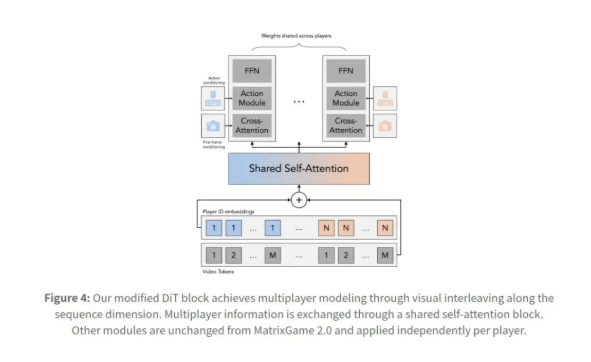
At its core lies an ingenious "multi-player self-attention layer" that facilitates real-time information exchange between participants. During testing scenarios involving complex collaborative building tasks, Solaris maintained remarkable visual coherence even as multiple users manipulated the environment simultaneously.

Star-Studded Backing and Massive Valuation

The launch comes with significant financial firepower. Xie's new venture AMI (Artificial Mind Interface), co-founded with Turing Award laureate Yann LeCun and headquartered in Paris, has already secured $1.03 billion in seed funding at a staggering $3.5 billion valuation.

"This isn't just about creating better videos," explains an industry insider familiar with the project. "Solaris represents a fundamental shift toward truly interactive digital environments where multiple participants can co-create experiences organically."

Open Source Approach Accelerates Innovation

Building on Matrix-Game2.0's open-source framework (originally developed by Kunlun Tian Gong), Solaris resources are now available to developers worldwide. This strategic move aims to foster rapid innovation across several industries:

  • Game development: Enabling richer multiplayer experiences
  • Virtual reality: Creating more immersive shared spaces
  • AI training: Providing better environments for embodied intelligence systems The implications extend far beyond entertainment - imagine architects collaborating on 3D models or medical students practicing procedures together in photorealistic simulations.

Key Points:

  • Multiplayer breakthrough: Solaris solves longstanding challenges in collaborative virtual environments
  • Technical innovation: New "multi-player self-attention layer" enables seamless interaction
  • Strong backing: $1B seed funding at $3.5B valuation with Yann LeCun's involvement
  • Open ecosystem: Available resources encourage broad developer participation
  • Industry impact: Potential applications span gaming, VR, education and professional training
Enjoyed this article?

Subscribe to our newsletter for the latest AI news, product reviews, and project recommendations delivered to your inbox weekly.

Weekly digestFree foreverUnsubscribe anytime

Related Articles

Chinese AI Makes Waves in Global Rankings as DeepSeek Climbs to Top Four
News

Chinese AI Makes Waves in Global Rankings as DeepSeek Climbs to Top Four

The latest a16z ranking reveals a shifting landscape in AI applications. While ChatGPT maintains its lead, Chinese platforms like DeepSeek are gaining ground, with four cracking the top 100. ByteDance's Doubao leads mobile usage with 315 million monthly users, signaling China's growing influence in consumer AI. The competition now focuses on who can become users' go-to AI assistant.

March 11, 2026
ArtificialIntelligenceTechTrendsChineseTech
Alibaba Shakes Up Qwen Leadership Amid AI Push
News

Alibaba Shakes Up Qwen Leadership Amid AI Push

Alibaba Cloud's CTO Zhou Jingren steps in to oversee the Qwen model temporarily following leadership changes at Tongyi Lab. The tech giant shuffles responsibilities as it doubles down on AI development, with Liu Dayiheng expanding his role in pre-training and coding teams. These moves signal Alibaba's commitment to advancing its flagship large language model during a crucial growth phase.

March 10, 2026
AlibabaArtificialIntelligenceTechLeadership
News

Broadcom Bets Big on AI Chips: $100 Billion Revenue Goal by 2027

Broadcom CEO Hock Tan stunned investors with bold predictions during Wednesday's earnings call, forecasting AI chip revenue will smash the $100 billion mark within three years. The announcement sent Broadcom shares soaring over 5% after hours, fueled by strong first-quarter results showing AI revenue doubling to $8.4 billion. With tech giants like Google and Meta driving demand for custom chips, Broadcom appears well-positioned to capitalize on the AI hardware boom.

March 6, 2026
SemiconductorsArtificialIntelligenceTechIndustry
GPT-5.4 Arrives With Mind-Reading AI and Million-Token Memory
News

GPT-5.4 Arrives With Mind-Reading AI and Million-Token Memory

OpenAI's latest model, GPT-5.4, introduces revolutionary features that bring us closer to truly intelligent digital assistants. The new Thinking mode lets users peer into the AI's reasoning process, while million-token memory enables handling massive documents. Perhaps most impressive are its native computer operation abilities - this AI doesn't just talk, it can actually work across your applications.

March 6, 2026
AIOpenAIGPT
News

Alibaba Denies Qwen Team Exodus Rumors, Vows Continued AI Innovation

Alibaba has firmly dismissed online rumors about mass resignations in its Qwen AI model team. The tech giant confirmed the team remains intact and focused on advancing artificial general intelligence (AGI) through open-source development. Contrary to speculation, Alibaba emphasized its commitment to technological breakthroughs over commercial metrics, while actively recruiting global AI talent.

March 6, 2026
ArtificialIntelligenceTechIndustryChinaTech
News

Tech Titans Bet Big on 3D Future as VAST Lands $50M Investment

Chinese tech giants Alibaba and Baidu are doubling down on the future of 3D content creation. VAST, an AI company specializing in 3D generation models, just secured $50 million in Series A funding led by Alibaba and Hengxu Capital. Their TripoAI platform has become a game-changer for designers, automating complex modeling tasks while building a community of over 6.5 million creators. With nearly 100 million models generated, VAST plans to use this investment to push boundaries in algorithm development and make 3D creation accessible to everyone.

March 6, 2026
ArtificialIntelligence3DModelingTechInvestment