AI Novels Flood the Market: Can Human Writers Keep Up?

The AI Writing Revolution Shaking Web Fiction

The glow of laptop screens burns late into the night across China's web fiction community, but a new competitor never sleeps - and never blinks. Artificial intelligence has stormed the gates of online literature, producing novels at speeds that leave even the most prolific human authors gasping.

Quantity Versus Quality

Where writing 10,000 words daily once marked an elite "god-tier" author, AI platforms like Tangku now generate complete 5-million-word epics in just two days. These digital storytellers construct intricate worlds and detailed chapter outlines faster than humans can brew their morning coffee.

The numbers tell a startling story: Fanqie Novel reported its daily new user count exploding from hundreds to over 5,000 shortly after introducing AI tools. "It's like competing against a factory," confessed one shaken author who requested anonymity.

The Soul Test

Yet beneath the staggering output lies fierce debate. Veteran editor Qiao Huan describes most AI prose as "grammatically perfect but emotionally empty" - literary equivalent of microwave meals compared to home cooking.

Nobel laureate Mo Yan tested AI poetry generators and concluded: "They mimic styles brilliantly but write without true understanding." Major platforms like Jinjiang Literature City now screen submissions for machine fingerprints, fearing algorithmic works could dull readers' appetites for authentic storytelling.

Who Benefits?

The financial implications spark equal controversy. Last year's uproar over Fanqie Novel's proposed "AI Training Agreement" revealed author suspicions that their labor was secretly training their replacements. Though revised after protest, the incident exposed publishing's uncomfortable new equation: human creativity feeding machine competitors.

Crossroads Ahead

Science fiction icon Liu Cixin predicts AI may claim most commercial writing within two decades. But scholar Xu Miaomiao counters that true artistry requires lived experience no algorithm can replicate.

The question haunting China's literary scene isn't whether to use AI tools - that ship has sailed - but how to harness them without losing what makes stories worth reading in the first place.

Key Points:

  • AI writing tools produce content hundreds of times faster than humans
  • Platforms report surging output but debate quality concerns
  • Authors fear becoming training data for their digital competitors
  • Industry divides on whether AI will augment or replace human creativity
Enjoyed this article?

Subscribe to our newsletter for the latest AI news, product reviews, and project recommendations delivered to your inbox weekly.

Weekly digestFree foreverUnsubscribe anytime

Related Articles

News

Tomato Novel Sees 13-Fold Surge in Submissions as AI Floodgates Open

Online literature platform Tomato Novel reports a staggering 1,302% increase in new book submissions this year, overwhelming editors with AI-generated content. Authors and voice actors share how they're adapting to the AI wave - from tightening review processes to blending human creativity with machine efficiency. The industry faces growing pains as it balances accessibility with quality control.

November 19, 2025
AI writingonline publishingcontent moderation
ChatGPT Ditches Annoying Long Dashes After User Backlash
News

ChatGPT Ditches Annoying Long Dashes After User Backlash

OpenAI CEO Sam Altman announced users can now disable ChatGPT's signature em dashes—a feature many found frustratingly persistent. The update comes alongside GPT5.1's release, offering improved personalization tools. While dashes serve functional purposes in AI writing, their overuse had become a telltale sign of machine-generated content, sparking jokes and complaints across social media.

November 14, 2025
ChatGPTAI writingOpenAI
News

Amazon's New Kindle Translate Opens Global Doors for Indie Authors – But at What Cost?

Amazon's new Kindle Translate service promises to break language barriers for independent authors, offering free AI-powered translations between English, Spanish and German. While this could democratize global publishing, questions linger about whether algorithms can truly capture literary nuance. Authors get translation previews and direct publishing tools, but the system still struggles with cultural subtleties that define great writing. The service comes with clear AI labeling, letting readers decide if machine-translated stories retain their magic.

November 7, 2025
AI translationself-publishingdigital publishing
China Clears First Brain-Computer Implant for Paralysis Patients
News

China Clears First Brain-Computer Implant for Paralysis Patients

In a medical breakthrough, China has approved the world's first invasive brain-computer interface device for clinical use. Developed by BioSensory Technology, the implant helps quadriplegic patients regain hand movement by interpreting brain signals. The system combines minimally invasive surgery with wireless technology, offering new hope for those with spinal cord injuries. Patients must meet strict criteria to qualify for this pioneering treatment.

March 13, 2026
medical innovationneurotechnologyspinal cord injury
Edge Gets Smarter: New AI Tool Summarizes Web Pages Instantly
News

Edge Gets Smarter: New AI Tool Summarizes Web Pages Instantly

A new browser extension called AI Page Summarizer has landed in the Microsoft Edge Store, bringing powerful AI summarization capabilities right to your browser sidebar. What makes it special? It works seamlessly with both online models like DeepSeek and Doubao, and local models through Ollama - meaning you can get concise summaries even offline. The tool goes beyond simple summarization, offering translation and contextual understanding too.

March 13, 2026
AI toolsbrowser extensionsMicrosoft Edge
xAI's Grok 4.20 Bets on Honesty Over Hype in AI Race
News

xAI's Grok 4.20 Bets on Honesty Over Hype in AI Race

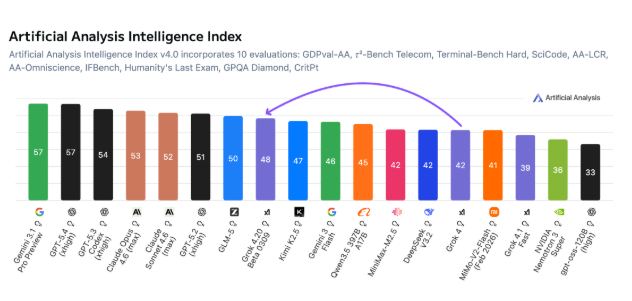
While competitors chase performance benchmarks, Elon Musk's xAI takes a different path with Grok 4.20. This new model sets industry records for truthfulness, dramatically reducing AI's tendency to 'hallucinate' false information. With three specialized modes and competitive pricing, xAI positions Grok as the reliable choice for businesses and researchers who can't afford factual errors.

March 13, 2026
xAIGrokAI reliability