
When AI Can't Agree: Actor's Simple Question Stumps Five Tech Giants

The Pronunciation Puzzle That Divided AI

Picture this: you're an actor preparing for a role, and suddenly you hit a snag - how do you pronounce that tricky character in your script? This exact scenario played out for Chinese actress Liu Meihan recently, but her solution - consulting AI assistants - led her down a rabbit hole of technological confusion.

The Great Pronunciation Debate

While dubbing for her new drama, Liu stumbled over the character "坊" in "铸币坊". Like many of us would these days, she turned to technology for help. But here's where things got interesting:

  • Baidu insisted it should be "fáng"
  • DeepSeek, Tencent Yuanfang, and Ali Qwen formed a united front with "fāng"
  • Most baffling? Doubao couldn't even agree with itself - giving different answers on Liu's phone versus her recording teacher's device

"I expected some consistency," Liu shared on social media. "Instead I got five different teachers arguing in my ear."

Dictionary to the Rescue

Amid this technological tug-of-war, Liu found clarity in an unexpected place - the Xinhua Dictionary app. The authoritative source confirmed the correct pronunciation as "fáng" when used in street or shop names.

This small linguistic adventure reveals bigger questions about our reliance on AI. We assume these tools have all the answers, but as Liu discovered, they can't always agree among themselves - especially on nuanced language questions.

Why This Matters

The incident isn't just about one actress' pronunciation woes. It highlights:

  1. AI's limitations with precise language tasks
  2. Inconsistencies between platforms we assume are equally reliable
  3. The enduring value of verified reference materials

Liu's takeaway? "AI is incredible for many things, but when it comes to academic precision, sometimes you need to double-check with traditional sources."

The next time your phone assistant gives you a quick answer, you might want to ask: is this information reliable... or just artificially confident?

Key Points:

  • Five major AI tools gave conflicting pronunciations for the same Chinese character
  • Even the same app (Doubao) produced different results on separate devices
  • The Xinhua Dictionary ultimately provided the authoritative answer
  • Incident reveals ongoing challenges with AI consistency in language processing
  • Serves as reminder that AI, while powerful, still has limitations requiring human verification
Enjoyed this article?

Subscribe to our newsletter for the latest AI news, product reviews, and project recommendations delivered to your inbox weekly.

Weekly digestFree foreverUnsubscribe anytime

Related Articles

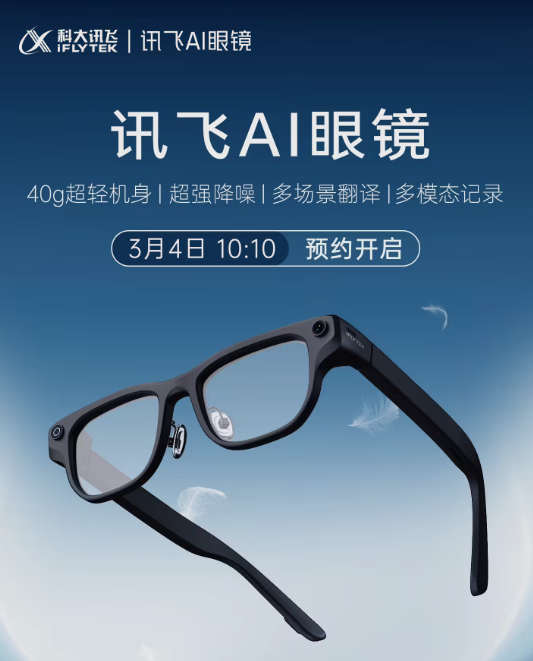
Xunfei's Feather-Light AI Glasses Break Language Barriers
News

Xunfei's Feather-Light AI Glasses Break Language Barriers

At MWC 2026, Xunfei unveiled revolutionary AI glasses weighing just 40 grams - lighter than most sunglasses. The secret sauce? Lip-reading technology that cuts through noisy environments, making conversations flow naturally across languages. Already available for pre-order in China, these glasses could change how we communicate globally.

March 4, 2026
AI translationwearable techlanguage technology
News

Google Translate Gets Smarter with Gemini AI

Google Translate just leveled up its game. The service now integrates Gemini AI, bringing human-like understanding to translations. Instead of literal word swaps, it grasps idioms, context and cultural nuances. Early users in the U.S. and India can try the mobile app first, with global expansion coming soon.

February 27, 2026
AI translationGoogle Geminilanguage technology
News

AI's Surprising Struggle: Why Six-Year-Olds Outsmart Top Models

A groundbreaking study reveals that even advanced AI models like Gemini 3 Pro Preview fall short of a six-year-old's visual reasoning skills. Researchers identified four key areas where silicon brains stumble, from missing fine details to struggling with spatial imagination. This challenges our assumptions about AI superiority and raises questions about the future of embodied intelligence.

January 23, 2026
AI limitationsvisual reasoningcognitive development
News

AI Models Stumble Over Simple Calendar Question

In a surprising turn of events, leading AI models including Google's AI Overviews, ChatGPT, and Claude struggled with basic calendar logic when asked whether 2027 is next year. While some corrected themselves mid-conversation, the initial errors revealed unexpected gaps in these systems' understanding of time and sequence. Only Google's Gemini 3 answered correctly, highlighting ongoing challenges with AI reasoning capabilities.

January 19, 2026
AI limitationsmachine learningtechnology fails
News

Google's New Translation Tech Lets Headphones Speak in Any Language

Google Translate just got a game-changing upgrade. Now your everyday headphones can deliver real-time translations while preserving the speaker's original voice - tone, accent and all. Powered by Gemini AI, this beta feature transforms how we experience foreign languages, whether you're traveling abroad or watching international content. Currently testing on Android in select countries, it supports over 70 languages and works with most headphones.

December 15, 2025
Google TranslateAI translationlanguage technology
News

Translation Schools Close Doors as AI Reshapes Industry

Two prestigious translation programs are shutting down as artificial intelligence transforms the profession. The Monterey Institute of International Studies, often called the 'Harvard of Translation,' will close its campus programs in 2027 amid plunging enrollment. Meanwhile, AI translation now completes work nine times faster at just 10% of traditional costs, leaving many students worried about their career prospects.

November 11, 2025
AI translationhigher educationworkforce disruption