Tencent Dives Into AI Agents with 'Shrimp' Ecosystem Launch

Tencent Bets Big on AI Agents with New 'Shrimp' Ecosystem

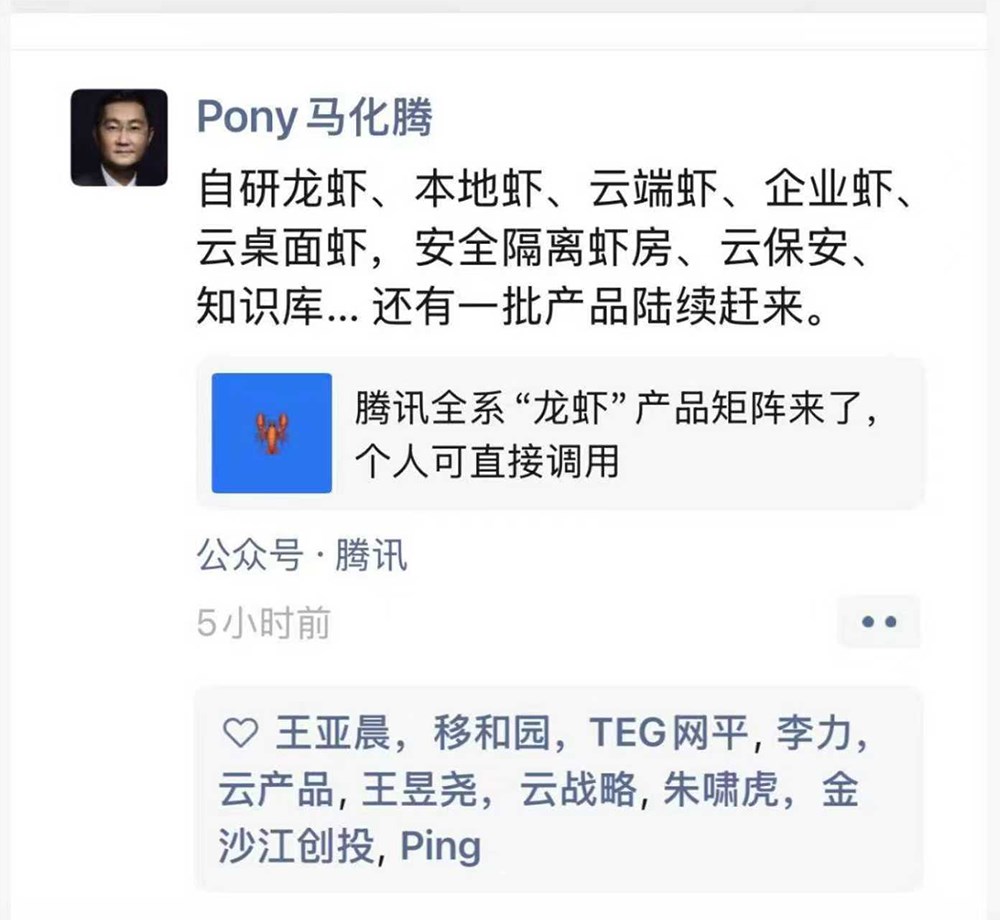
Tencent CEO Pony Ma made waves this week by unveiling the company's comprehensive "Shrimp" AI agent ecosystem on social media. This strategic move positions the tech giant as a serious contender in the rapidly evolving AI assistant market.

A Diverse Product Lineup

The Shrimp ecosystem isn't a one-size-fits-all solution. Tencent has developed specialized versions including:

  • WorkBuddy: The flagship desktop AI agent
  • Local Shrimp for offline processing
  • Cloud Shrimp for scalable solutions
  • Enterprise Shrimp for business applications
  • Secure isolated "shrimp rooms" for sensitive operations
Image

What makes WorkBuddy stand out is its remarkable accessibility. Launched March 9th, it requires no technical setup—installing like any regular app while offering powerful cross-software automation capabilities. "This could be the first AI assistant your parents actually use," quipped one industry analyst.

Expanding the Ecosystem

Tencent isn't stopping at desktop applications. The company is already testing QClaw, a local AI assistant built on its OpenClaw open-source framework. Even more intriguing are reports of a WeChat-integrated AI agent coming later this year. Imagine booking rides or ordering food just by chatting with your messaging app—this could revolutionize how millions interact with mini-programs daily.

The market has responded enthusiastically to these developments. Tencent's stock surged 11% this week, hitting HK$578 at its peak. As one Hong Kong-based trader noted, "Investors see this as Tencent finally playing its cards in the AI race after watching rivals make moves."

Why This Matters Now

With AI technology transitioning from labs to real-world applications, timing is everything. Tencent's deep integration with China's digital life through WeChat and its open-source ecosystem give it unique advantages. But the window for establishing dominance is closing fast as competitors ramp up their own offerings.

The Shrimp launch suggests Tencent isn't just dipping its toes in the water—it's diving in headfirst to shape how we'll interact with technology in the coming years.

Key Points:

  • Plug-and-play accessibility lowers barriers for mainstream adoption
  • WeChat integration could redefine everyday digital interactions
  • Stock surge reflects strong market confidence in Tencent's AI strategy
  • Open-source approach may accelerate ecosystem growth
  • The race is on as enterprise AI adoption reaches critical mass
Enjoyed this article?

Subscribe to our newsletter for the latest AI news, product reviews, and project recommendations delivered to your inbox weekly.

Weekly digestFree foreverUnsubscribe anytime

Related Articles

WeChat's AI Assistant Set to Transform Mini-Program Experience by 2026
News

WeChat's AI Assistant Set to Transform Mini-Program Experience by 2026

Tencent is quietly developing an AI assistant for WeChat that could revolutionize how users interact with mini-programs. Slated for testing in mid-2026, this intelligent agent aims to handle tasks like ride-hailing and food delivery through simple voice commands. The project represents WeChat's ambitious push into AI, potentially turning the platform into a one-stop 'smart task center' for its 1.4 billion users.

March 11, 2026
WeChatAI assistantTencent
Meta snaps up AI social platform Moltbook in race for agent ecosystem
News

Meta snaps up AI social platform Moltbook in race for agent ecosystem

Meta has acquired Moltbook, a Reddit-like platform where AI agents interact and collaborate. The deal brings Moltbook's founders into Meta's Superintelligence Lab, along with their crucial identity verification technology. While financial details remain undisclosed, the move signals Meta's push to lead in developing standards for AI agent cooperation - a key battleground as tech giants shift from single models to interconnected ecosystems.

March 11, 2026
MetaAI AgentsTech Acquisitions
News

WeChat's AI Agent Could Make Daily Tasks as Easy as Saying One Sentence

Tencent is quietly developing an AI assistant that could revolutionize how we use WeChat. Unlike typical chatbots, this agent would connect directly with millions of mini-programs, potentially letting users accomplish complex tasks like ordering food and booking rides with simple voice commands. Set for testing this summer, the move signals Tencent's push to reclaim its position as China's dominant super app amid growing competition from Alibaba and ByteDance in the AI space.

March 11, 2026
WeChatAI assistantsTencent
Tencent's WorldCompass Helps AI Models Navigate Complex Commands
News

Tencent's WorldCompass Helps AI Models Navigate Complex Commands

Tencent has open-sourced WorldCompass, a reinforcement learning framework that dramatically improves how AI world models understand and execute complex instructions. This breakthrough solves persistent accuracy issues, boosting performance by over 35% in challenging scenarios. The technology marks a shift from pure pre-training to sophisticated fine-tuning approaches.

March 11, 2026
AI developmentTencentmachine learning
News

Tech Giants Unite: Microsoft Backs Anthropic in Legal Fight Against Pentagon Ban

In an unprecedented show of industry solidarity, Microsoft has filed court documents supporting rival AI firm Anthropic against a controversial Pentagon ban. The tech giant argues the Defense Department's 'supply chain risk' designation lacks transparency and could cripple contractors. Meanwhile, 37 researchers from OpenAI and Google have joined the fight, signaling rare cooperation between competitors. This legal battle may redefine how government regulates emerging AI technologies.

March 11, 2026
Artificial IntelligenceGovernment RegulationTech Industry
Xie Saining's Team Unveils Solaris: A Breakthrough in Multi-User Video AI
News

Xie Saining's Team Unveils Solaris: A Breakthrough in Multi-User Video AI

Xie Saining's research team has launched Solaris, the world's first multi-user video world model, powered by Kunlun Wanzhi's Matrix-Game2.0. This innovative technology enhances player interaction in environments like Minecraft, outperforming previous solutions. The release coincides with a major funding milestone for Xie's AI company, AMI, highlighting the growing importance of world models in advancing artificial general intelligence.

March 11, 2026
AIMachine LearningVirtual Worlds