Shanghai's New AI Model Speeds Up Antiviral Drug Breakthroughs

Shanghai's AI Breakthrough in Antiviral Research

Shanghai researchers have developed an artificial intelligence tool that could slash the time needed to create new antiviral medications. The ViraHInter model, created by a collaboration between Shanghai Artificial Intelligence Lab and several leading medical institutions, offers a digital shortcut in the race against evolving viruses.
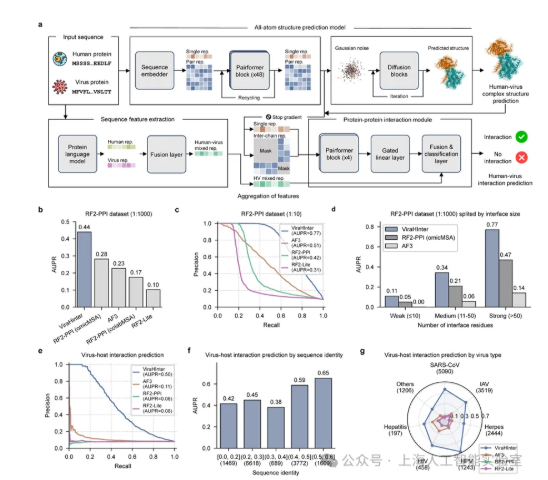
Image

How ViraHInter Changes the Game

Traditional drug development requires painstaking laboratory work to understand how viruses interact with human proteins. ViraHInter eliminates much of this trial-and-error by making accurate predictions about these interactions before researchers ever step into a lab.

"What sets this model apart is its dual focus," explains Dr. Li Wei, a computational biologist involved in the project. "While most systems analyze either protein sequences or structures, ViraHInter does both simultaneously - like reading a book while also understanding how the pages are bound together."

The AI achieves this through two key approaches:

  1. Generating detailed 3D models of virus-protein interactions at the atomic level
  2. Using language processing techniques to spot patterns that persist even as viruses mutate

Real-World Results

Initial tests show remarkable promise. When predicting virus-human protein interactions, ViraHInter achieved an accuracy score of 0.50 - 4.5 times better than AlphaFold3, currently one of the most advanced systems in this field.

Researchers put the model to work analyzing three influenza subtypes. It successfully identified 33 host factors shared across all three strains - potential weak spots that could lead to broader-spectrum treatments.

Perhaps most exciting is the model's ability to tackle new threats. Even when presented with completely novel virus sequences, ViraHInter maintained strong performance. This adaptability could prove crucial when the next pandemic emerges.

What This Means for Future Treatments

The implications extend beyond influenza. The same principles could apply to coronaviruses, HIV, and other rapidly-mutating viruses that have historically challenged drug developers.

"We're not just speeding up the process," notes Dr. Chen from Ruijin Hospital. "We're uncovering targets that traditional methods might miss entirely. Some of these interaction points are so subtle they'd be nearly impossible to spot without this level of computational power."

As antiviral resistance grows worldwide, tools like ViraHInter could help scientists stay one step ahead of evolving pathogens. The research team is now working to integrate their findings into actual drug development pipelines.

Key Points

  • Dual analysis: Combines protein structure and sequence data for more complete predictions
  • Speed advantage: Reduces reliance on time-consuming lab experiments
  • Broad applications: Effective against multiple virus types, including emerging strains
  • Proven performance: Outperforms existing models by significant margins
  • Drug development: Identifies promising treatment targets that might otherwise go unnoticed
Enjoyed this article?

Subscribe to our newsletter for the latest AI news, product reviews, and project recommendations delivered to your inbox weekly.

Weekly digestFree foreverUnsubscribe anytime

Related Articles

Chai-2 AI Model Boosts Antibody Design with 16-20% Hit Rate
News

Chai-2 AI Model Boosts Antibody Design with 16-20% Hit Rate

Chai Discovery's Chai-2 AI model revolutionizes antibody design with a 16-20% experimental hit rate, far surpassing traditional methods. The zero-shot system integrates all-atom prediction and generative modeling, enabling rapid development of nanomolar-affinity antibodies without templates. While not open-sourced, its potential for accelerating drug discovery is generating significant industry excitement.

July 1, 2025
AI in biotechantibody designdrug discovery
AI Helps Save a Dog: How ChatGPT and AlphaFold Designed a Cancer Treatment
News

AI Helps Save a Dog: How ChatGPT and AlphaFold Designed a Cancer Treatment

When AI expert Paul Conyngham's dog Rosie was diagnosed with incurable mast cell cancer, he turned to an unlikely team of consultants: ChatGPT, AlphaFold, and Grok. Together, these AI systems helped design a personalized treatment that shrank Rosie's tumor by 75%. While experts caution that more research is needed, this heartwarming case shows how AI might revolutionize personalized medicine - even for our furry friends.

March 16, 2026
AI in medicineveterinary innovationpersonalized treatment
News

Amazon Takes Aim at Healthcare with $99 AI Assistant Platform

Amazon Web Services has thrown its hat into the digital healthcare ring with Amazon Connect Health, a new AI-powered platform priced at $99 per month. The service automates administrative tasks like appointment scheduling and medical documentation, freeing up doctors' time while complying with HIPAA standards. As tech giants like OpenAI and Anthropic also expand into medical AI, Amazon's move signals intensifying competition in transforming healthcare through artificial intelligence.

March 6, 2026
healthcare technologyAI in medicineAmazon AWS
ByteDance Challenges AlphaFold with Open-Source Protein Prediction Breakthrough
News

ByteDance Challenges AlphaFold with Open-Source Protein Prediction Breakthrough

ByteDance has unveiled Protenix-v1, a groundbreaking open-source model that rivals AlphaFold3 in predicting biomolecular structures. This fully accessible tool can accurately model proteins, DNA, RNA, and small molecules, potentially accelerating drug discovery and synthetic biology research. Alongside the model release, ByteDance introduced an evaluation toolkit with thousands of molecular samples, setting new standards for transparency in computational biology.

February 9, 2026
computational biologyopen source scienceprotein prediction
News

OpenAI Eyes Pharma Breakthroughs With AI Drug Development Push

OpenAI CEO Sam Altman revealed plans to potentially invest in pharmaceutical companies using its AI technology for drug discovery. Speaking at a San Francisco tech conference, Altman outlined a revenue-sharing model where OpenAI could recoup costs through royalties on successful treatments. While no deals are finalized, this move signals OpenAI's ambition to monetize its AI expertise beyond traditional tech applications.

February 4, 2026
AI pharmaceuticalsOpenAI strategydrug discovery
AI Pharma Startup Chai Discovery Hits $1.3B Valuation After Major Funding Round
News

AI Pharma Startup Chai Discovery Hits $1.3B Valuation After Major Funding Round

Chai Discovery, an AI-powered drug development startup backed by OpenAI, has joined the unicorn club after securing $130 million in Series B funding. The company's innovative approach uses foundational models to design novel drug molecules from scratch, achieving breakthroughs with its Chai2 model that outperforms traditional methods. With strong investor support and rapid technological progress, Chai is positioning itself at the forefront of AI-driven pharmaceutical innovation.

December 16, 2025
AI pharmaceuticalsdrug discoverybiotech startups