Shanghai Researchers Unveil Specialized AI for Optics Breakthroughs
Shanghai's Optics GPT Brings AI Precision to Light Science
As artificial intelligence expands into specialized fields, researchers at Shanghai Jiao Tong University have made waves with their latest creation - Optics GPT. Launched January 26, this vertical large model represents China's growing expertise in combining AI with advanced technological applications.
The Specialist Among Generalists
Where ChatGPT serves as a jack-of-all-trades, Optics GPT operates more like a seasoned professor specializing in light science. "We've essentially created a digital colleague," explains the development team lead. "It doesn't just process optical data - it understands the underlying physics like someone who's spent years in the lab."
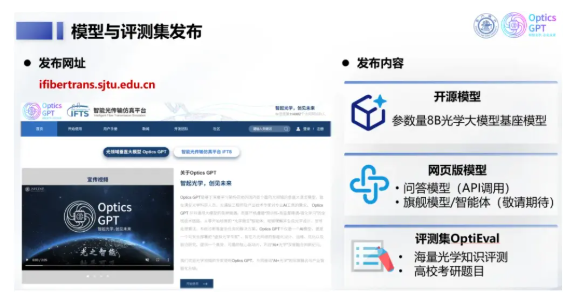
The model underwent rigorous testing across six critical areas:
- Fundamental principles: Optical physics and quantum optics
- Cutting-edge research: Nonlinear optics and optical computing
- Practical applications: Optical design and communication systems
In each category, Optics GPT demonstrated superior performance compared to general-purpose AI models - proving that sometimes specialization beats sheer size.
Designed for Real-World Science
What sets this system apart? Four key advantages:
- Compact yet powerful: At just 8 billion parameters (far smaller than most commercial AIs), it runs efficiently on standard lab equipment.
- Deep domain knowledge: The system internalizes optical concepts with near-human intuition.
- Practical problem-solving: From diagnosing system errors to simulating new designs, it assists where researchers need it most.
- Secure infrastructure: All development occurred domestically, addressing growing concerns about sensitive research data.
The implications extend beyond academic circles. Smaller tech firms can now access sophisticated optical analysis tools previously limited to well-funded institutions.
Key Points:
- Shanghai Jiao Tong University's Optics GPT specializes exclusively in light science applications
- Outperforms general AI models despite smaller size (8B parameters)
- Excels in both theoretical optics and practical engineering scenarios
- Designed with security-conscious research environments in mind