OpenAI's Stealth Funding of Child Safety Group Raises Eyebrows

OpenAI's Quiet Role in Child Safety Coalition Sparks Concern

When children's advocacy groups received emails in March from the newly formed "Parents and Children's AI Alliance," the pitch seemed straightforward. The coalition proposed common-sense AI safeguards like age verification tools and restrictions on child-targeted advertising. What wasn't mentioned? That OpenAI was footing the entire bill.

Behind Closed Doors

The artificial intelligence company has been quietly building support for its preferred regulatory approach in California and beyond. But several nonprofit leaders told reporters they felt misled after discovering OpenAI's central role only after joining the alliance. "We walked away immediately," said one director who requested anonymity. "There's a right way to engage advocates, and this wasn't it."

A spokesperson for the alliance confirmed OpenAI is among seven members working toward "the strongest child AI safety law in America." Yet other child protection organizations remain skeptical of letting an AI company with commercial interests shape policy. "We need genuine leadership from child welfare experts, not tech executives writing their own rules," argued Claire Bennett of SafeTech for Kids.

Growing Scrutiny

The controversy comes as OpenAI faces mounting questions about youth safeguards. Multiple states are considering bills to regulate how children interact with AI systems. Company representatives have previously lobbied against some protective measures they deemed too restrictive.

Critics say the stealth funding follows a troubling pattern. At the alliance's March 17 launch event, OpenAI's involvement went unmentioned entirely. Public policy scholars compare such tactics to "astroturfing" - creating artificial grassroots support for corporate agendas.

"When you hide your fingerprints this way, people reasonably wonder what else you're not disclosing," noted Stanford researcher Dr. Elena Torres. Several former alliance members say they're now reviewing all communications with OpenAI for similar omissions.

Key Points:

  • 📌 Transparency questions surround OpenAI-funded "Parents and Children's AI Alliance"
  • 📌 Multiple groups withdrew upon learning of undisclosed tech company backing
  • 📌 Policy experts warn such arrangements risk undermining public trust in AI governance

Enjoyed this article?

Subscribe to our newsletter for the latest AI news, product reviews, and project recommendations delivered to your inbox weekly.

Weekly digestFree foreverUnsubscribe anytime

Related Articles

OpenAI Pivots from Video to Podcasts with TBPN Acquisition
News

OpenAI Pivots from Video to Podcasts with TBPN Acquisition

In a surprising strategic shift, OpenAI has acquired popular tech podcast TBPN just weeks after shuttering its Sora video app. The move signals OpenAI's growing focus on shaping AI conversations rather than just creating tools. While promising editorial independence, this acquisition raises questions about tech giants controlling media narratives in the AI era.

April 3, 2026
OpenAITechMediaAIPolicy
OpenAI Brings Tech Comedy Show TBPN Under Its Wing to Shape AI Conversations
News

OpenAI Brings Tech Comedy Show TBPN Under Its Wing to Shape AI Conversations

OpenAI has made a surprising move by acquiring popular tech comedy show TBPN, aiming to foster more authentic public discussions about artificial intelligence. The show's hosts, who share a long history with OpenAI's leadership, will maintain editorial independence while bringing their signature humor and gong-beating announcements to the AI dialogue. This unconventional partnership signals OpenAI's commitment to making complex tech topics accessible and engaging for wider audiences.

April 3, 2026
OpenAITech MediaAI Communication
China's Broadcast Industry Cracks Down on AI-Generated Celebrity Impersonations
News

China's Broadcast Industry Cracks Down on AI-Generated Celebrity Impersonations

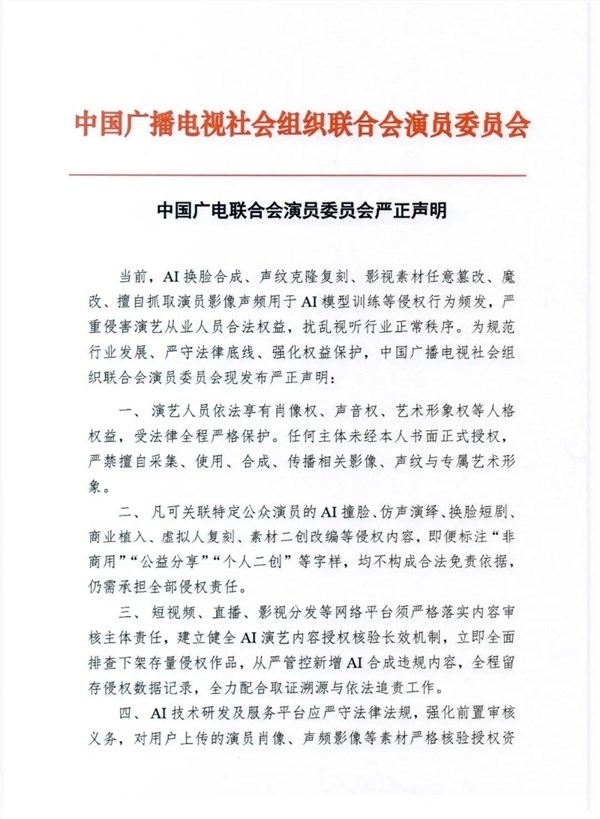
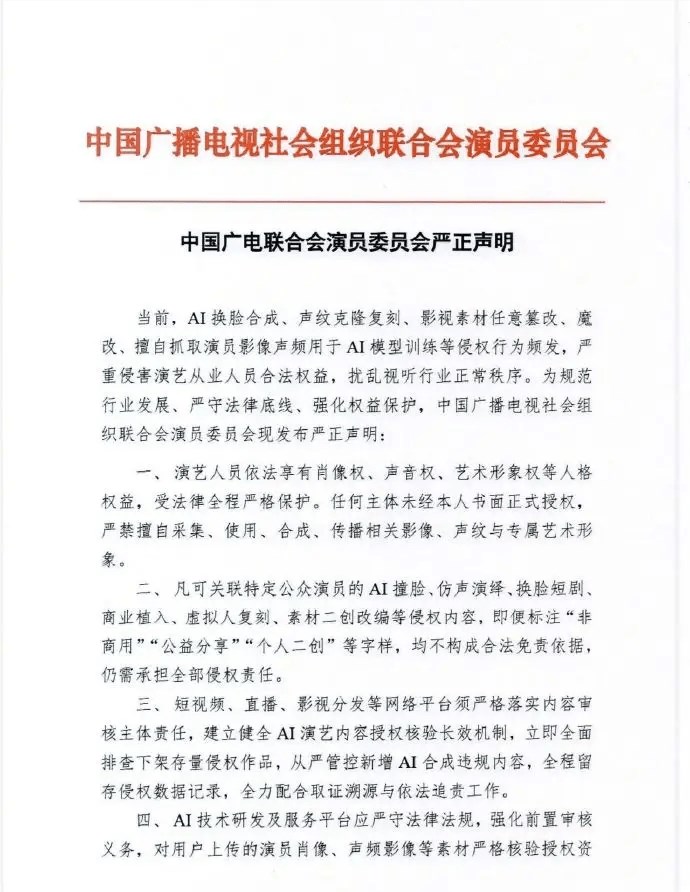
China's entertainment industry is taking a stand against unauthorized AI impersonations of actors. The China Radio and Television Association has issued strict new rules banning face-swapping and voice cloning without explicit permission. Platforms must now verify content authenticity, while the association pledges to monitor and remove infringing material. This move highlights growing concerns about digital identity protection in the age of advanced AI technologies.

April 3, 2026
AI regulationdigital rightsentertainment industry
China's Entertainment Industry Cracks Down on Unauthorized AI Manipulation of Performers
News

China's Entertainment Industry Cracks Down on Unauthorized AI Manipulation of Performers

China's entertainment industry is taking a stand against the growing misuse of AI technology. The Actors Committee has issued a firm statement banning unauthorized face-swapping, voice cloning, and other digital manipulations of performers' likenesses. This comes as voice actors and celebrities increasingly find their digital identities being hijacked by cheap AI tools. The new guidelines clarify legal responsibilities and require platforms to implement better content verification systems.

April 2, 2026
AI regulationentertainment industrydigital rights
Experts Sound Alarm as AI Videos Flood Kids' YouTube
News

Experts Sound Alarm as AI Videos Flood Kids' YouTube

More than 200 child development experts have united to challenge YouTube over its recommendation of AI-generated content to young viewers. Their open letter compares the platform's current approach to an 'uncontrolled experiment' that could harm children's cognitive development. While YouTube defends its labeling policies, critics argue these measures fail to protect pre-literate toddlers from what they call 'digital landfills' of low-quality content.

April 2, 2026
child developmentAI regulationdigital parenting
News

Banks Get a Digital Makeover: OpenAI and Gradient Labs Bring AI Assistants to Everyone

OpenAI has teamed up with Gradient Labs to revolutionize banking with AI. Their new digital customer manager, powered by GPT-5.4, promises lightning-fast responses and expert-level service—no private bank account required. Early adopters like LHV and NatWest are already seeing results, from fraud prevention to financial planning. Could this be the end of frustrating call center waits?

April 1, 2026
AI bankingOpenAIGradient Labs