OpenAI's New AI Scientist: GPT-Rosalind Aims to Revolutionize Drug Discovery

OpenAI Debuts 'AI Scientist' for Medical Breakthroughs

In a move that could reshape pharmaceutical research, OpenAI introduced GPT-Rosalind on April 16th - an AI model specifically engineered for life science innovation. The name pays homage to Rosalind Franklin, whose X-ray crystallography work revealed DNA's double helix structure in 1953.
Image

What Can This AI Researcher Do?

Unlike general-purpose chatbots, GPT-Rosalind speaks the language of biochemistry fluently. It's been specially trained to:

  • Digest mountains of genomic and chemical data
  • Suggest promising research avenues scientists might overlook
  • Help design more efficient lab experiments
  • Model how proteins might interact with potential drugs

"We're not replacing scientists - we're giving them superpowers," explains an OpenAI insider familiar with the project. Early tests show the model outperforming human experts in predicting certain molecular behaviors, though real-world validation remains ongoing.

Who Gets Access First?

The model is currently rolling out to select partners through a research preview program. Notable collaborators include:

  • Amgen (biotech heavyweight)
  • Moderna (mRNA vaccine pioneer)
  • Thermo Fisher Scientific (lab equipment leader)
  • Allen Institute (nonprofit research hub)

Each partner brings unique expertise to stress-test GPT-Rosalind's capabilities. Moderna, for instance, might explore how the AI could accelerate vaccine development timelines.

The Bigger Picture

This launch marks OpenAI's clearest move yet into scientific AI, a space where Google's DeepMind (famous for AlphaFold's protein predictions) currently leads. The company simultaneously released a companion plugin connecting to 50+ specialized research tools - essentially giving scientists one AI interface to navigate their complex digital toolbox.

Wall Street took notice immediately, with biotech stocks showing unusual volatility following the announcement. While some researchers caution that AI can't yet replace decades of laboratory intuition, many acknowledge these tools could dramatically shorten the 10-15 year timelines typical for new drug development.

Key Points

  • Specialized skillset: GPT-Rosalind focuses exclusively on life sciences, unlike general AI models
  • Real-world testing: Early adopters include major pharma companies and research institutions
  • Competitive landscape: Puts OpenAI in direct competition with Google's DeepMind in scientific AI
  • Complementary tools: New plugin integrates with existing scientific software ecosystems
  • Market impact: Biotech sector shows sensitivity to AI advancements in drug discovery
Enjoyed this article?

Subscribe to our newsletter for the latest AI news, product reviews, and project recommendations delivered to your inbox weekly.

Weekly digestFree foreverUnsubscribe anytime

Related Articles

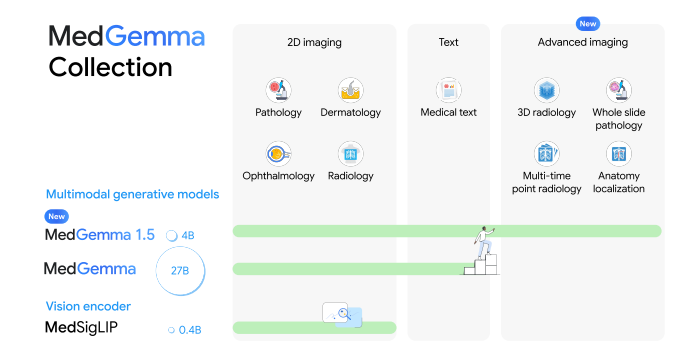
Google's MedGemma 1.5 AI Takes Medical Imaging to the Next Dimension
News

Google's MedGemma 1.5 AI Takes Medical Imaging to the Next Dimension

Google has just unveiled MedGemma 1.5, its latest open-source medical AI that can interpret complex 3D scans with remarkable accuracy. This upgrade moves beyond traditional 2D image analysis, offering doctors potential new tools for everything from tumor tracking to digital pathology. While not yet ready for clinical use, the model shows impressive improvements - achieving double-digit accuracy gains while maintaining its efficient 4 billion parameter size.

April 17, 2026
medical AIGoogle ResearchAI in healthcare
News

AI Pioneer AIMed Helps Drug Developers Navigate Global Patent Maze

Hangzhou-based Huiyidao Technology has rebranded as AIMed, bringing AI-powered solutions to translational medicine. Their flagship PharmaMark AI tool helps pharmaceutical companies identify patent risks early in development, potentially saving millions in litigation costs. With FDA-certified technology and global research partnerships, AIMed aims to bridge the gap between laboratory discoveries and clinical applications.

February 25, 2026
AI in healthcarepharmaceutical innovationpatent analytics
News

NHS Tests AI & Robot Duo to Spot Lung Cancer Earlier

The UK's NHS is piloting groundbreaking technology that pairs AI analysis with robotic precision to detect lung cancer sooner. At London's Guy's and St Thomas' Hospital, the system can identify tiny 6mm nodules - about rice-sized - then guide biopsies in a single 30-minute procedure. This could transform a process that currently takes weeks, reducing patient anxiety while catching more cancers early. The health service aims to screen all smokers nationwide by 2030, potentially diagnosing 23,000 early-stage cases by 2035.

January 27, 2026
medical innovationcancer screeningAI in healthcare
Claude AI Gets Medical License: A Game-Changer for Healthcare
News

Claude AI Gets Medical License: A Game-Changer for Healthcare

Anthropic's Claude AI has cleared a major hurdle by achieving HIPAA compliance, allowing it to handle sensitive health data legally. This breakthrough transforms Claude from a tech novelty into a practical tool for doctors and patients alike. Early adopters report significant efficiency gains, with the AI helping organize medical records, summarize research, and improve doctor-patient communication. Privacy remains paramount - Anthropic vows patient data will never be used for AI training.

January 13, 2026
AI in healthcareHIPAA compliancemedical technology
UK Doctors Embrace AI Assistants Amid Growing Pains
News

UK Doctors Embrace AI Assistants Amid Growing Pains

Nearly 30% of UK GPs now use AI tools like ChatGPT during patient consultations, according to a Nuffield Trust study. While these digital assistants help ease workloads, doctors voice concerns about regulation gaps and ethical dilemmas. The rapid adoption comes as patients also turn to AI for health advice, creating both opportunities and challenges in modern healthcare.

December 4, 2025
AI in healthcareMedical technologyUK National Health Service
Baidu Health's 'Stars Everywhere' Program Aims for 100M Health Contents
News

Baidu Health's 'Stars Everywhere' Program Aims for 100M Health Contents

Baidu Health has launched the 'Stars Everywhere' program, partnering with 100,000 doctors to create over 100 million AI-generated health education materials. The initiative leverages AI and human oversight to ensure accuracy, while empowering doctors with digital tools to enhance public health literacy.

August 1, 2025
health techAI in healthcaremedical education