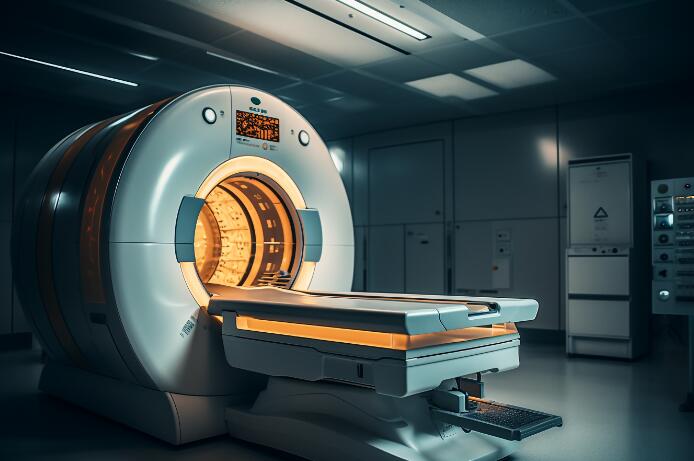
NHS Tests AI & Robot Duo to Spot Lung Cancer Earlier

NHS Pioneers AI-Robot Teamwork Against Lung Cancer

The UK's National Health Service is betting on an unlikely medical dream team - artificial intelligence paired with robotic precision - to tackle the country's deadliest cancer. Starting this month at London's Guy's and St Thomas' Hospital, clinicians will test whether this high-tech partnership can spot lung cancer earlier than ever before.

How the Breakthrough Works

The system operates like a futuristic medical detective. First, specialized AI software scrutinizes lung scans with superhuman attention, flagging suspicious nodules as small as 6 millimeters - about the size of a grain of rice that often escapes human notice. Then comes the robotic reinforcement: a miniature camera-guided tool navigates deep into lung tissue to collect precise biopsy samples.

What typically unfolds over weeks of anxious waiting and repeat scans could soon compress into a single 30-minute procedure. For patients, this means less uncertainty and potentially avoiding more invasive surgeries down the line.

"We're essentially giving doctors microscopic vision and a steadier hand," explains Dr. Sarah Wilkinson, lead researcher on the trial. "The AI spots what human eyes might miss, then robotics help us safely reach those tricky areas."

Targeting Those Most at Risk

The timing couldn't be more critical. Lung cancer claims about 33,000 UK lives annually, with stark disparities showing higher rates in deprived communities. Smoking remains the leading cause, prompting NHS England to pledge nationwide screening for all current and former smokers by 2030.

Early projections suggest these combined efforts could:

  • Diagnose 50,000 cases by 2035
  • Detect nearly half at early stages when treatment works best
  • Save thousands through timely intervention

"This isn't just about fancy technology," emphasizes NHS Chief Executive Amanda Pritchard. "It's about fairness - ensuring everyone gets these life-saving tools regardless of postcode."

The pilot represents one of healthcare's most ambitious fusions of human expertise with machine capabilities. If successful, it could rewrite how we detect not just lung cancer but other hard-to-spot diseases.

Key Points:

  • Precision partnership: AI identifies rice-sized lesions while robotics enable safer biopsies
  • Faster answers: Condenses weeks of testing into one brief procedure
  • Equity focus: Part of broader push to screen all smokers nationwide by 2030
  • Life-saving math: Could catch 23,000 early-stage cancers by target year
Enjoyed this article?

Subscribe to our newsletter for the latest AI news, product reviews, and project recommendations delivered to your inbox weekly.

Weekly digestFree foreverUnsubscribe anytime

Related Articles

Tsinghua's Smart Glasses Detect and Stop Facial Twitches Instantly
News

Tsinghua's Smart Glasses Detect and Stop Facial Twitches Instantly

Researchers at Tsinghua University have created revolutionary smart glasses that monitor facial muscle movements and automatically deliver relief when spasms occur. The lightweight wearable device, featured in Nature Communications, uses advanced sensors to detect subtle twitches before triggering gentle electrical stimulation. Early trials show the system significantly improves quality of life for people with hemifacial spasm, offering a convenient alternative to invasive treatments.

January 14, 2026
wearable techmedical innovationneurological disorders
Claude AI Gets Medical License: A Game-Changer for Healthcare
News

Claude AI Gets Medical License: A Game-Changer for Healthcare

Anthropic's Claude AI has cleared a major hurdle by achieving HIPAA compliance, allowing it to handle sensitive health data legally. This breakthrough transforms Claude from a tech novelty into a practical tool for doctors and patients alike. Early adopters report significant efficiency gains, with the AI helping organize medical records, summarize research, and improve doctor-patient communication. Privacy remains paramount - Anthropic vows patient data will never be used for AI training.

January 13, 2026
AI in healthcareHIPAA compliancemedical technology
News

Robot Surgeon Makes History With First AI-Driven Autonomous Operation

A surgical robot has successfully performed the world's first fully autonomous operation on a live animal using AI technology. The breakthrough procedure, conducted on a pig, achieved an 88% success rate for critical steps like bile duct clamping. This marks a major leap from traditional robotic surgery toward true AI autonomy in medicine.

January 7, 2026
robotic surgerymedical AIsurgical innovation
UK Doctors Embrace AI Assistants Amid Growing Pains
News

UK Doctors Embrace AI Assistants Amid Growing Pains

Nearly 30% of UK GPs now use AI tools like ChatGPT during patient consultations, according to a Nuffield Trust study. While these digital assistants help ease workloads, doctors voice concerns about regulation gaps and ethical dilemmas. The rapid adoption comes as patients also turn to AI for health advice, creating both opportunities and challenges in modern healthcare.

December 4, 2025
AI in healthcareMedical technologyUK National Health Service
AI breakthrough slashes organ transplant waste
News

AI breakthrough slashes organ transplant waste

Stanford researchers have developed an AI tool that predicts donor viability with startling accuracy, potentially reducing ineffective liver transplant preparations by 60%. The system analyzes neural and circulatory data to determine optimal transplant timing, outperforming even experienced surgeons' judgments. This innovation could dramatically improve efficiency in organ transplantation systems worldwide.

November 14, 2025
medical innovationorgan donationAI healthcare
AI Use in Cancer Screening May Reduce Doctors' Skills, Study Finds
News

AI Use in Cancer Screening May Reduce Doctors' Skills, Study Finds

A new study reveals that while AI improves colon cancer detection rates, doctors' skills decline when AI assistance is removed. Researchers found a 20% drop in tumor detection accuracy without AI, raising concerns about over-reliance on technology. The medical community is now exploring ways to balance AI integration with maintaining physician expertise.

August 13, 2025
medical AIcancer screeningphysician training