OpenAI's New AI Model Aims to Speed Up Breakthroughs in Life Sciences
OpenAI Debuts GPT-Rosalind for Life Sciences
In a significant move for AI-powered research, OpenAI launched GPT-Rosalind on April 16th - a specialized model that could transform how we develop new medicines. Named after Rosalind Franklin, whose work was crucial in discovering DNA's structure, this AI aims to shorten the painfully long drug development timeline.
What Can This AI Actually Do?
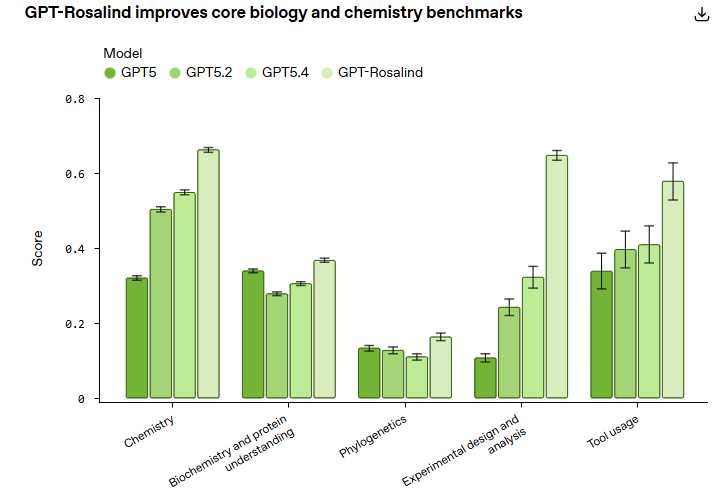
The model acts like a supercharged research assistant for scientists. It digests mountains of biochemical data to help with everything from spotting patterns in complex studies to designing better proteins. Early tests show it's not just competent - in some prediction tasks, it's outperforming human experts.
Right now, access is limited to big players including pharmaceutical heavyweight Amgen, vaccine maker Moderna, and research institutions like the Allen Institute. These partners are putting GPT-Rosalind through its paces with real-world research challenges.
The Tech Behind the Breakthrough
OpenAI didn't just tweak their existing models. They deeply customized GPT-Rosalind for genomics and chemistry work. Benchmarks like LABBench2 show it's no general-purpose chatbot - this is specialized scientific machinery. The company also released complementary tools linking to over 50 scientific databases, creating what could become an essential research ecosystem.
Why This Matters Now
This launch signals OpenAI's serious play for the scientific AI space, currently led by Google's DeepMind and Anthropic. As AI moves from answering trivia questions to assisting with groundbreaking medical research, we're seeing these tools evolve from novelties into critical infrastructure.
The announcement sent ripples through biotech markets, with some company stocks reacting immediately. While no one's claiming AI will replace experienced researchers yet, the technology's potential to reshape drug discovery is becoming harder to ignore.
Key Points
- Specialized science AI: GPT-Rosalind is fine-tuned specifically for life sciences research
- Real-world partners: Early adopters include major pharma companies and research institutions
- Beyond human performance: Excels at certain prediction tasks critical to drug development
- Scientific ecosystem: Comes with access to dozens of specialized research tools and databases
- Market impact: Biotech sector shows immediate reaction to OpenAI's entry into scientific AI